
Fitting a consumer unit is specialist electrical work and should not be treated as a DIY job. A consumer unit controls and protects the electrical circuits in a property, so incorrect installation can create serious risks, including electric shock, overheating, fire, nuisance tripping, failed certification and unsafe wiring conditions.
In a domestic property in England and Wales, installing or replacing a consumer unit is normally notifiable electrical work under Building Regulations. This means the work should either be carried out by a registered competent electrician who can self-certify, or it must be notified through the correct Building Control route. GOV.UK Approved Document P explains the importance of proper design, installation, inspection, testing and provision of information for electrical safety work in dwellings.
This guide explains what consumer unit fitting involves, why a qualified electrician is needed, what checks should happen before installation, what certificates you should receive, and when an EICR may be needed before replacing an old fuse box.
Last updated: 2026
Reviewed by: London Safety Certificate Compliance Team
Key Takeaways
- Fitting a consumer unit is not suitable DIY work.
- Consumer unit replacement is normally notifiable work in domestic properties in England and Wales.
- The existing wiring, earthing, bonding and circuits should be assessed before a new consumer unit is fitted.
- A new consumer unit should not simply be connected to unsafe or untested wiring.
- The work should include proper inspection, testing, certification and Building Regulations notification where applicable.
- A modern consumer unit may include RCD protection, RCBOs and surge protection depending on the installation requirements.
- An EICR can help identify whether the existing installation is suitable before replacement.
- You should receive the correct electrical certification after the work is completed.
Table of Contents
Quick Answer: Can You Fit a Consumer Unit Yourself?
| Question | Answer |
|---|---|
| Can I fit a consumer unit myself? | No. Consumer unit fitting should be carried out by a qualified and competent electrician. |
| Is consumer unit replacement notifiable? | Yes, in domestic properties in England and Wales it is normally notifiable electrical work. |
| Do I need certification? | Yes. You should receive proper electrical certification and Building Regulations compliance documentation where applicable. |
| Does a new consumer unit need testing? | Yes. Inspection and testing are essential before the installation can be certified. |
| Do I need a full rewire? | Not always, but the existing wiring must be suitable and safe. |
| Should I get an EICR first? | It can be useful if the wiring is old, untested, faulty or previously altered. |
What Does Fitting a Consumer Unit Involve?
Fitting a consumer unit involves replacing or installing the main electrical distribution board that controls and protects the circuits in a property.
A proper consumer unit replacement is not only about attaching a new box to the wall. It normally involves checking the existing electrical installation, safely isolating the supply, removing the old fuse box or consumer unit, installing the new unit, connecting the circuits correctly, testing the installation and issuing the correct certification.
The electrician must also check whether the existing wiring is suitable for connection to the new board. If the wiring, earthing, bonding or circuits are unsafe, remedial work may be needed before the new consumer unit can be properly certified.
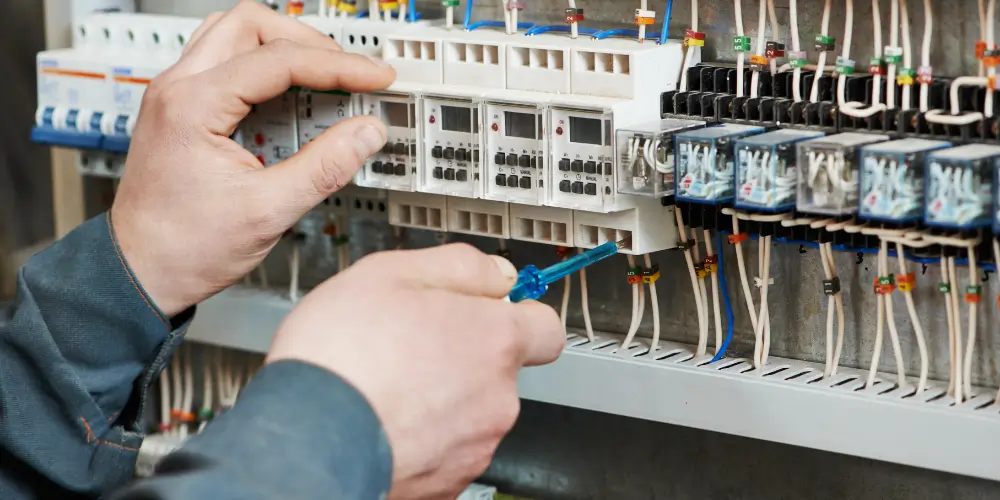
Why Consumer Unit Fitting Is Not a DIY Job
A consumer unit is a critical safety component. It controls the circuits for sockets, lighting, cookers, showers, heating, alarms, outbuildings and other fixed electrical points.
If it is installed incorrectly, the risks can include:
- electric shock
- overheating
- electrical fire
- exposed live parts
- incorrect circuit protection
- failed RCD or RCBO operation
- nuisance tripping
- damaged appliances
- unsafe earthing or bonding
- failed inspection and certification
- insurance or property sale issues
This is why consumer unit replacement should be handled by a qualified electrician with the correct inspection and testing knowledge.
A visual check is not enough. The installation must be properly inspected, tested and certified.
Is Consumer Unit Replacement Notifiable?
Yes. In domestic properties in England and Wales, installing a new consumer unit or fuse box is normally notifiable electrical work. Planning Portal guidance lists the installation of a new consumer unit or fuse box as notifiable work.
This means the work should normally be completed by a registered electrician who can notify the work through a competent person scheme, or it must be notified to Building Control using the correct process.
If the work is not properly notified and certified, it can cause problems later when selling the property, dealing with insurance, letting the property, or proving electrical compliance.

What Should Be Checked Before Fitting a Consumer Unit?
Before fitting a new consumer unit, a competent electrician should assess whether the existing electrical installation is suitable.
Important checks may include:
- condition of existing wiring
- number of circuits
- condition of the old fuse box or consumer unit
- earthing arrangement
- main protective bonding
- suitability of protective devices
- signs of overheating or damage
- circuit labelling
- previous alterations or DIY work
- access to the meter and consumer unit position
- whether any circuits show faults during testing
The electrician should not simply connect a new consumer unit to unsafe wiring. If defects are found, they should be explained clearly and dealt with properly.
Does a New Consumer Unit Need an EICR First?
An EICR is not always required before replacing a consumer unit, but it can be very useful when the condition of the electrical installation is unknown. It may be sensible to have an EICR before a consumer unit replacement if the property has old wiring, the installation has not been tested recently, there are repeated electrical faults, circuits keep tripping, there has been DIY electrical work, the property is rented or about to be rented, the property is being bought or sold, or the old fuse box has no RCD protection.
An EICR can also help the electrician understand the condition of the circuits before replacement and identify whether the installation is satisfactory, whether remedial work is needed, and whether the consumer unit is part of a wider electrical safety issue. If you want to know how the EICR is carried out for a consumer unit and a distribution board, visit our blog post on the EICR test procedure.
Plastic consumer units, if found in the property, may also cause issues during an EICR. These units, especially older models, may fail the inspection due to safety concerns such as inadequate fire resistance or the absence of essential protection features. If a plastic consumer unit is found unsafe, it may need to be replaced to ensure the overall safety of the electrical installation. For a detailed breakdown, read our guide on Does a Plastic Consumer Unit Fail an EICR? (UK Guide 2026).
Can You Fit a New Consumer Unit Without Rewiring?
Yes, in some cases a new consumer unit can be fitted without a full rewire. A full rewire is not automatically required just because the consumer unit is being replaced.
However, the existing wiring must be suitable and safe. If testing finds damaged cables, poor insulation readings, missing bonding, unsafe alterations, overloaded circuits or serious defects, remedial work or rewiring may be needed.
A new consumer unit can improve protection, but it cannot make unsafe wiring safe by itself. The condition of the circuits still matters.
What Type of Consumer Unit May Be Fitted?
The right consumer unit depends on the property, number of circuits, electrical demand and inspection findings.
Common options include:
| Consumer Unit Type | What It Means |
|---|---|
| Dual RCD consumer unit | Circuits are split across RCD-protected sections |
| RCBO consumer unit | Individual circuits have their own combined protection |
| High integrity consumer unit | Allows more flexible circuit protection arrangements |
| Consumer unit with surge protection | Includes protection against certain voltage surges |
| Commercial distribution board | Used for larger or commercial electrical installations |
Modern domestic consumer units are commonly metal or enclosed in non-combustible material. IET guidance explains that Regulation 421.1.201 gives the choice of using a consumer unit with an enclosure made from non-combustible material, or enclosing it in a non-combustible cabinet or enclosure.
What Happens During Professional Consumer Unit Replacement?
A professional consumer unit replacement is not just a simple fuse box swap. It involves assessment, safe isolation, installation, testing and certification. The work should be carried out by a competent electrician, not by a homeowner or an unqualified person.
1. Existing Installation Assessment
Before replacing the consumer unit, the electrician will assess the existing electrical installation. This may include checking the age and condition of the wiring, identifying visible defects, reviewing the current fuse box or consumer unit, and confirming whether the installation appears suitable for upgrade.
2. Circuit Identification
The electrician will confirm how many circuits are present in the property, such as lighting circuits, socket circuits, cooker circuits, shower circuits, immersion heater circuits, smoke alarm circuits and any other fixed electrical circuits. This helps ensure the new consumer unit is correctly sized and suitable for the property.
3. Earthing and Bonding Checks
Earthing and bonding are important safety parts of the electrical installation. Before a consumer unit replacement, the electrician should check that the main earthing arrangement and bonding to services such as gas and water are suitable. If earthing or bonding is inadequate, remedial work may be needed before or during the replacement.
4. Safe Isolation
The electrician will plan and carry out safe isolation before removing the old fuse box or consumer unit. This is a critical safety step to make sure the electrical supply is isolated correctly before work begins.
5. Removal of the Old Fuse Box or Consumer Unit
Once the installation has been safely isolated, the old fuse box or consumer unit can be removed. The electrician will carefully disconnect the existing circuits and prepare the area for the new consumer unit.
6. Installation of the New Consumer Unit
A suitable new consumer unit will then be fitted. The type of unit and protective devices used will depend on the property, the number of circuits and the required level of protection, such as RCDs, RCBOs or surge protection where appropriate.
7. Correct Circuit Connection and Labelling
Each circuit must be connected correctly into the new consumer unit. The electrician should also label the circuits clearly, so it is easy to identify which protective device controls each part of the property.
8. Inspection and Testing
Testing is a major part of professional consumer unit replacement. The electrician should inspect and test the electrical installation to confirm that the circuits are safe and that the protective devices operate correctly. Any faults found during testing should be identified and explained.
9. Electrical Certification
After the work is completed and tested, the electrician should issue the correct electrical certification. This provides evidence that the consumer unit replacement has been carried out and tested professionally.
10. Building Regulations Notification
Where required, the work should also be notified under Building Regulations. This is especially important because consumer unit replacement is notifiable electrical work in many domestic properties.
A proper consumer unit replacement should always include inspection, testing and certification. Without these steps, the job is incomplete and may not provide proper evidence of electrical safety or compliance.
What Certificates Should You Receive?
After consumer unit replacement, you should receive the correct paperwork.
This may include:
- Electrical Installation Certificate
- schedule of test results
- circuit schedule or labels
- Building Regulations compliance certificate or notification confirmation where applicable
- details of any remedial work completed
Keep these documents safely. They may be needed for property sales, landlords, insurance, future electrical work or compliance records.
What Can Go Wrong With Poor Consumer Unit Installation?
Poor consumer unit installation can create serious electrical safety and compliance problems. Common issues include incorrect circuit identification, loose connections, missing blanks, wrong protective devices, lack of proper RCD or RCBO protection where required, unsuitable earthing or bonding, poor cable entry protection, overloaded circuits, nuisance tripping, failed test results, missing electrical certification and no Building Regulations notification. In some cases, a new consumer unit may also be connected to defective existing wiring without the faults being properly identified first.
A cheap consumer unit replacement without proper inspection, testing, or paperwork can become more expensive later if the installation has to be corrected, re-tested, or re-certified by a competent electrician. For landlords, letting agents and property managers, poor installation can also create problems with electrical safety records and compliance evidence. Read our guide on “Is an electrical safety certificate a legal requirement for landlords UK 2026” to know more about electrical safety and compliance.
How Long Does It Take to Fit a Consumer Unit?
A straightforward domestic consumer unit replacement often takes around half a day to a full day. The exact time depends on the number of circuits, access, condition of wiring, testing results and whether faults are found.
Larger houses, HMOs, older properties and commercial premises can take longer. If circuits fail testing or remedial work is needed, the job may not be completed as a simple one-visit replacement.
For commercial premises, shutdown planning may also be needed to reduce disruption to business operations.
How Much Does It Cost to Fit a Consumer Unit?
The cost depends on the size and complexity of the installation. Main cost factors include:
- number of circuits
- consumer unit type
- RCBO or RCD arrangement
- surge protection requirement
- condition of existing wiring
- earthing and bonding upgrades
- access to the consumer unit and meter
- fault finding needed during testing
- remedial work required
- domestic or commercial property type
- certification and notification requirements
A low headline price may not include testing, certification, notification, fault-finding or remedial work. Always check what is included before accepting a quote. To find out the pricing criteria and more detailed facts and figures, visit our blog post How much to replace a consumer unit?
When Should an Old Consumer Unit Be Replaced?
An old consumer unit may need replacing if it is damaged, unsafe, outdated or no longer suitable for the property’s electrical demand. Common signs include old rewireable fuses, no RCD protection, repeated tripping, signs of overheating, a burning smell near the fuse box, damaged casing, poor labelling, lack of spare ways, or a failed or unsatisfactory EICR.
Replacement may also be needed during property renovation, when new circuits are being added, or where there are landlord compliance, insurance or property sale concerns.
Visible damage, burning smells and repeated tripping should never be ignored. These issues may indicate a serious electrical safety problem and should be checked by a qualified electrician before the situation becomes more dangerous.
Consumer Unit Replacement for Landlords
Landlords may need consumer unit replacement if an EICR identifies issues with the existing board or if the installation lacks suitable protection.
For rented properties, landlords should keep:
- latest EICR report
- electrical certificates for remedial work
- consumer unit replacement certificate
- Building Regulations compliance documents
- proof of remedial work where applicable
- next inspection date
If the property has an unsatisfactory EICR, consumer unit replacement may form part of the remedial work, but it may not be the only issue. Other circuits or parts of the installation may also need attention.
Consumer Unit Replacement for Commercial Premises
Commercial consumer unit replacement is often more complex than domestic work. Commercial premises may have several distribution boards, three-phase supplies, plant equipment, tenant areas, emergency lighting supplies, fire alarm supplies and business-critical systems.
Commercial replacement may need:
- site assessment
- shutdown planning
- out-of-hours access
- tenant coordination
- distribution board identification
- testing and certification
- risk-based planning
- phased works where needed
A small shop will not have the same requirements as a restaurant, warehouse, office building, school, surgery or industrial unit.
Need Consumer Unit Replacement in London?
If your old fuse box is outdated, damaged, repeatedly tripping, missing RCD protection or has been flagged during an EICR, London Safety Certificate can help.
We provide consumer unit replacement, electrical inspection and EICR services across London for landlords, homeowners, letting agents, property managers and businesses.
Our team can assess the existing installation, explain whether replacement is suitable, identify remedial issues, provide certification and help you keep proper electrical compliance records.
Frequently Asked Questions
Can I fit a consumer unit myself?
No. Consumer unit fitting should be carried out by a qualified and competent electrician. It is not suitable DIY work because it involves safety-critical electrical inspection, testing and certification.
Is consumer unit replacement notifiable?
Yes. In domestic properties in England, installing or replacing a consumer unit is normally notifiable work under Building Regulations.
Do I need a certificate after fitting a consumer unit?
Yes. You should receive the correct electrical certification, test results and Building Regulations compliance documentation where applicable.
Can a new consumer unit be fitted without rewiring?
Yes, if the existing wiring is suitable and safe. If the wiring fails testing or has serious defects, remedial work or rewiring may be needed.
Does fitting a consumer unit require an EICR?
Not always, but an EICR can be useful where the condition of the wiring is unknown, old, faulty, previously altered or already unsatisfactory.
How long does it take to fit a consumer unit?
A standard domestic consumer unit replacement often takes around half a day to a full day, but larger properties, faults, poor access or commercial installations can take longer.
How much does it cost to fit a consumer unit?
The cost depends on the number of circuits, consumer unit type, wiring condition, testing, certification, earthing, bonding and whether remedial work is needed.
What happens if faults are found during installation?
The electrician should explain the fault, record it properly and advise what remedial work is needed before the installation can be safely certified.
Does a new consumer unit improve safety?
A properly selected, installed and tested modern consumer unit can improve protection, but it does not automatically fix unsafe wiring. The existing circuits must still be inspected and tested.
Should landlords replace old fuse boxes?
Landlords should act if an old fuse box is unsafe, lacks suitable protection, is damaged or has been flagged during an EICR. The correct action depends on the inspection findings.