
No. A plastic consumer unit does not automatically fail an EICR just because it is plastic.
A plastic consumer unit may still pass if it is safe, undamaged, correctly installed, properly enclosed, and shows no signs of overheating, burning, cracking, exposed live parts or poor workmanship.
However, a plastic consumer unit may receive an EICR code if the electrician finds a real safety concern. The code depends on the actual risk found during inspection and testing.
In simple terms:
- Plastic only, no defect = often no fail, sometimes C3
- Plastic unit with poor fire containment concern = may be C3
- Plastic unit with heat damage, cracking or unsafe condition = may be C2
- Plastic unit with exposed live parts or immediate danger = may be C1
- Suspected issue that cannot be confirmed = may be FI
Last updated: 2026
Reviewed by: London Safety Certificate compliance team
Key Takeaways
- A plastic consumer unit does not automatically fail an EICR.
- The EICR code depends on the condition, location, fire risk and defects found.
- A safe and intact plastic consumer unit may pass, although an upgrade to metal may be recommended.
- C3 may be used where improvement is recommended but no immediate or potential danger is found.
- C2 may be used where the unit creates a potentially dangerous condition.
- C1 may apply where there is immediate danger, such as exposed live parts or severe burning.
- FI may be used where further investigation is needed before the inspector can confirm safety.
- New or replacement domestic consumer units are normally expected to have non-combustible enclosures, commonly metal.
- Landlords should act quickly if an EICR gives C1, C2 or FI observations linked to the consumer unit.
Table of Contents
Understanding the Role of Plastic Consumer Units in an EICR
Plastic consumer units were common in older UK homes. During an EICR, the electrician isn’t “failing plastic” – they’re assessing risk. The unit is checked for heat damage, cracks/brittleness, secure terminations, signs of arcing, and whether the enclosure helps contain fire if a fault occurs.

What EICR Code Can a Plastic Consumer Unit Get?
A plastic consumer unit is not an automatic fail. The electrician EICR codes what they find.
| Condition Found | Likely EICR Outcome |
|---|---|
| Plastic consumer unit, intact, no damage, no overheating | Often satisfactory; C3 may be recommended |
| Plastic unit in poor location or with fire containment concern | C3 or possibly C2 depending on risk |
| Cracked enclosure near live parts | C2 possible |
| Heat marks, melting, burning smell or signs of arcing | C2 likely, C1 possible if immediate danger exists |
| Exposed live parts or missing blanks giving access to live components | C1 or C2 depending on severity |
| Loose or overheating main tails/terminations | C2 likely, C1 possible if danger is immediate |
| Inspector cannot confirm safety without further investigation | FI |
The key rule is this: the electrician codes the risk, not just the material of the consumer unit.
Is a Plastic Consumer Unit a C2 or C3?
A plastic consumer unit is not automatically C2 and not automatically C3.
It may be C3 if the board is plastic but otherwise safe, with no signs of overheating, damage or immediate safety risk. In that case, the electrician may recommend improvement or replacement with a modern metal consumer unit.
It may be C2 if the plastic consumer unit creates a potentially dangerous condition, such as heat damage, cracking, poor containment, damaged enclosure, loose connections, evidence of overheating or other defects that increase fire or shock risk.
So the honest answer is:
Plastic consumer unit only = usually not automatic fail.
Plastic consumer unit with safety defects = can fail.
Quick verdict: will it pass or fail?
| What the electrician sees | Likely EICR outcome |
|---|---|
| Plastic unit is intact, no heat marks, terminations sound | Often Pass (may still get C3 upgrade recommended) |
| Discolouration, slight melting, burning smell, loose tails | C2 (urgent remedial) |
| Exposed live parts, severe burning/charred busbar/terminals | C1 (danger present – immediate action) |
| Can’t confirm safety without opening/isolating/testing further | FI (further investigation) |
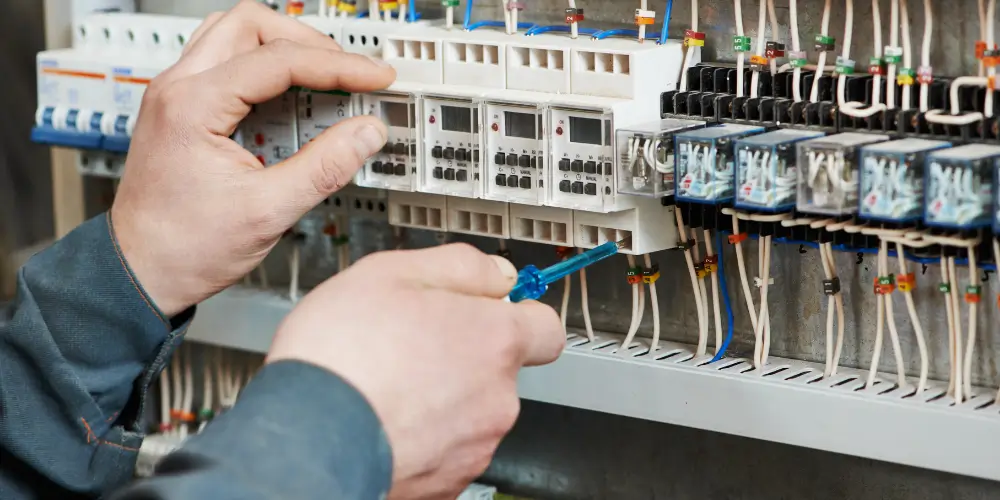
Common EICR outcomes for plastic consumer units (what usually triggers each code)
- C3 (upgrade recommended): plastic unit is intact, no heat damage, terminations are sound – but metal is preferred for fire containment (especially in higher-risk setups).
- C2 (urgent): heat marks, melting, brittle/cracked enclosure near live parts, loose/overheating signs, or inadequate containment risk.
- C1 (immediate danger): burning/charred parts, exposed live conductors, severe overheating/arcing evidence.
- FI (further investigation): suspected overheating/loose connections where inspection/testing can’t confirm safety without deeper checks.
This alone will improve quality massively.
When does a plastic consumer unit become a fire risk?
A plastic enclosure becomes a concern when heat or arcing is already happening. Common triggers:
- loose or overheated terminals inside the unit
- discoloration/brown marks, melted plastic, burning smell
- cracked/brittle enclosure (age/heat damage)
- poor installation location (limited ventilation, combustible surroundings)
If these are present, the unit may be coded C2 or C1 depending on severity.
Top 7 reasons plastic boards get coded
The 7 most common reasons a plastic consumer unit gets coded on an EICR
- Heat damage around MCBs/RCBOs (brown marks / distortion)
- Loose tails / loose main switch terminations (classic overheating cause)
- Cracked or brittle enclosure near live parts (age/impact/heat)
- Poor siting (combustible surface, cramped cupboard, poor ventilation)
- Signs of arcing (black soot marks, buzzing, intermittent power issues)
- Missing/incorrect blanks (gaps that expose accessible live parts)
- General poor workmanship (untidy conductors, damaged insulation, non-credible alterations)
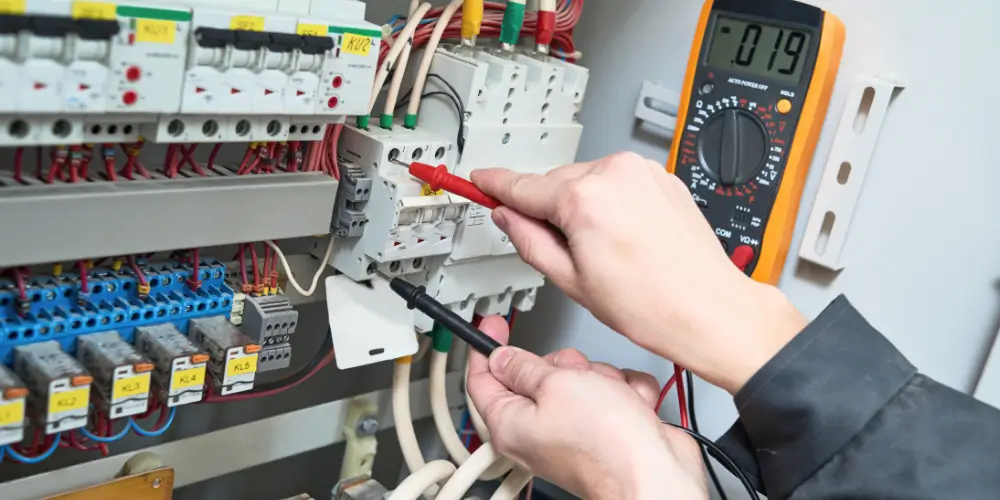
Metal vs Plastic Consumer Units
BS 7671 (18th Edition) strongly favours non-combustible consumer unit enclosures (typically metal) in many domestic settings because they help contain fire and hot debris if a fault occurs.
Modern domestic consumer units are normally expected to have a non-combustible enclosure, commonly metal, to help contain fire if a fault occurs inside the unit.
This requirement came from Amendment 3 to BS 7671 and is now part of modern wiring regulation expectations for new or replacement consumer units in domestic premises.
This does not mean every existing plastic consumer unit automatically fails an EICR. Existing installations are assessed based on condition, risk, age, location, installation quality and signs of deterioration.
A plastic consumer unit may still be recorded as satisfactory if it is safe and no relevant defects are found.

Are Plastic Consumer Units Still Legal?
Plastic consumer units are not automatically illegal just because they are plastic.
Many older homes still have plastic consumer units. During an EICR, the electrician will assess whether the unit is safe for continued use.
A plastic consumer unit becomes a concern where there are issues such as:
- heat damage
- burning marks
- cracked enclosure
- missing blanks
- exposed live parts
- loose connections
- poor cable entry
- poor location
- signs of arcing
- unsuitable alterations
- evidence of overheating
If none of these issues are present, the unit may not fail. However, upgrading to a modern metal consumer unit may still be recommended for improved fire containment and compliance evidence.
Should landlords replace plastic consumer units?
Landlords must ensure electrics are safe and maintained. A plastic consumer unit may be acceptable if it’s safe and tested, but upgrading to metal is often recommended if:
- the unit is heat damaged, cracked, or poorly installed
- EICR returns C2/C1/FI linked to the board or its condition
- you want stronger compliance evidence for agents/insurers
- the property is higher risk (HMOs, older wiring, repeated faults)
See Our full guide on landlord electrical safety certificate rules.
How to Prepare for an EICR Without DIY Electrical Work
How to reduce the chance of a failed visit (without DIY)
Do not open, repair or alter a consumer unit yourself. Consumer units contain live electrical components and should only be inspected internally by a competent electrician using safe isolation procedures.
- Make the consumer unit accessible (not boxed in, not blocked by storage).
- Ensure the electrician can access the meter area and main switch.
- If the property is tenanted, arrange access to all rooms and notify about short interruptions.
- Have any previous EICR handy (helps spot repeat issues and saves time).
- If you’ve had tripping/burning smells, mention it before the visit so testing is planned properly.
Plastic Consumer Unit in a Rental Property
A landlord does not automatically have to replace a plastic consumer unit just because it is plastic.
However, the landlord must take EICR findings seriously. If the report gives a C1, C2 or FI observation connected to the consumer unit, the report will normally be unsatisfactory and remedial action or further investigation will be needed.
If the report gives C3 only, this is usually improvement recommended rather than an automatic fail.
For rental properties, the safest approach is:
- complete C1 issues immediately
- complete C2 remedial work urgently
- complete FI investigation without delay
- consider C3 upgrades where they improve safety and future compliance
- keep all remedial certificates and EICR records
How Much Does It Cost to Replace a Plastic Consumer Unit in London?
Most consumer unit upgrades in London vary based on circuits and protection required. Consumer Unit Cost usually depends on:
- number of circuits / complexity
- whether RCBOs, SPD, or other protection is needed
- condition of existing wiring and tails
- access and isolation requirements (tenanted homes often take longer)
A simple consumer unit upgrade usually costs less than a replacement that also needs fault finding, remedial wiring work or earthing and bonding upgrades.
For an accurate quote, provide clear photos of the existing consumer unit, number of circuits, property type and any recent EICR observations.
Plastic Consumer Unit Under Stairs or in Escape Route
A plastic consumer unit may attract more concern if it is located in a higher-risk position, such as:
- under stairs
- in an escape route
- in a cupboard with combustible storage
- near the only exit route
- in a poorly ventilated area
- in a tenanted property with limited access control
- where there is visible heat damage or previous overheating
The location alone does not always decide the code, but it can affect the electrician’s risk assessment.
If the consumer unit is plastic, old, damaged and positioned in an escape route or under stairs, the chance of a stronger EICR observation increases.
Frequently Asked Questions
Will a plastic consumer unit automatically fail an EICR?
No. It’s coded based on safety, condition, installation, and fire risk – material alone doesn’t automatically fail.
What EICR code is given for a plastic consumer unit?
Often C3 (recommend upgrade) if otherwise safe, but C2/C1/FI if defects or evidence of overheating is found.
Do landlords have to replace plastic consumer units?
Not automatically – landlords must keep electrics safe. Replacement is usually recommended when risk or defects exist, or to strengthen compliance.
How long does an EICR take?
Most homes take a few hours depending on size, circuits, and access.
Can you replace the consumer unit and do EICR at the same time?
Often yes – if access and safe isolation is possible. Any faults found may require additional remedial work.
Is a plastic consumer unit a C2?
Not automatically. A plastic consumer unit may be coded C2 only where the electrician identifies a potentially dangerous condition, such as heat damage, cracking, exposed parts, loose connections or serious fire risk.
Is a plastic consumer unit a C3?
It may be coded C3 where the unit is plastic but otherwise safe, and the electrician recommends improvement or replacement with a modern metal consumer unit.
What code is a plastic consumer unit on an EICR?
The code depends on risk. It may be no code, C3, C2, C1 or FI depending on condition, location and defects found.
Are plastic consumer units legal?
Existing plastic consumer units are not automatically illegal. They are assessed during an EICR based on condition and safety. New or replacement domestic consumer units are normally expected to be non-combustible, commonly metal.
Do plastic consumer units need to be replaced?
Not always. Replacement is usually recommended where the unit is damaged, heat-affected, poorly installed, unsafe, or where the client wants stronger compliance evidence.
Can a plastic consumer unit pass an EICR?
Yes. A plastic consumer unit can pass an EICR if it is safe, intact, correctly installed and no relevant defects are found.
Does a landlord have to replace a plastic consumer unit?
Not automatically. A landlord should follow the EICR outcome. C1, C2 or FI observations need action, while C3 is normally improvement recommended.
Conclusion
A plastic consumer unit does not automatically fail an EICR. The electrician should assess the actual condition, safety risk, location, installation quality and any signs of overheating, damage or exposed live parts.
A plastic consumer unit may receive C3 if improvement is recommended but no immediate or potential danger is found. It may receive C2 where there is a potentially dangerous condition, and C1 where immediate danger is present. FI may be used where further investigation is needed.
For landlords and property managers, the safest route is to act on any C1, C2 or FI observations quickly and consider upgrading older plastic consumer units where this improves safety, compliance evidence and fire containment.