
Is an electrical safety certificate a legal requirement? Yes. In England, landlords must make sure the fixed electrical installation in a rented property is inspected and tested at least every 5 years by a properly qualified person. The document landlords usually call an “electrical safety certificate” is normally the Electrical Installation Condition Report, known as an EICR.
Many landlords also ask, “does a landlord have to have an electrical safety certificate?”. In practice, this refers to the same requirement for a valid Electrical Installation Condition Report (EICR) confirming that the fixed electrical installation in the rental property has been inspected and tested for safety.
If you’re renting out in London, having an up-to-date EICR is one of the fastest ways to protect yourself from:
- enforcement action (especially after tenant complaints)
- insurance problems after an incident
- delays in letting / renewals because agents request the certificate
Last Updated: 2026
Reviewed By: London Safety Certificate Compliance Team
Table of Contents
Quick Answer: Do Landlords Need an Electrical Safety Certificate?
| Question | Answer |
|---|---|
| Do landlords need an electrical safety certificate in England? | Yes. Landlords must have the fixed electrical installation inspected and tested at least every 5 years by a properly qualified person. |
| What document is normally used? | An Electrical Installation Condition Report, commonly called an EICR. |
| Is PAT testing the same thing? | No. PAT testing covers portable appliances, not the fixed electrical installation. |
| What happens if the EICR is unsatisfactory? | C1, C2 or FI observations usually require remedial work or further investigation. |
| How long does a landlord EICR last? | Usually up to 5 years, unless the report recommends an earlier inspection. |
Does a landlord have to have an electrical safety certificate?
In most cases, yes. Landlords renting out property in England must ensure the fixed electrical installation is safe and inspected regularly by a qualified electrician.
Although many people refer to this as an electrical safety certificate, the official document used for landlord compliance is the Electrical Installation Condition Report (EICR).
The inspection confirms that the wiring, consumer unit, and electrical circuits in the property have been tested for safety.
Keeping an up-to-date EICR helps landlords:
- demonstrate compliance with safety regulations
- identify electrical hazards early
- provide documentation if requested by tenants or councils
- reduce the risk of electrical faults causing harm or damage
What counts as the “electrical safety certificate”? (EICR explained)
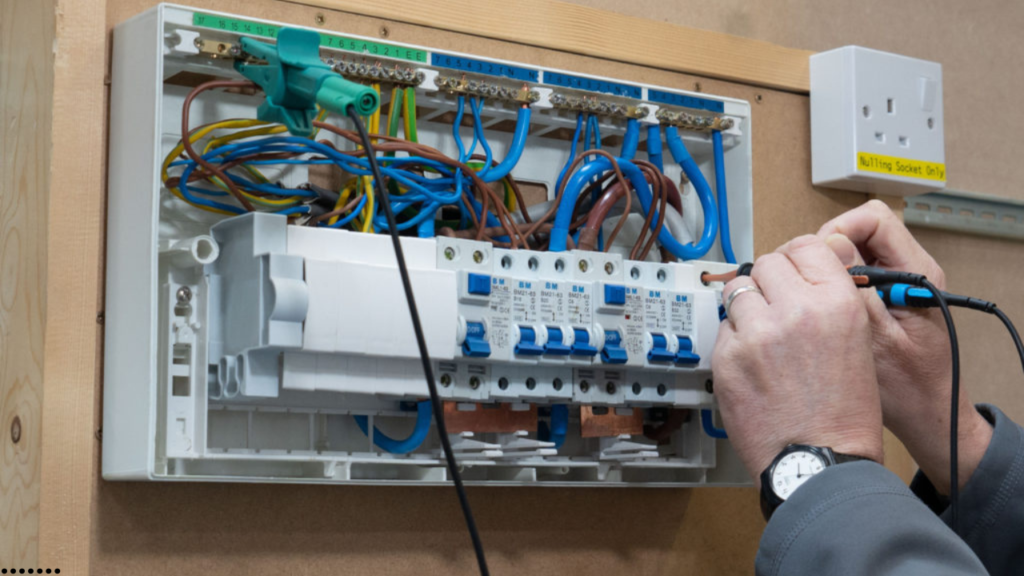
For landlords, the “electrical safety certificate” is normally the EICR. It is a formal report produced after an electrician inspects and tests the fixed wiring and electrical installation, including:
- consumer unit / distribution board
- earthing and bonding
- fixed circuits (lighting, sockets, showers, cooker circuits, etc.)
- signs of overheating, damage, deterioration, unsafe DIY alterations
- test results (recorded against circuits)
Important: an EICR is not the same thing as:
- PAT testing (portable appliances like kettles, fridges, extension leads)
- a minor works certificate (small electrical changes)
- an Electrical Installation Certificate (EIC) (new installation/major alteration)
If a letting agent asks for the “electrical certificate ”, they mean: send the latest EICR PDF.
Which landlords must have it? (private rented sector, HMOs, letting agents)
In England, the requirement mainly applies to private rented sector landlords – including:
- single-let flats and houses
- HMOs (licensed or not, depending on the property type)
- landlords using managing agents / letting agents (agents will still request it)
- companies and portfolio landlords (same duty, bigger risk if something goes wrong)
Who usually asks for it:
- letting agents before marketing a property
- tenants after faults or repeated tripping
- councils during licensing/enforcement checks
- insurers after electrical incidents
If you’re unsure: If the property is being let as a rented home in England, landlords should treat a current EICR as a core compliance document and check the recommended next inspection date carefully.
Landlords in the private rented sector are required to ensure electrical installations are safe and meet legal safety standards. For more information on rental property regulations, check the UK Government regulations on renting out a property.

How often do landlords need an EICR? (5 years + earlier if recommended)
Most rentals in England follow a maximum of 5 years, but there’s a key rule landlords miss:
The EICR can require a shorter interval.
Your report includes a recommended next inspection date (for example 1 year, 3 years, or 5 years). If the report recommends sooner, you should follow that.
You may also need a new EICR earlier if:
- you’ve done major electrical works
- there’s flood/fire damage or serious electrical faults
- repeated tripping, burning smells, overheating, or unreliable circuits
- change of occupancy in a high-risk property setup
Landlord shortcut: check the “Next inspection due” recommendation on your last EICR – that date is what agents and councils look at first.
See our full Guide on How long is an EICR valid.
Why an electrical safety certificate matters for landlords
An EICR is more than just a compliance document. It helps landlords detect electrical issues before they become serious safety risks.
Regular electrical inspections can help:
- identify wiring faults early
- prevent electrical fires or electric shock hazards
- maintain safe living conditions for tenants
- demonstrate responsible property management
- reduce disputes related to electrical safety
Electrical inspections also provide landlords with documented proof that the property’s electrical installation has been checked and maintained.
Tenant & local authority rules (how/when to provide copies)
Landlords must be able to provide the EICR when requested. Best practice (and what agents/councils expect) is:
- Give a copy to existing tenants after inspection/testing (keep proof)
- Give a copy to new tenants before they move in (or at the start of the tenancy)
- If the local authority requests it, provide it promptly
- Keep the latest report saved in a “landlord compliance pack” with dates
Pro tip: email the PDF to the tenant/agent and keep the sent email as evidence. It’s the simplest proof you complied.
What happens if a landlord does not have an electrical safety certificate?
If a landlord cannot provide a valid EICR when requested, it may create several problems.
Local authorities may investigate if tenants report electrical safety concerns. Letting agents may also refuse to market a property without the correct compliance documentation.
Without a valid EICR landlords may face:
- delays when renting the property
- complaints from tenants about electrical safety
- enforcement checks from local authorities
- complications during insurance claims following electrical incidents
Keeping the latest report available helps avoid these situations.
What happens if the EICR is unsatisfactory? (C1/C2/C3/FI + remedials)
If the EICR requires remedial work or further investigation, landlords must usually ensure the work is completed within 28 days or within the shorter period stated in the report. Written confirmation should be kept with the property records and supplied where required.
GOV.UK states landlords must give tenants proof that installations and equipment have been inspected, tested and checked, and the guidance confirms the 5-year inspection requirement. An EICR can be Satisfactory or Unsatisfactory based on observation EICR codes.
What the codes mean (simple)
- C1 = Danger present (needs immediate action)
- C2 = Potentially dangerous (urgent remedial work)
- C3 = Improvement recommended (not an immediate fail on its own)
- FI = Further investigation needed (can make the report unsatisfactory)
What landlords should do next
- Fix C1/C2 items quickly (these are the ones councils/agents care about)
- If FI, book further investigation and then remedials
- Get written evidence of remedial works completed (certificate/invoice)
- If needed, arrange a re-test / updated EICR once defects are cleared
Most unsatisfactory EICR reports can be resolved through remedial work. The bigger risk for landlords is delaying repairs or failing to keep evidence that the work was completed.
Who can carry out an EICR? (competent person / qualifications)
Can any electrician do an EICR? Not every electrician should be doing landlord EICRs. You need a competent person – someone trained and experienced in inspection and testing, using calibrated test equipment.
What to check before you book
- they carry out EICRs regularly (not “once in a while”)
- they can explain results and codes clearly
- they provide a proper PDF report with schedules + recommended next inspection date
- they can handle remedials if the report is unsatisfactory
Avoid: “visual-only” inspections. A real EICR includes testing where safe/possible and records limitations if not. When selecting an electrician for the EICR, ensure they are a qualified, competent professional. Look for electricians with a recognized qualification, such as NICEIC certification, which ensures they meet industry standards for inspection and testing.
How to prepare the property (access, shutdown, keys, occupancy)
This section reduces failed visits and speeds up your certificate.
Before the appointment
- Ensure clear access to the consumer unit and main meter area
- Make sure the electrician can access all rooms (including lofts/outbuildings if applicable)
- Arrange keys with tenants/agents (don’t assume they’ll be home)
- Notify tenants there may be short power interruptions during testing
On the day
- Have someone available to provide access and confirm any limitations
- If a circuit can’t be isolated or a room is locked, it must be recorded as a limitation — and you may need a return visit
Landlord tip: Most “limitations” happen because nobody arranged keys or access. Fix that and your EICR is smoother.
Costs in London + what affects price
London EICR pricing depends on work involved, not just postcode.
Main factors that affect cost
- property size and number of circuits
- number of consumer units / boards
- age/condition of wiring
- access issues (tenanted properties, locked rooms, no keyholder)
- whether remedials are required after the report
How to avoid extra costs
- clear access to the consumer unit
- ensure full property access on the day
- send any previous EICR if you have it
- book remedials quickly if the report fails (prevents repeat admin + delays)
For a clear quote, landlords should provide the number of bedrooms, property type, postcode, number of consumer units if known, and whether the property is occupied.
Frequently Asked Questions
-
How quickly can I get my EICR certificate in London?
Usually the report is issued after inspection/testing. Timing depends on property access and whether issues require remedials.
-
Can you do the EICR while tenants are in the property?
Yes – but access to all rooms and the consumer unit must be arranged. Tenants should expect brief power interruptions.
-
Do I need an EICR for a new tenancy?
If your EICR is in date and still valid (and no major changes/issues), you can use the existing one. Agents often request it before marketing.
-
Will my property fail if it has an older consumer unit?
Not automatically. The outcome depends on safety, condition, and test results. Any safety defects will be coded (C1/C2/FI).
-
What if the tenant refuses access?
Record the refusal, keep proof of your attempts to arrange access, and rebook when access is available. Limitations may be recorded if inspection/testing can’t be completed.
-
What documents should I keep after an EICR?
Keep the EICR PDF, any remedial certificates/invoices, and proof you sent the report to the tenant/agent.
-
Can the same electrician do remedials after a failed EICR?
Yes – and it’s usually faster. Just ensure you receive written evidence of works completed.
-
Does a landlord legally have to provide an electrical safety certificate?
Yes. In England, landlords in the private rented sector must ensure the electrical installation is inspected and tested regularly. The document provided as evidence is usually the Electrical Installation Condition Report (EICR).
-
What happens if a landlord fails to obtain an electrical safety certificate?
If landlords do not arrange electrical inspections when required, they may face complaints from tenants, enforcement action from local authorities, or difficulties demonstrating electrical safety after an incident.
-
How can a landlord find a qualified electrician for an EICR inspection?
Landlords should choose electricians experienced in inspection and testing who provide full EICR reports with circuit schedules and test results.
Conclusion
An electrical safety certificate is a legal requirement for landlords in England, and the document used in practice is the EICR for the fixed electrical installation. Keep your EICR in date (usually up to 5 years, or sooner if your report recommends), keep evidence of any remedials, and make sure you can provide the report to tenants/agents/council when requested. If you need a Residential EICR in London, we can book a suitable slot, manage tenant access properly to avoid limitations, and deliver your report quickly.