
An EICR test procedure is the inspection and testing process used to assess the condition of a property’s fixed electrical installation. During an EICR, a qualified electrical inspector checks the consumer unit, circuits, earthing, bonding, protective devices, visible wiring condition and test results before issuing an Electrical Installation Condition Report.
The purpose of an EICR is not simply to say whether the electrics “work”. It is to assess whether the fixed electrical installation is safe for continued use, whether defects are present, whether further investigation is needed, and whether the report should be marked satisfactory or unsatisfactory.
This guide explains what happens during an EICR test, what electricians normally check, what tests may be carried out, whether the power needs to be turned off, how observations are coded, and what happens after the report is issued. If you want the full meaning of the report itself explained first, read our guide on what is an EICR certificate.
Last updated: 2026
Reviewed by: London Safety Certificate Compliance Team
Key Takeaways
- An EICR test procedure includes visual inspection, electrical testing, review of circuits, checking of earthing and bonding, assessment of protective devices, recording of test results and issuing of a final report.
- The inspection focuses on the fixed electrical installation, not portable appliances.
- The electrician may need to turn off power to some circuits during parts of the inspection and testing.
- The final EICR report is usually marked satisfactory or unsatisfactory.
- C1, C2 and FI observations usually make an EICR unsatisfactory.
- C3 observations are improvement recommendations and do not normally make the report unsatisfactory on their own.
- For rented homes in England, landlords must have electrical installations inspected and tested at least every five years by a properly qualified person.
- For commercial premises, the inspection interval is normally risk-based and should follow the recommendation of a competent person.
Table of Contents
Quick Answer: What Is the EICR Test Procedure?
The EICR test procedure is a structured electrical inspection and testing process. It usually starts with property details, access planning and a visual inspection. The inspector then checks the consumer unit, earthing and bonding, visible wiring condition, accessories and protective devices. Where safe and accessible, electrical tests are carried out and the results are recorded. Any defects are coded as C1, C2, C3 or FI, and the final EICR report confirms whether the installation is satisfactory or unsatisfactory.
EICR Test Procedure Step by Step
| Step | What Happens | Why It Matters |
|---|---|---|
| 1 | Booking details and property access are confirmed | Helps the inspector understand property type, access, circuits and any special requirements |
| 2 | A visual inspection is carried out | Identifies visible damage, deterioration, missing labels, overheating or unsafe conditions |
| 3 | The consumer unit or distribution board is checked | Confirms condition of the board, protective devices, labelling and circuit arrangements |
| 4 | Earthing and bonding are assessed | Checks important safety arrangements used to reduce electric shock risk |
| 5 | Electrical tests are carried out where safe and accessible | Helps assess circuit condition, insulation, polarity, continuity and protective device operation |
| 6 | Test results are recorded | Creates a written record of the electrical condition at the time of inspection |
| 7 | Observations are coded | Defects are classified as C1, C2, C3 or FI depending on risk |
| 8 | The EICR report is issued | Confirms whether the installation is satisfactory or unsatisfactory |
You can also see our EICR report example to understand6 how the final report is usually presented.
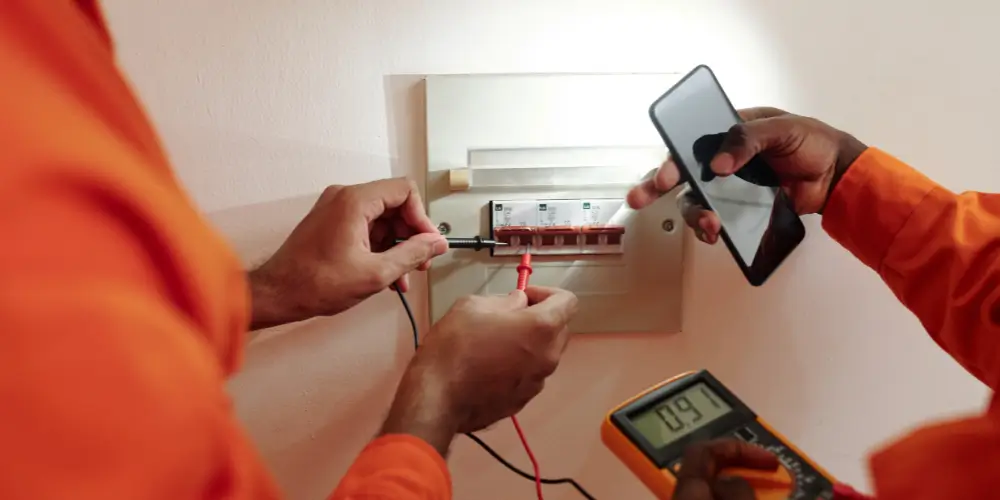
What Happens Before the EICR Inspection?
Before the EICR appointment, the booking team or electrician may ask for basic information about the property. This can include the property type, number of bedrooms or units, whether the property is residential or commercial, whether the building is occupied, and whether access is available to the consumer unit, meter area, plant rooms or distribution boards.
For rental properties, landlords and agents should make sure access has been agreed with the tenant. For commercial premises, it may also be necessary to agree a shutdown window, arrange keys, notify staff, or confirm access to restricted electrical areas.
Good preparation helps reduce delays, limitations and repeat visits.
Initial Visual Inspection
The visual inspection is usually the first major part of the EICR process. The inspector looks at visible and accessible parts of the fixed electrical installation before carrying out detailed testing.
This may include checking:
- consumer unit or distribution board condition
- visible signs of overheating or damage
- broken sockets, switches or accessories
- loose or damaged fittings
- signs of poor electrical alterations
- missing or unclear circuit labels
- exposed live parts
- suitability of protective devices
- signs of deterioration, age or wear
- earthing and bonding arrangements where visible
The visual inspection helps the electrician identify obvious safety issues before testing begins. If a serious danger is found, the inspector may need to make the situation safe or record it as a high-risk observation.
Consumer Unit and Distribution Board Checks
The consumer unit or distribution board is one of the most important areas checked during an EICR. It controls and protects the circuits in the property, so its condition matters.
The inspector may check:
- whether the board is accessible
- whether circuits are labelled correctly
- condition of breakers, RCDs, RCBOs or fuses
- signs of overheating, burning or damage
- suitability of the enclosure
- signs of poor workmanship or unsafe alterations
- presence and condition of main switches
- whether protective devices appear suitable for the circuits served
In commercial premises, there may be multiple distribution boards, sub-mains, plant room boards and three-phase supplies. These can make the EICR more complex and may require more time, planning and access.
Earthing and Bonding Checks
Earthing and bonding are key parts of electrical safety. They help reduce the risk of electric shock and support the safe operation of protective devices.
During an EICR, the inspector may assess:
- main earthing conductor
- main protective bonding
- bonding to gas and water services where applicable
- earthing arrangements
- continuity of protective conductors
- visible condition of earthing and bonding connections
Poor or missing earthing and bonding can be serious because it may affect how safely the installation responds during a fault. If the inspector identifies a concern, it may be recorded with a suitable EICR classification code depending on the risk.
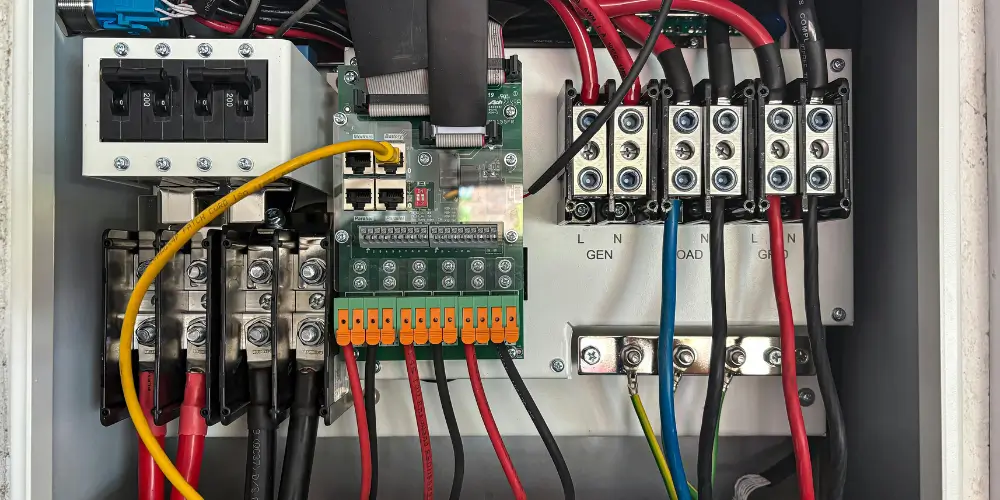
What Electrical Tests Are Carried Out During an EICR?
An EICR normally includes inspection and testing. The exact tests depend on the installation, access, safety conditions and professional judgement of the competent person.
Common electrical test methods used during an EICR may include:
| Test / Check | What It Helps Assess |
|---|---|
| Continuity testing | Whether protective conductors and circuit conductors are continuous |
| Insulation resistance testing | Whether insulation condition may indicate deterioration, damage or leakage |
| Polarity checks | Whether conductors are connected in the correct arrangement |
| Earth fault loop impedance testing | Whether protective devices are likely to disconnect within required conditions |
| RCD testing | Whether RCDs or RCBOs operate correctly where fitted |
| Protective bonding checks | Whether bonding arrangements are present and suitable |
| Circuit schedule review | Whether circuits are identified, recorded and tested properly |
| Functional checks | Whether certain devices operate as expected where applicable |
These tests should only be carried out by a competent person using suitable equipment. This page explains what happens during the inspection; it is not a DIY electrical testing guide.
EICR Test Checklist: What Is Usually Checked?
An EICR test checklist usually covers the fixed electrical installation and the condition of circuits, accessories, protective devices and test results.
| Area Checked | Examples |
|---|---|
| Consumer unit / distribution board | Condition, labelling, protective devices, signs of overheating or damage |
| Earthing and bonding | Main earthing conductor, protective bonding, visible connection condition |
| Circuits | Lighting, sockets, cooker, shower, heating and other fixed circuits |
| Accessories | Sockets, switches, isolators and visible fittings |
| RCD / RCBO protection | Operation and suitability where applicable |
| Wiring condition | Visible damage, deterioration, unsafe alterations or poor workmanship |
| Test results | Circuit readings recorded in the schedule of test results |
| Limitations | Any areas not accessed, isolated or tested are recorded |
| Observations | Defects and issues are coded as C1, C2, C3 or FI |
| Final result | The report is marked satisfactory or unsatisfactory |
What Is Not Usually Covered by an EICR?
An EICR focuses on the fixed electrical installation. It does not replace every other safety check.
An EICR does not normally replace:
- PAT testing for portable appliances
- gas safety checks
- fire risk assessments
- fire alarm servicing
- emergency lighting testing
- manufacturer servicing of specialist equipment
- full investigation of every concealed cable route
- remedial work unless separately agreed
This matters because many landlords and business owners assume one electrical report covers everything. It does not. An EICR is a key fixed wiring safety report, but it is only one part of a proper property compliance file.
Will the Power Be Turned Off During an EICR?
Some parts of an EICR may require circuits to be isolated for safe inspection and testing. In simple terms, yes, some power interruption may be needed.
The level of disruption depends on:
- property type
- number of circuits
- condition of the installation
- access to the consumer unit or distribution boards
- whether the property is occupied
- whether the inspection is residential or commercial
- whether safe isolation is possible
- whether shutdown windows are agreed in advance
For a normal residential EICR, disruption is usually limited, but circuits may still need to be switched off during testing.
For commercial EICRs, planning is more important. Shops, offices, restaurants, warehouses and multi-site businesses may need testing arranged around opening hours, staff access, equipment shutdowns or landlord/tenant access arrangements.
Residential EICR Test Procedure
For a residential property, the EICR process is usually more straightforward than a large commercial site. The inspector normally checks the consumer unit, circuits, earthing, bonding, visible wiring condition, sockets, switches and test results.
Residential EICRs are common for:
- landlords
- homeowners
- letting agents
- HMOs
- property buyers
- property sellers
- rented flats and houses
For landlords in England, electrical installations in rented properties must be inspected and tested at least every five years by a properly qualified person. If the report requires remedial or further investigative work, the required action normally needs to be completed within 28 days or within the shorter period stated in the report.
Commercial EICR Test Procedure
A commercial EICR usually requires more planning than a domestic inspection. Commercial properties often have more circuits, more distribution boards, higher loads, specialist equipment, restricted areas, tenants, staff, plant rooms, three-phase supplies and shutdown issues.
Commercial EICRs are common for:
- offices
- shops
- restaurants
- warehouses
- schools
- surgeries
- care settings
- industrial units
- mixed-use buildings
- managed commercial properties
For commercial premises, there is not one single legal inspection interval that fits every building. The duty is to maintain electrical systems so they are safe, and the inspection frequency should be risk-based. The next inspection date is normally recommended by the competent person, taking account of the installation, use, environment, maintenance history and previous findings. For a fuller breakdown of legal duties, inspection intervals and business premises, read our guide on commercial property EICR requirements.
What Is an EICR Schedule of Test Results?
The schedule of test results is the part of the EICR report where circuit test information is recorded. It helps show how the electrical installation performed during inspection and testing.
A schedule of test results may include details such as:
- circuit reference
- circuit description
- protective device details
- cable information where recorded
- test readings
- RCD test information where applicable
- remarks or observations linked to circuits
For property owners and landlords, this section can look technical. The important thing is that it supports the overall report outcome and gives a record of the circuits tested at the time of inspection.
What Are Limitations During an EICR?
A limitation is something that prevents part of the installation from being fully inspected or tested. Limitations are common where access is restricted, circuits cannot be safely isolated, equipment cannot be switched off, or areas are locked or concealed.
Examples of possible limitations include:
- no access to a room or locked area
- no access to a distribution board
- circuits not safely isolatable at the time
- business-critical equipment that cannot be turned off
- concealed cables or inaccessible parts of the installation
- lack of previous circuit information
- unsafe conditions preventing further testing
Limitations should be recorded on the report. If important areas cannot be inspected or tested, a follow-up visit or further investigation may be needed. Limitations should be recorded on the report, and you can read our full guide on operational limitations during an EICR to understand when they may affect the inspection result.
How Are EICR Observations Coded?
If the inspector identifies a defect, damage, deterioration, unsafe condition or issue requiring further investigation, it is recorded as an observation and given a classification code.
The main EICR codes are:
| Code | Meaning | Effect on Report |
|---|---|---|
| C1 | Danger present | Unsatisfactory |
| C2 | Potentially dangerous | Unsatisfactory |
| C3 | Improvement recommended | Usually satisfactory if C3 only |
| FI | Further investigation required | Unsatisfactory until investigated |
A report with C1, C2 or FI observations is normally unsatisfactory. A report with only C3 observations can still be satisfactory because C3 is an improvement recommendation rather than a danger or potential danger. The main EICR codes are explained in detail in our full guide to EICR codes.
What Happens After the EICR Test?
After the inspection and testing are complete, the electrician prepares the EICR report. The report should show what was inspected, what was tested, what limitations applied, what observations were recorded, which codes were used and whether the overall result is satisfactory or unsatisfactory.
| Report Result | What It Means | Next Step |
|---|---|---|
| Satisfactory | No C1, C2 or FI observations recorded | Keep the report and follow the next inspection date |
| Unsatisfactory with C1 | Danger present | Immediate action required |
| Unsatisfactory with C2 | Potentially dangerous | Arrange urgent remedial work |
| Unsatisfactory with FI | Further investigation required | Investigation is needed before safety can be confirmed |
| C3 only | Improvement recommended | Improvement advised, but the report may still be satisfactory |
If the report is satisfactory, keep it with the property records and note the recommended next inspection date.
If the report is unsatisfactory, do not ignore it. Review the observations, arrange remedial work or further investigation, and keep written evidence of any work completed. If the report is unsatisfactory, do not ignore it. Review the observations, arrange remedial work or further investigation, and read our guide on what landlords should do after an unsatisfactory EICR.
How Long Does an EICR Test Take?
The time required depends on the size, condition and complexity of the installation.
A small flat with easy access may take less time than a large house, HMO, shop, restaurant, office, warehouse or commercial unit with several distribution boards. Older installations, poor labelling, blocked access, no shutdown window and previous defects can also increase the time needed.
The best answer is that an EICR should take as long as is reasonably required to inspect, test and record the installation properly. A rushed report is not useful if it misses important safety information or records poor limitations.
For a more detailed breakdown by property type and access issues, read our guide on how long an EICR takes to do.
How Often Should an EICR Be Carried Out?
For rented homes in England, landlords must have the electrical installation inspected and tested at least every five years by a properly qualified person. For owner-occupied homes, commercial properties and other premises, the interval depends on the type of installation, use, environment, condition, maintenance history and previous report recommendation.
For commercial premises, the clean rule is:
Follow the recommended next inspection date on the previous EICR unless a competent person advises otherwise.
An EICR may be needed sooner if there has been:
- flood or water damage
- fire damage
- repeated tripping
- overheating
- major alteration work
- change of occupancy
- change of business use
- insurance request
- lease requirement
- safety concern or incident
For a fuller explanation of inspection intervals, landlord rules and report expiry, read our guide on how long an EICR is valid for in the UK.
Who Can Carry Out an EICR?
An EICR should be carried out by a competent person with the knowledge, training, experience and equipment needed to inspect and test electrical installations safely.
For landlords, the person carrying out the inspection must be properly qualified. For commercial and more complex installations, the inspector should have suitable experience with the type of premises being inspected.
A normal handyman, builder or unqualified person should not be used for an EICR. Electrical inspection and testing requires proper competence because incorrect testing, poor judgement or missed defects can create serious safety risks. For more detail on competence, training and inspector requirements, read our guide on who is qualified to carry out an EICR.
Frequently Asked Questions
What is the EICR test procedure?
The EICR test procedure is the process used to inspect and test the fixed electrical installation in a property. It usually includes visual inspection, checking the consumer unit, assessing earthing and bonding, testing circuits where safe and accessible, recording observations and issuing an EICR report.
What happens during an EICR test?
During an EICR test, the electrician checks the condition of the fixed wiring, consumer unit, circuits, protective devices, earthing, bonding, accessories and test results. Any defects are recorded and coded as C1, C2, C3 or FI.
Is an EICR test the same as an electrical safety certificate?
Many people call it an electrical safety certificate, but the correct document is usually an Electrical Installation Condition Report. It records the condition of the fixed electrical installation and confirms whether the report is satisfactory or unsatisfactory.
Will my electricity be turned off during an EICR?
Some circuits may need to be turned off during parts of the inspection and testing. The amount of disruption depends on the property, number of circuits, access and whether the inspection is residential or commercial.
Can I stay in the property during an EICR test?
In many residential properties, you can usually remain in the property, but there may be temporary power interruptions. The electrician will need safe access to the consumer unit, sockets, switches and other relevant parts of the installation.
What does an electrician check during an EICR?
The electrician may check the consumer unit, circuit protection, earthing, bonding, visible wiring condition, sockets, switches, accessories, signs of damage, test results and any issues affecting electrical safety.
What tests are carried out during an EICR?
Common tests may include continuity testing, insulation resistance testing, polarity checks, earth fault loop impedance testing, RCD testing where applicable, and verification of earthing and bonding. The exact testing depends on the installation and site conditions.
What is an EICR test checklist?
An EICR test checklist is a practical list of areas usually checked during the inspection, such as the consumer unit, earthing, bonding, circuits, accessories, RCD protection, wiring condition, test results, limitations and observations.
How long does an EICR test take?
The time depends on the size, age and complexity of the property. A small residential property may take less time than a large house, HMO or commercial premises with multiple distribution boards and circuits.
How often should an EICR be carried out?
For rented homes in England, an EICR is required at least every five years. For commercial premises and other properties, the interval should be risk-based and normally follows the next inspection date recommended by a competent person.
What happens if an EICR is unsatisfactory?
If the EICR is unsatisfactory, the report will usually contain C1, C2 or FI observations. The defects should be reviewed, remedial work or further investigation arranged, and evidence of completed work kept with the property records.
Does an EICR include PAT testing?
No. An EICR checks the fixed electrical installation. PAT testing relates to portable electrical appliances and is a separate type of inspection/testing.