
Fire door inspection frequency depends on the type of building, the use of the door, the level of risk, the fire risk assessment and whether the building falls under specific fire door check requirements.
For multi-occupied residential buildings over 11 metres in England, responsible persons must carry out checks of communal fire doors at least every 3 months and use best endeavours to check flat entrance fire doors at least every 12 months.
For workplaces, HMOs, commercial buildings and lower-rise residential buildings, there is not one single inspection interval that fits every door in every property. Fire doors must be kept in suitable working order, and the inspection frequency should be based on the fire risk assessment, building use, occupancy, door location, condition and how heavily the door is used. The Regulatory Reform (Fire Safety) Order 2005 requires fire safety facilities, equipment and devices to be maintained where necessary, which is why regular fire door checks are a key part of fire safety management.
If you manage flats, an HMO, workplace, shop, office, care setting, school, restaurant, warehouse or mixed-use building, fire doors should not be left unchecked. A damaged, poorly closing or badly maintained fire door may fail to restrict the spread of fire and smoke when it is needed most.
Last updated: 2026
Reviewed by: London Safety Certificate Compliance Team
Key Takeaways
- Fire door inspection frequency depends on building type, building height, door location, usage, risk and the fire risk assessment.
- In multi-occupied residential buildings over 11 metres in England, communal fire doors must be checked at least every 3 months.
- In those buildings, responsible persons must use best endeavours to check flat entrance fire doors at least every 12 months.
- Workplaces and commercial premises should have a suitable risk-based inspection and maintenance system.
- HMOs may require more careful fire door management because of shared accommodation, licensing conditions and local authority expectations.
- High-traffic doors, damaged doors and doors in higher-risk areas should be checked more frequently.
- A simple visual check is not the same as a full fire door inspection.
- Common defects include excessive gaps, damaged seals, poor closing, loose hinges, damaged glazing, missing signage and doors being wedged open.
- Records of inspections, defects and remedial work should be kept as part of the fire safety file.
Table of Contents
Quick Answer: How Often Should Fire Doors Be Checked?
| Property / Door Type | Fire Door Check Frequency |
|---|---|
| Multi-occupied residential building over 11m — communal fire doors | At least every 3 months |
| Multi-occupied residential building over 11m — flat entrance fire doors | Best endeavours check at least every 12 months |
| Other multi-occupied residential buildings with common parts | Follow the fire risk assessment and provide residents with fire door safety information |
| Workplaces and commercial premises | Risk-based checks under the fire risk assessment and maintenance system |
| HMOs | Follow the fire risk assessment, HMO licence conditions and local authority requirements |
| High-traffic doors | Check more frequently because damage and wear are more likely |
| Damaged or altered doors | Inspect immediately before relying on the door for fire protection |
| After building work or refurbishment | Inspect after work is completed to confirm the door set has not been affected |
These are general guide points. The correct inspection schedule should be based on the building’s fire risk assessment, legal duties, door condition, occupancy, use and any specific requirements that apply to the premises.
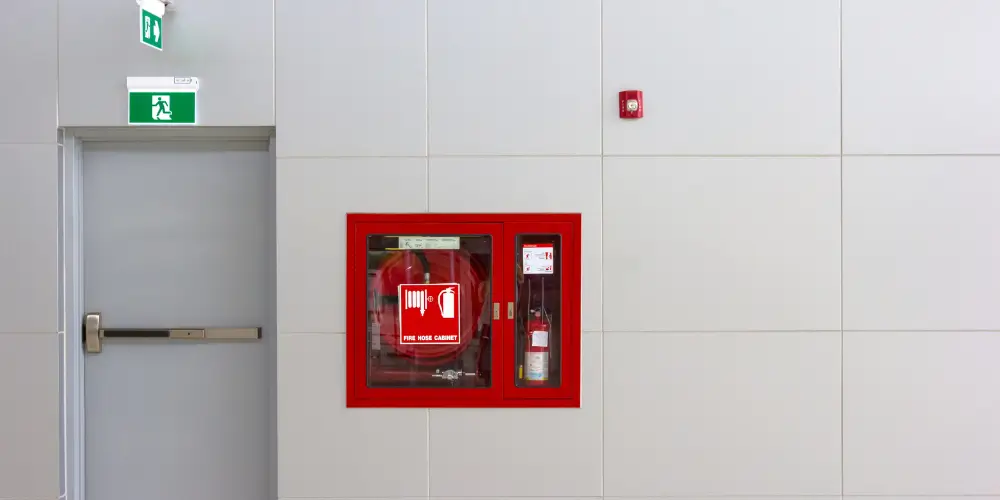
Why Fire Door Inspection Frequency Matters
Fire doors are designed to help slow the spread of fire and smoke. They protect escape routes, separate higher-risk areas and help keep protected routes usable during an emergency.
A fire door only works properly if the whole door set is in good condition. That includes the door leaf, frame, seals, hinges, closer, latch, glazing, signage and surrounding gaps. A fire door that is damaged, poorly fitted, held open, missing seals or failing to close properly may not provide the level of protection expected.
Regular checks help identify defects before they become serious. They also create an inspection record that shows the responsible person has taken fire door safety seriously.
Fire Door Inspection Frequency by Property Type
Fire door checks are not the same for every building. A quiet internal door in a low-risk area does not face the same level of wear as a communal corridor door in a block of flats, a busy workplace door, a school corridor door or a fire door in a commercial kitchen.
| Property Type | Practical Fire Door Inspection Approach |
|---|---|
| Flats over 11m | Quarterly communal door checks and annual best-endeavours flat entrance door checks |
| Lower-rise flats | Risk-based checks, resident information and maintenance under the fire risk assessment |
| HMOs | Regular checks based on risk assessment, licence conditions and property layout |
| Workplaces | Inspection frequency based on fire risk assessment and usage |
| Shops and offices | Check more often where doors are used daily by staff, customers or contractors |
| Schools and care settings | More frequent checks may be needed because of occupancy, vulnerability and traffic |
| Restaurants and commercial kitchens | Fire doors near higher-risk areas should be monitored carefully |
| Warehouses and industrial units | Door condition should be checked where impact, traffic or equipment movement may cause damage |
| Mixed-use buildings | Landlord, tenant and managing agent responsibilities must be clear |
Fire Doors in Flats and Buildings Over 11 Metres
Fire door inspection rules are especially important in multi-occupied residential buildings over 11 metres in England.
For these buildings, the responsible person must:
- check all fire doors in communal areas at least every 3 months
- use best endeavours to check flat entrance fire doors at least every 12 months
- provide residents with information about the importance of fire doors
This applies to multi-occupied residential buildings over 11 metres in height. The purpose is to make sure communal and flat entrance doors are not ignored, especially where doors form part of the building’s fire safety arrangements.
Flat entrance doors are important because they help separate individual flats from communal corridors, stairs and escape routes. Communal fire doors are also important because they help protect shared escape routes and limit the spread of smoke and fire through common areas.
Communal Fire Doors vs Flat Entrance Doors
Communal fire doors and flat entrance fire doors have different roles.
| Door Type | What It Protects | Typical Check Requirement in Buildings Over 11m |
|---|---|---|
| Communal fire door | Shared corridors, stairways, lobbies and common parts | At least every 3 months |
| Flat entrance fire door | Separation between a flat and common escape route | Best endeavours check at least every 12 months |
| Plant room or service cupboard fire door | Higher-risk service areas | Risk-based checks depending on use and location |
| Bin store or refuse area fire door | Higher-risk waste/storage area | Risk-based checks, often more frequent where damage risk is high |
| Commercial kitchen or high-risk room door | Higher fire-load or operational risk area | Risk-based checks and maintenance |
The more important the door is to escape routes or compartmentation, and the more heavily it is used, the more important regular checking becomes.
Fire Doors in Workplaces and Commercial Premises
For workplaces and commercial premises, fire door inspection frequency should be decided through the fire risk assessment and the building’s maintenance arrangements.
Commercial premises may include:
- offices
- shops
- restaurants
- warehouses
- schools
- surgeries
- care settings
- factories
- industrial units
- mixed-use buildings
- managed commercial properties
The responsible person must make sure that fire safety arrangements are suitable and that fire safety measures are maintained where required. Fire doors are commonly part of those fire safety measures because they help protect escape routes and slow the movement of fire and smoke.
A small office with low foot traffic may not need the same inspection frequency as a busy school, care home, restaurant, HMO or warehouse. The inspection schedule should reflect real risk.
Fire Doors in HMOs
HMOs need careful fire door management because they often include shared kitchens, corridors, bedrooms, escape routes and multiple occupants. Fire doors in HMOs are commonly subject to fire risk assessment findings, licensing expectations and local authority requirements.
In an HMO, fire door inspection frequency may depend on:
- number of occupants
- property layout
- number of storeys
- location of kitchens and higher-risk rooms
- shared escape routes
- fire risk assessment findings
- local authority licence conditions
- previous defects or damage
- tenant behaviour and door misuse
A landlord or managing agent should not assume one generic rule is enough for every HMO. The fire risk assessment and any licence conditions should be checked carefully.
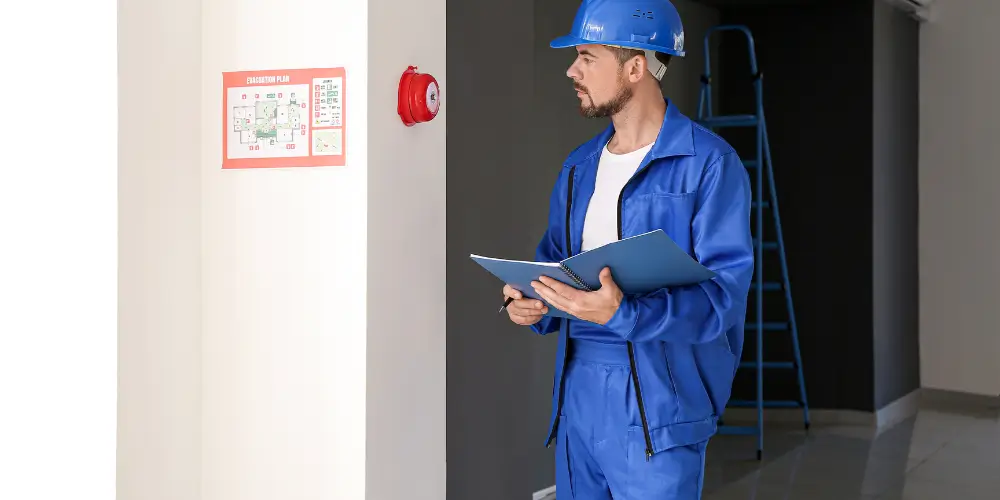
Visual Checks vs Full Fire Door Inspections
A visual check is not the same as a full fire door inspection.
A visual check is a basic look at obvious issues. It may identify damage, missing signage, a door wedged open, a door not closing, or visible gaps.
A full fire door inspection is a more detailed check of the door set and its components. This is usually carried out by a competent person with suitable fire door knowledge.
| Check Type | What It Means | Who May Carry It Out |
|---|---|---|
| Basic visual check | Looks for obvious damage, obstruction or failure to close | Responsible person, trained staff, property manager or competent person |
| Routine management check | Regular check of condition, closing action, signage, gaps and obvious defects | Trained staff, responsible person or managing agent |
| Full fire door inspection | Detailed inspection of door leaf, frame, closer, hinges, seals, glazing, gaps and compliance issues | Competent fire door inspector or suitably trained person |
| Post-damage inspection | Check after impact, alteration, fire, vandalism or building work | Competent person |
| Remedial verification | Confirms that defects have been corrected properly | Competent person or qualified contractor depending on work |
Simple checks can help identify obvious problems early, but they should not replace a proper fire door inspection where a detailed assessment is needed.
What Should Be Checked During a Fire Door Inspection?
A fire door inspection should assess the complete fire door set, not just the door leaf. If you are unsure whether the door is actually a fire door, read our guide on how to identify a fire door. This includes checking the condition of the door leaf and frame, door gaps, hinges, door closer, latch and lock operation, intumescent seals, smoke seals where fitted, fire-rated glazing, signage, threshold condition, and any signs of damage, warping, distortion or poor repairs. This includes checking whether the door closes correctly, and you can read our guide on whether fire doors need to be self-closing.
The inspection should also confirm whether the fire door closes fully, whether it is being wedged or held open incorrectly, whether it has been altered, and whether it is suitable for its location. A fire door is only effective when the full assembly works together, because even a good-quality door leaf can fail if the frame, closer, gaps, seals or ironmongery are incorrect.

Common Fire Door Defects
Fire door defects are common, especially in busy buildings. Common issues include:
- door does not close fully
- door does not latch
- excessive gaps around the door
- damaged intumescent strips
- missing or damaged smoke seals
- loose or missing hinge screws
- damaged frame
- damaged glazing
- missing signage
- unsuitable repairs
- holes drilled through the door
- door wedged open
- closer disconnected or adjusted incorrectly
- damaged threshold
- incompatible ironmongery
- fire door altered without proper assessment
Any fire door defect should be recorded and prioritised according to risk. Some issues may need urgent action because they directly affect the ability of the door to resist smoke or fire. If the issue is excessive gaps around the frame or threshold, read our guide on how to fix fire door gaps.
Who Is Responsible for Fire Door Inspections?
The responsible person is usually the person or organisation with control over the premises or relevant part of the premises. This may be a landlord, building owner, employer, managing agent, facilities manager, freeholder, management company or other duty-holder.
In commercial premises, the responsible person is often the employer or person in control of the workplace.
In blocks of flats, the responsible person may be the building owner, managing agent, freeholder or management company for common parts.
In HMOs, the landlord or manager will usually have important fire safety responsibilities.
In multi-occupied buildings, responsibility can be shared. For example, a landlord may control communal areas while tenants control some internal areas. The fire risk assessment and legal arrangements should make responsibilities clear.
For flats and communal areas, read our guide on who is responsible for fire doors in flats.
Who Can Inspect Fire Doors?
Fire doors can be checked at different levels.
Basic visual checks may be carried out by a responsible person, property manager, caretaker or trained staff member if they understand what to look for and know when to escalate defects.
Detailed inspections should be carried out by a competent person with suitable fire door knowledge, training and experience. A competent inspector should understand door sets, gaps, seals, hinges, closers, frames, glazing, signage and common failure points.
A poor inspection can miss defects that affect life safety, so detailed inspections should not be treated as a tick-box exercise.
How Often Should Communal Fire Doors Be Checked?
In multi-occupied residential buildings over 11 metres in England, communal fire doors must be checked at least every 3 months. This includes fire doors in common parts such as corridors, stairways, lobbies and shared escape routes.
For other buildings, communal fire door checks should still be risk-based. A communal door in a busy building may need more frequent checks than a door in a low-traffic area.
More frequent checks may be needed where:
- doors are used heavily
- doors are repeatedly damaged
- residents or occupants wedge doors open
- doors protect important escape routes
- the building has vulnerable occupants
- previous inspections found defects
- there is frequent contractor movement
- the door is close to a higher-risk area
How Often Should Flat Entrance Fire Doors Be Checked?
In multi-occupied residential buildings over 11 metres in England, responsible persons must use best endeavours to check flat entrance fire doors at least every 12 months.
“Best endeavours” means the responsible person should take reasonable steps to arrange access and carry out the checks. If access is refused or cannot be arranged, the attempts should be recorded.
Flat entrance door checks are important because these doors help protect common escape routes from smoke and fire if a fire starts inside a flat.
How Often Should Workplace Fire Doors Be Inspected?
Workplace fire door inspection frequency should be based on the fire risk assessment. There is no single universal rule that every workplace fire door must be inspected on the same fixed timetable.
The responsible person should consider:
- number of occupants
- public access
- vulnerable people
- escape route layout
- door usage level
- history of defects
- fire risk assessment findings
- type of work carried out
- likelihood of impact or damage
- maintenance history
A workplace with heavy door use, customer access, vulnerable occupants, kitchens, plant rooms or high fire risk may need more frequent checks than a low-risk office.
How Often Should Fire Doors in Schools and Care Settings Be Checked?
Schools, nurseries, care homes and healthcare settings often need closer fire door management because of occupancy, vulnerability, staffing, daily use and evacuation challenges.
Inspection frequency should be based on the fire risk assessment and the specific building use. Doors in corridors, sleeping areas, stairways, kitchens, plant rooms and protected escape routes may need closer attention.
Where doors are used heavily or are likely to be damaged, checks should be more frequent.
Should Fire Door Checks Be Recorded?
Yes. Fire door checks should be recorded.
A clear inspection record helps show:
- when the door was checked
- who checked it
- what was inspected
- what defects were found
- what action was taken
- when remedial work was completed
- whether follow-up inspection was needed
Records are useful for audits, managing agents, landlords, insurers, fire risk assessments and enforcement checks.
A fire door register can also help larger buildings track every door, location, rating, condition and remedial status.
What Happens If a Fire Door Fails Inspection?
If a fire door fails inspection, the defect should be recorded and action should be taken according to the seriousness of the issue.
Examples of urgent defects may include:
- door does not close
- door does not latch
- excessive gaps
- missing or damaged seals
- damaged glazing
- damaged frame
- missing hinges or loose fixings
- unauthorised alterations
- door wedged open
- holes or damage through the door leaf
The responsible person should arrange suitable remedial work and keep evidence that the issue was corrected. If the defect affects escape routes or compartmentation, it should not be delayed unnecessarily.
Fire Door Inspection for London Properties
London properties often include older flats, converted buildings, HMOs, mixed-use premises, commercial units, shops, offices and managed residential blocks. These buildings can have complex fire door responsibilities because landlords, tenants, managing agents and business owners may control different parts of the premises.
A fire door inspection can help identify whether doors are damaged, poorly closing, incorrectly fitted, missing seals, poorly labelled or affected by unauthorised alterations.
London Safety Certificate provides fire door inspection and fire door certificate services for landlords, managing agents, property managers, business owners and responsible persons across London.
Frequently Asked Questions
How often do fire doors need to be inspected?
Fire door inspection frequency depends on the building, risk and door type. In multi-occupied residential buildings over 11 metres in England, communal fire doors must be checked at least every 3 months and flat entrance fire doors should be checked at least every 12 months using best endeavours.
How often should communal fire doors be checked?
In multi-occupied residential buildings over 11 metres in England, communal fire doors must be checked at least every 3 months. In other buildings, the frequency should be based on the fire risk assessment and usage.
How often should flat entrance fire doors be checked?
In multi-occupied residential buildings over 11 metres in England, responsible persons must use best endeavours to check flat entrance fire doors at least every 12 months.
Do fire doors in buildings over 11 metres need quarterly checks?
Yes, communal fire doors in multi-occupied residential buildings over 11 metres in England must be checked at least every 3 months.
Do workplaces need fire door inspections?
Yes, workplaces should have fire door checks as part of their fire safety management and maintenance arrangements. The frequency should be based on the fire risk assessment, door use and building risk.
Do HMOs need regular fire door checks?
Yes. HMOs should have regular fire door checks based on the fire risk assessment, property layout, occupancy and any HMO licence or local authority requirements.
Who is responsible for fire door inspections?
The responsible person is usually the landlord, building owner, employer, managing agent, facilities manager, freeholder, management company or person in control of the premises or relevant area.
What should be checked on a fire door?
A fire door inspection should check the door leaf, frame, gaps, hinges, closer, latch, seals, glazing, signage, condition, obstructions and whether the door closes properly.
Is a visual check the same as a full fire door inspection?
No. A visual check looks for obvious issues, while a full fire door inspection is a more detailed check of the complete door set by a competent person.
What happens if a fire door fails inspection?
The defect should be recorded, prioritised and repaired. Serious defects affecting closing, gaps, seals, glazing, frame condition or escape route protection should be dealt with quickly.
Can tenants inspect their own fire doors?
Tenants can report visible problems, but the responsible person should make sure appropriate fire door checks are carried out and recorded. Detailed inspections should be done by a competent person.
Should fire door inspection records be kept?
Yes. Records should show when checks were carried out, who completed them, what defects were found and what remedial action was taken.