
Responsibility to use a fire extinguisher falls to the nearest able-bodied person who can operate the correct extinguisher and still maintain a clear escape route. In workplaces, trained staff or assigned fire marshals take charge, with supervisors ensuring competency and safety. At home, a designated adult should act while others evacuate. Untrained or medically limited individuals should not intervene. After action, equipment must be tagged, refilled, and incidents reported; continue for details on roles and procedures.
Key Takeaways
- The nearest able-bodied, trained person should retrieve and use the extinguisher if doing so is safe and quick.
- Designated staff or fire marshals are responsible for operating extinguishers in workplaces in accordance with policy and incident command.
- Untrained occupants should prioritise evacuation and only attempt to use an extinguisher if instinctive, the fire is small, and escape routes are clear.
- Home responsibility typically falls to a primary adult to fight small fires, with a secondary adult managing evacuation and alarms.
- Employers must provide, maintain, and assign extinguisher users, ensure training, and document incidents and equipment status.
Table of Contents
Decision Rule: Who Should Grab the Fire Extinguisher
When a fire is discovered, responsibility for retrieving the extinguisher should default to the nearest able-bodied person who can do so without compromising their own safety or blocking emergency egress; this rule balances immediacy and prudence. The decision hinges on proximity, physical capability, awareness of extinguisher type, and an intact escape route. If the nearest person is untrained or uncertain, they should still fetch the device only if it can be done instinctively and quickly; otherwise, notifying others and initiating evacuation takes precedence. Supervisors or designated safety officers assume responsibility in structured settings when present and available.
In multi-occupant spaces, clear verbal commands reduce hesitation: one person fetches while another calls emergency services and guides occupants away. The rule discourages lone attempts at complex suppression that risk entrapment. Ultimately, the decision rule prioritises human life and orderly response, ensuring that attempts to control a minor fire donot create greater harm.

Safety Checklist: When to Attempt Using a Fire Extinguisher
Why attempt suppression at all? The decision to use an extinguisher should hinge on safety, effectiveness, and the preservation of life and property. A concise checklist helps determine when attempting suppression is reasonable and prudent.
- Assess fire size: small, contained flames versus spreading fire indicate feasibility.
- Confirm escape route: a clear, unobstructed path must exist for immediate withdrawal.
- Alarm and call: the fire alarm should be activated and emergency services notified first.
- Consider smoke and toxins: visibility, heat, and odor levels must be tolerable without respirators.
- Use appropriate extinguisher: the class must match the fire type and be in working condition. Check out What Fire Extinguisher for Electrical Fire: Complete Safety Guide.
If any checklist item fails, suppression should not be attempted; evacuation and professional response take priority. The checklist supports calm, quick decisions, reducing unnecessary risk while maximising the chance of successful, controlled intervention.
Choosing Users: Physical Ability, Training, and Authority
Select individuals to use a fire extinguisher based on clear criteria: physical capability to operate the device and move quickly, formal training in extinguisher types and techniques, and the authority or responsibility assigned by workplace policy or incident command. Candidates should be able to lift and aim the extinguisher, maintain balance, and retreat rapidly if conditions worsen. Training must cover extinguisher selection, PASS technique (pull, aim, squeeze, sweep), limitations of extinguishers, scene assessment, and safe approach/withdrawal distances.
Consider medical conditions, mobility limits, or stress responses that impair performance; these are legitimate disqualifiers. Verify competency periodically through drills and refresher training, and document participation and assessment outcomes. Ascertain that chosen users understand communication protocols, evacuation triggers, and when to defer to emergency responders. Assigning responsibility should prioritise safety: minimise exposure, match task complexity to ability, and preserve clear lines of accountability without creating undue burden on unqualified personnel.
Workplace Roles: Employers, Fire Marshals, and Trained Staff
Several workplace roles share responsibility for fire extinguisher readiness and use: employers set policy and provide equipment, designated fire marshals oversee training and response coordination, and trained staff perform initial extinguisher actions within their competence. Responsibilities are distributed clearly to guarantee timely, safe responses and regulatory compliance.
- Employers: supply suitable extinguishers, maintain inspections, document policies.
- Fire marshals: develop procedures, schedule drills, lead incident coordination.
- Trained staff: operate extinguishers when safe, follow PASS technique, report incidents.
- Maintenance personnel: service and replace units, guarantee signage and accessibility.
- Supervisors: verify staff training, enforce evacuation priorities, liaise with emergency services.
Each role has defined limits: employers balance provision and oversight, marshals manage strategy but defer to emergency services for major incidents, trained staff act only when risks are controllable. Clear assignment of duties, regular refresher training, and documented procedures reduce confusion and improve outcomes during small fires while protecting people and property. Explore the Types of Fire and Fire Extinguisher Guide for Workplace Safety.
Home and Family: Who Should Act and How to Assign Roles
Who should act during a home fire and how roles are assigned depend on household composition, the layout of the dwelling, and occupants’ abilities; responsibilities should be simple, explicit, and practiced. A designated primary adult should handle a portable extinguisher if the fire is small, contained, and escape routes remain clear. A secondary adult can assist by alerting others, calling emergency services, and guiding evacuation. Children, elderly, and mobility-impaired household members should never attempt fire suppression; their role is immediate evacuation and meeting at a prearranged safe location. Pets should be contained only if doing so does not delay people. Assignments ought to reflect proximity to exits, strength to operate equipment, and familiarity with the home’s extinguisher locations. Regular brief, realistic drills reinforce who retrieves extinguishers, who calls 911, and who guarantees everyone exits. Periodic review after changes in household makeup or layout keeps roles current and reduces hesitation during an actual emergency.
Schools, Restaurants, and Public Venues: Role-by-Role Guidance
Moving from household settings to larger public spaces changes responsibilities: schools, restaurants, and venues require clearer, role-specific plans because of greater occupant numbers, varying staff training, and fixed evacuation routes. In these settings, responsibility divides by role and function rather than by household ties. Administrators set policy and guarantee resources; managers coordinate response priorities; front-line staff act as immediate responders within safe limits; safety officers maintain equipment; and attendees follow evacuation directions.
- Administrators: define who may use extinguishers and when, and guarantee policies align with codes.
- Managers: make split-second decisions to prioritise evacuation versus fire suppression.
- Front-line staff: perform limited, safe extinguisher use for small, contained fires if trained.
- Safety officers/maintenance: inspect, tag, and replace extinguishers and signage.
- Patrons and students: evacuate promptly and report hazards; avoid interfering with responders.
This role-focused approach balances prompt action with overall occupant safety and regulatory compliance.
Training & Drills: What Designated Extinguisher Users Must Know
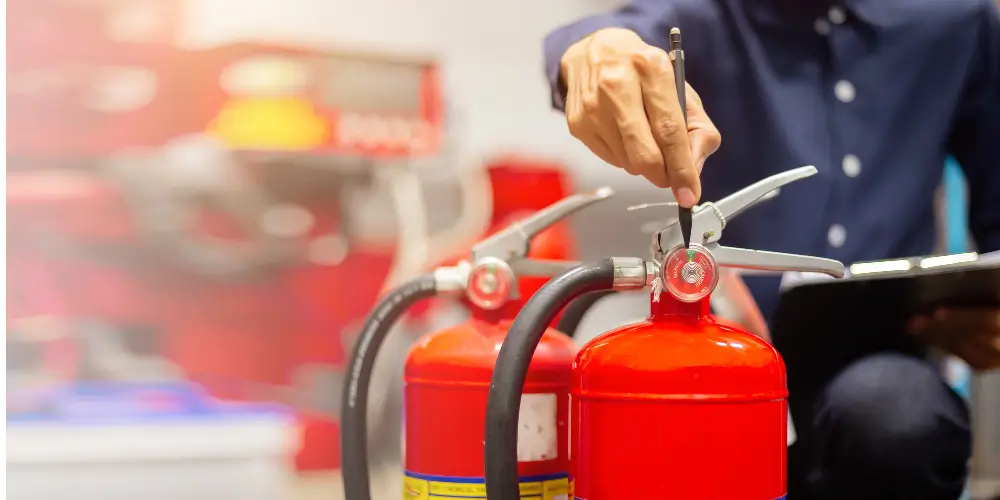
Designated extinguisher users must complete focused training and participate in regular drills to ensure they can assess the size of a fire, select the correct extinguisher type, and operate equipment safely under pressure. Training should cover fire classes, extinguisher mechanics, limits of portable devices, and recognition of situations requiring immediate evacuation or professional response. Instruction combines classroom explanation with hands-on practice using inert training units or supervised live demonstrations.
Drills simulate realistic scenarios: visibility reduction, noise, obstacles, and team coordination to reinforce roles such as communicator, extinguisher operator, and safety observer. Emphasis is placed on risk assessment, confirming a clear exit route, evaluating fire behavior, and deciding when to withdraw.
Training frequency must reflect workplace hazards and staff turnover; brief refresher sessions between thorough annual trainings help retain skills. Documentation of attendance and competency checks supports ongoing readiness. Ultimately, well-structured training and realistic drills guarantee designated users act decisively and safely when small, containable fires occur.
After the Event: Inspection, Refill, Reporting, and Legal Steps
After an incident regardless of whether the fire was extinguished by trained staff or by automatic systems attention shifts to post-event responsibilities that restore readiness and address liability. The responsible party must verify extinguishers are inspected, documented, and returned to service or replaced. A clear chain of custody for used equipment, timely refilling or replacement, and formal reporting to management and insurers preserve safety and legal compliance. Records support regulatory inspections and potential claims; eyewitness statements and maintenance logs reduce ambiguity. External agencies may need to be notified if damage or injuries occur.
- Secure the scene and confirm the fire is fully out before handling equipment.
- Tag and remove discharged extinguishers for professional inspection and recharge.
- Complete incident reports detailing time, cause, users, and actions taken.
- Notify building management, insurers, and, if required, fire authorities.
- Retain maintenance and witness records to meet legal and regulatory requirements under the Regulatory Reform (Fire Safety) Order 2005.
These steps protect occupants, maintain readiness, and limit organizational liability.
Frequently Asked Questions
Can Bystanders Be Held Liable if They Use an Extinguisher Improperly?
Yes. A bystander can be liable if their improper extinguisher use causes injury, property damage, or worsens the fire; liability depends on local law, negligence standards, foreseeability, and whether actions exceeded reasonable emergency assistance.
Are Pets Ever Considered in Extinguisher Decision-Making?
Yes. Reasonable caretakers consider pets when deciding to use an extinguisher, prioritising human safety first, then attempting rescue or evacuation; extinguisher use may be modified to avoid smoke, chemical exposure, or blocking escape routes for animals.
What if Multiple People Reach the Extinguisher at Once?
They should quickly establish a clear leader and task: one person operates the extinguisher while others assist with evacuation, call emergency services, or remove flammables. Decisions prioritise safety, capability, and minimising exposure to smoke or heat. Here is the guide for How to Use Fire Extinguishers Safely.
Do Insurance Companies Require Documented Extinguisher Training?
Yes; insurers often expect documented extinguisher training, especially for businesses in high-risk settings. The claimant’s organization typically must provide records of training, inspection, and maintenance to support coverage and risk-mitigation claims.
Can Children Be Trained to Use Extinguishers Safely?
Yes. Children can be trained to use extinguishers safely, provided instruction is age‑appropriate, focuses on recognition and escape prioritisation, uses demonstrations and supervised hands‑on practice, and guarantees physical ability and adult oversight during actual use.
Conclusion
Responsibility for using a fire extinguisher rests with designated, capable individuals who can safely assess and act. Employers, fire marshals, trained staff, or assigned household members should intervene only when the size of the fire, escape routes, and personal safety permit. Schools, restaurants, and public venues must assign roles, provide training and drills, and enforce limits on authority. After-use inspection, refill, incident reporting, and legal notifications guarantee accountability, readiness, and compliance with safety obligations.