
Fire extinguishers are provided to help deal with small fires in controlled situations, but they should never replace evacuation, emergency planning or professional fire safety management.
A fire extinguisher should only be used if it is safe to do so, the fire is small, the correct extinguisher is available, the user has been trained, and there is a clear escape route. If there is any doubt, people should raise the alarm, leave the building and call the emergency services.
This guide does not provide a DIY firefighting tutorial. Instead, it explains what landlords, employers, responsible persons, managing agents and businesses need to know about safe extinguisher use, staff training, correct extinguisher selection, maintenance and fire risk assessment duties.
Key Takeaways
- Identify the class of fire to choose the appropriate type of fire extinguisher.
- Use the PASS method: Pull, Aim, Squeeze, and Sweep.
- Aim the extinguisher nozzle at the base of the flames, not at the flames themselves.
- Maintain a safe distance of 6-8 feet from the fire when discharging the extinguisher.
- Ensure the fire is completely out and monitor the area for any re-ignition.
Table of Contents
Quick Answer: Where Should You Aim a Fire Extinguisher?
If a trained person is using a suitable fire extinguisher on a small fire, the extinguisher stream is normally aimed at the base of the fire, not the top of the flames.
However, this should only be attempted where:
- the fire is small
- the correct extinguisher type is available
- the person has been trained
- the escape route is clear
- the alarm has been raised
- the user is not putting themselves or others at risk
If the fire is spreading, producing heavy smoke, involves unknown materials, or the person is unsure what to do, evacuation is the safer action.
Fire Extinguishers Are First-Aid Firefighting Equipment
Fire extinguishers are designed for small early-stage fires. They are not intended for tackling large fires, spreading fires or fires involving serious life risk.
A responsible person should make sure fire extinguishers are:
| Requirement | Why It Matters |
|---|---|
| Correct type | Different fires need different extinguishers |
| Suitable location | People must be able to find them quickly |
| Properly maintained | Faulty extinguishers may not work in an emergency |
| Clearly visible | Hidden or blocked extinguishers delay response |
| Matched to risks | Fire risks differ in offices, kitchens, workshops and plant rooms |
| Supported by training | Staff need to know when not to use one |
| Included in the fire risk assessment | Equipment should match the premises risk |
Fire extinguishers should be part of a wider fire safety system that includes alarms, escape routes, emergency lighting, fire doors, staff training and a suitable fire risk assessment.
When Should a Fire Extinguisher Be Used?
A fire extinguisher may only be appropriate where the situation is controlled and low-risk.
Before anyone attempts to use an extinguisher, they should consider:
- Has the fire alarm been raised?
- Is the fire small and contained?
- Is the correct extinguisher available?
- Has the person been trained?
- Is there a safe exit route behind them?
- Is smoke already spreading?
- Could the fire involve electricity, gas, chemicals or cooking oil?
- Could the fire spread quickly?
- Is evacuation the safer option?
If the answer is uncertain, the person should not attempt to fight the fire.
Fire Classes in the UK
Different types of fire need different extinguishers. Using the wrong extinguisher can make the situation worse.
| Fire Class | Common Materials |
|---|---|
| Class A | Solid materials such as paper, wood, textiles and some plastics |
| Class B | Flammable liquids such as petrol, solvents and paints |
| Class C | Flammable gases |
| Class D | Burning metals |
| Class F | Cooking oils and fats |
| Electrical fire risk | Fires involving live electrical equipment |
The fire risk assessment should identify the likely fire types in the premises and help decide what extinguisher provision is suitable.
Types of Fire Extinguishers and Their Uses
Different extinguishers are designed for different risks.
| Extinguisher Type | Common Use |
|---|---|
| Water | Class A fires involving solid materials |
| Foam | Some Class A and Class B fire risks |
| CO₂ | Electrical equipment and some flammable liquid risks |
| Dry powder | Some Class A, B and C risks, depending on setting |
| Wet chemical | Cooking oil and deep fat fryer risks |
| Specialist extinguishers | Metal fires, lithium-ion risks or specialist environments |
The correct extinguisher depends on the premises, fire risk assessment and the hazards present. Do not assume one extinguisher type is suitable for every fire.
Fire Extinguishers for Electrical Fires
Electrical fire risks need careful control. Water should not be used on live electrical equipment.
In many premises, CO₂ extinguishers are commonly provided near electrical equipment because they do not leave the same residue as some other extinguishers and are suitable for certain electrical risks. However, the correct provision should be based on the fire risk assessment and competent fire safety advice.
Examples of electrical fire risk areas include:
- server rooms
- offices with computers
- plant rooms
- switch rooms
- electrical cupboards
- workshops
- retail counters
- commercial premises with electrical equipment
The safest priority is to raise the alarm, evacuate if needed, and only allow trained people to act where it is safe.
Fire Extinguishers for Kitchens and Cooking Oil Fires
WKitchens can create different fire risks from offices or communal corridors.
Cooking oil and fat fires can be especially dangerous. A wet chemical extinguisher may be required where deep fat fryers or cooking oil risks are present.
Kitchen fire safety should consider:
- cooking appliances
- extraction systems
- grease build-up
- cooking oil storage
- staff training
- emergency procedures
- suitable extinguishers
- fire blankets where appropriate
- maintenance and cleaning records
Restaurants, cafés, takeaways, HMOs and commercial kitchens should not rely on generic extinguisher placement. The fire risk assessment should match the actual use of the premises.
Where Should Fire Extinguishers Be Located?
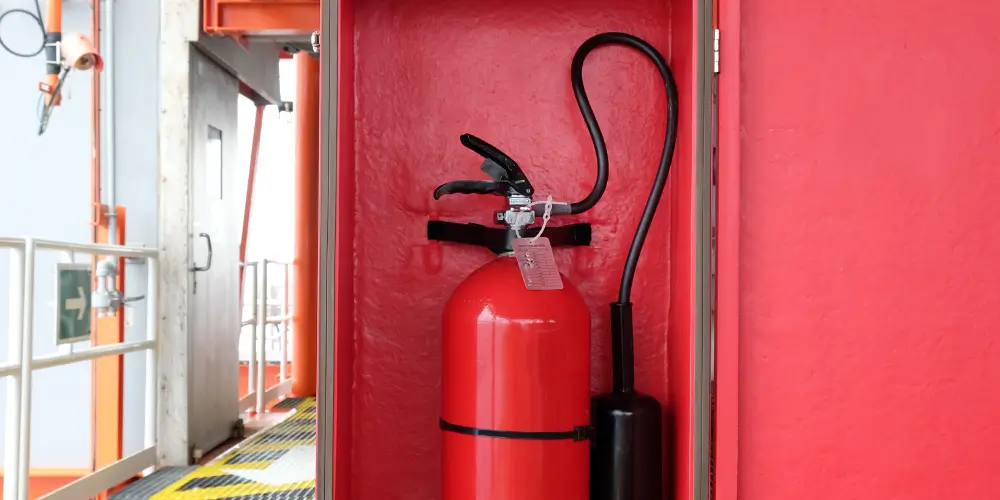
Fire extinguishers should be easy to find and suitable for the risks nearby.
They are commonly positioned:
- near escape routes
- near exits
- close to higher-risk areas
- in corridors or circulation routes
- near kitchens where suitable
- near electrical risk areas where suitable
- in visible and accessible positions
They should not be hidden behind furniture, blocked by storage, placed where they are difficult to reach, or installed without considering the actual fire risk.
Fire Extinguisher Training in the UK
Fire extinguisher training should focus on safe decision-making, not encouraging unnecessary firefighting.
Training should help staff understand:
- when to raise the alarm
- when to evacuate
- when not to use an extinguisher
- which extinguisher types match which fire risks
- why the wrong extinguisher can be dangerous
- how to keep escape routes clear
- how to report missing or damaged extinguishers
- what the workplace emergency plan requires
GOV.UK says new staff should be trained when they start work and employees should be told about new fire risks.
Legal Requirements for Fire Extinguishers and Training
The law does not work by simply saying every premises must have the same number of extinguishers. Fire safety equipment should be suitable for the premises and based on fire risk.
The responsible person should make sure that:
- fire risks are assessed
- suitable fire safety equipment is provided
- staff receive information, instruction and training
- emergency plans are in place
- fire drills are carried out
- equipment is maintained
- defects are recorded and acted on
GOV.UK says you should carry out at least one fire drill per year and record the results as part of the fire safety and evacuation plan.
Fire Extinguisher Maintenance and Inspection
Fire extinguishers should be checked and maintained so they remain ready for use.
Basic checks may include:
- extinguisher is in the correct location
- access is not blocked
- pressure gauge appears acceptable where fitted
- safety pin or tamper seal is intact
- instructions are visible
- extinguisher is not damaged
- extinguisher has not been discharged
- service label is present
- next service date is not overdue
Fire extinguisher maintenance should be handled by a competent person or fire extinguisher servicing provider. BAFE guidance refers to BS 5306-3 for commissioning and maintenance of portable fire extinguishers.
Common Fire Extinguisher Mistakes
Certain missteps can greatly compromise their effectiveness and safety when using fire extinguishers.
Key errors include misidentifying the type of fire, which can lead to using an extinguisher that exacerbates the situation rather than controlling it.
Furthermore, incorrect usage techniques fail to extinguish the fire and pose serious risks to the user and surrounding areas.
Misidentifying Fire Types
Many accidents involving fire extinguishers stem from misidentifying the type of fire they intend to combat. Proper fire safety education recognises various fire classes to guarantee effective and safe extinguishing practices. Misidentifying fire types leads to ineffective fire handling and can exacerbate the situation, causing undue harm and damage.
Here are key points to reflect on:
- Class A fires involve ordinary combustibles such as wood and paper. Water-based or foam extinguishers are effective here, but using a CO2 extinguisher, suitable for Class B fires (flammable liquids), would be ineffective and potentially dangerous.
- Class C fires are electrical in nature. Misusing a water-based extinguisher could conduct electricity and lead to electrocution. Instead, CO2 or dry chemical extinguishers are the safe choices.
- Class D fires involve combustible metals like magnesium. Using a standard ABC extinguisher could cause a violent reaction. Specialised Class D extinguishers are required for these types of fires.
Understanding these distinctions helps prevent common misconceptions and fire classification errors, considerably reducing risks associated with extinguisher misuse.
Incorrect Usage Techniques
In addition to recognising fire types, properly using fire extinguishers is critical to guarantee safety and effectiveness in emergencies. Unfortunately, incorrect extinguisher handling often leads to ineffective techniques, stemming from common user mistakes and misunderstanding fire classes. One notable error is the misuse of an extinguisher type for a fire it’s not intended for, which can exacerbate or fail to suppress it.
| Common Mistake | Consequence |
| Using water on oil fires | Can cause the fire to spread |
| Not reading instructions | Ineffective use or potential misuse under stress |
| Aiming at flames, not base | Fails to tackle the source, allowing the fire to continue |
These errors underscore the importance of familiarising oneself with fire extinguisher myths and operational guidelines before an emergency arises. For instance, a prevalent myth is that all extinguishers work effectively on any fire. This dangerous assumption can lead to catastrophic results. Effective training and a clear understanding of fire classes are essential to utilise fire extinguishers correctly and safely, ensuring they serve their intended purpose during critical moments.
Frequently Asked Questions
Where should you aim a fire extinguisher stream?
A trained person using a suitable extinguisher on a small fire would normally aim at the base of the fire, not the top of the flames. If there is doubt, evacuate and call emergency services.
Should anyone use a fire extinguisher?
No. Fire extinguishers should only be used by trained people where the fire is small, the correct extinguisher is available, the alarm has been raised and there is a clear escape route.
What is the safest action if a fire starts?
The safest action is usually to raise the alarm, leave the building by a safe route and call emergency services. Do not attempt to fight a fire if it is spreading or unsafe.
What type of fire extinguisher is used for electrical fires?
CO₂ extinguishers are commonly used for certain electrical fire risks, but the correct extinguisher provision should be based on the premises fire risk assessment.
Can you use water on an electrical fire?
No. Water should not be used on live electrical equipment because it can create a serious electric shock risk.
Do staff need fire extinguisher training?
Staff should receive suitable fire safety information, instruction and training. Fire extinguisher training should focus on safe decision-making, correct extinguisher selection and when not to fight a fire.
How often should fire extinguishers be checked?
Fire extinguishers should be visually checked regularly and professionally maintained according to the relevant servicing requirements and the premises fire safety management system.
Do fire extinguishers expire?
Fire extinguishers can become unfit for use due to age, pressure loss, discharge, damage or missed servicing. Check the service label and arrange competent maintenance.
Where should fire extinguishers be placed?
They should be visible, accessible, suitable for the risks nearby, and positioned so people can reach them without moving towards unnecessary danger.
Is a fire extinguisher enough for fire safety compliance?
No. Fire extinguishers are only one part of fire safety. Fire risk assessment, alarms, escape routes, emergency lighting, fire doors, staff training and maintenance records may also be needed.