
Fire Risk Assessment London
Fire Risk Assessment London – What it is
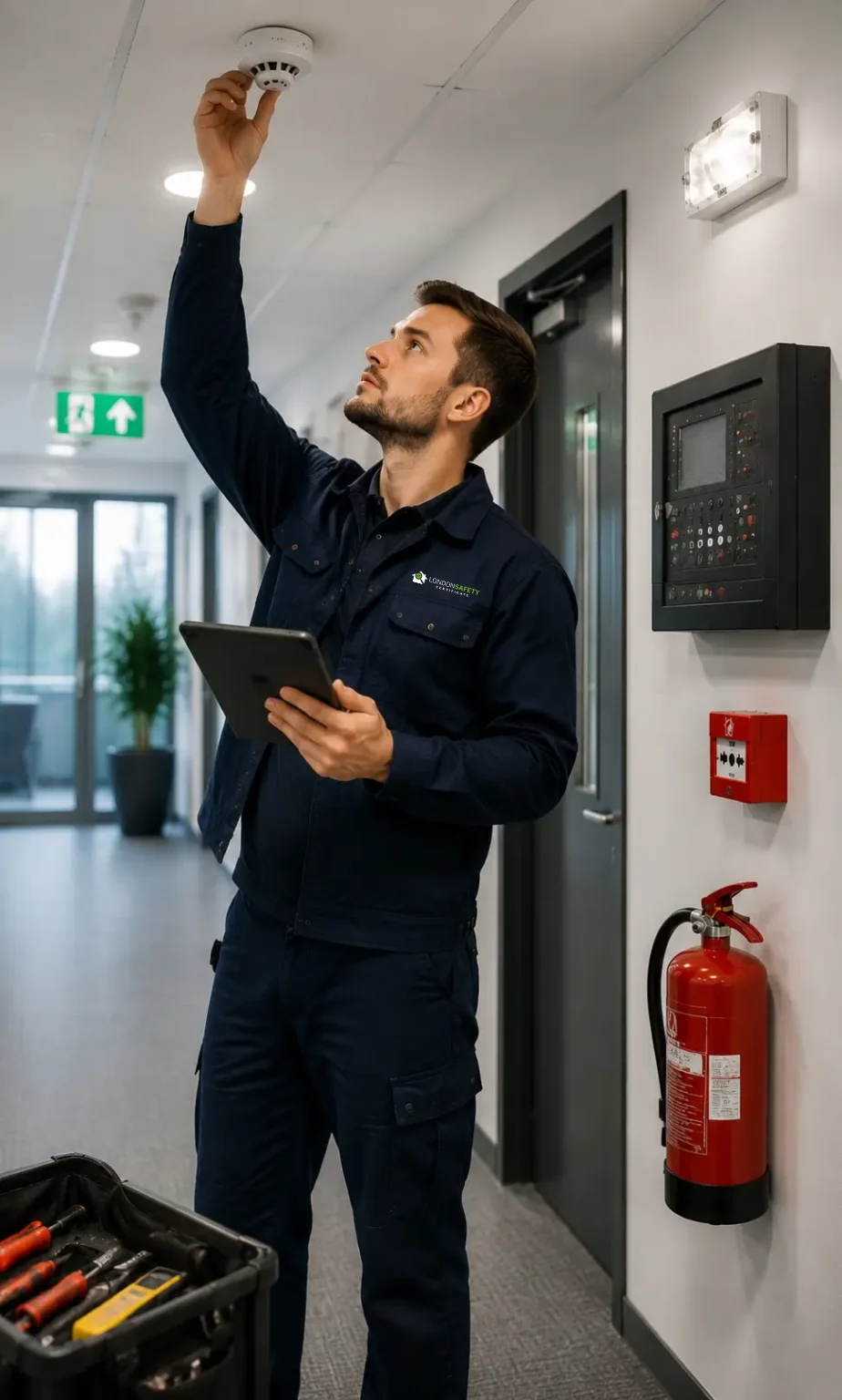
A Fire Risk Assessment London is a professional inspection that identifies fire hazards, evaluates risk, and sets out clear actions to reduce risk and improve compliance. It helps protect occupants, reduce the chance of fire-related incidents, and provides written documentation that may be needed for managing agents, landlords, insurers, or internal compliance records.

Identifies Fire
Hazards

Evaluates Fire
Risk

Sets Out Clear Actions

Provides Written Documentation

At London Safety Certificate, we carry out fire risk assessments for residential properties, HMOs, and communal areas across London. You receive a written report with findings and a practical, prioritised action plan.
Who It’s for?
If you’re not sure which package applies (studio vs communal vs bedrooms), call us and we’ll confirm the correct scope before attendance.
Fire risk assessment cost calculator
A “fire risk assessment cost calculator” can only estimate prices because real scope depends on layout and communal areas. The fastest way to confirm your correct price is to share:

Property type
Studio / 1–3 bed / 3–6 bed / Communal
Requirements
Managing Agents/ Insurance Needs

Floors
How many levels in the building?

Communal areas
Corridors / Stairs Included?
What’s included in our Fire Risk Assessment London service
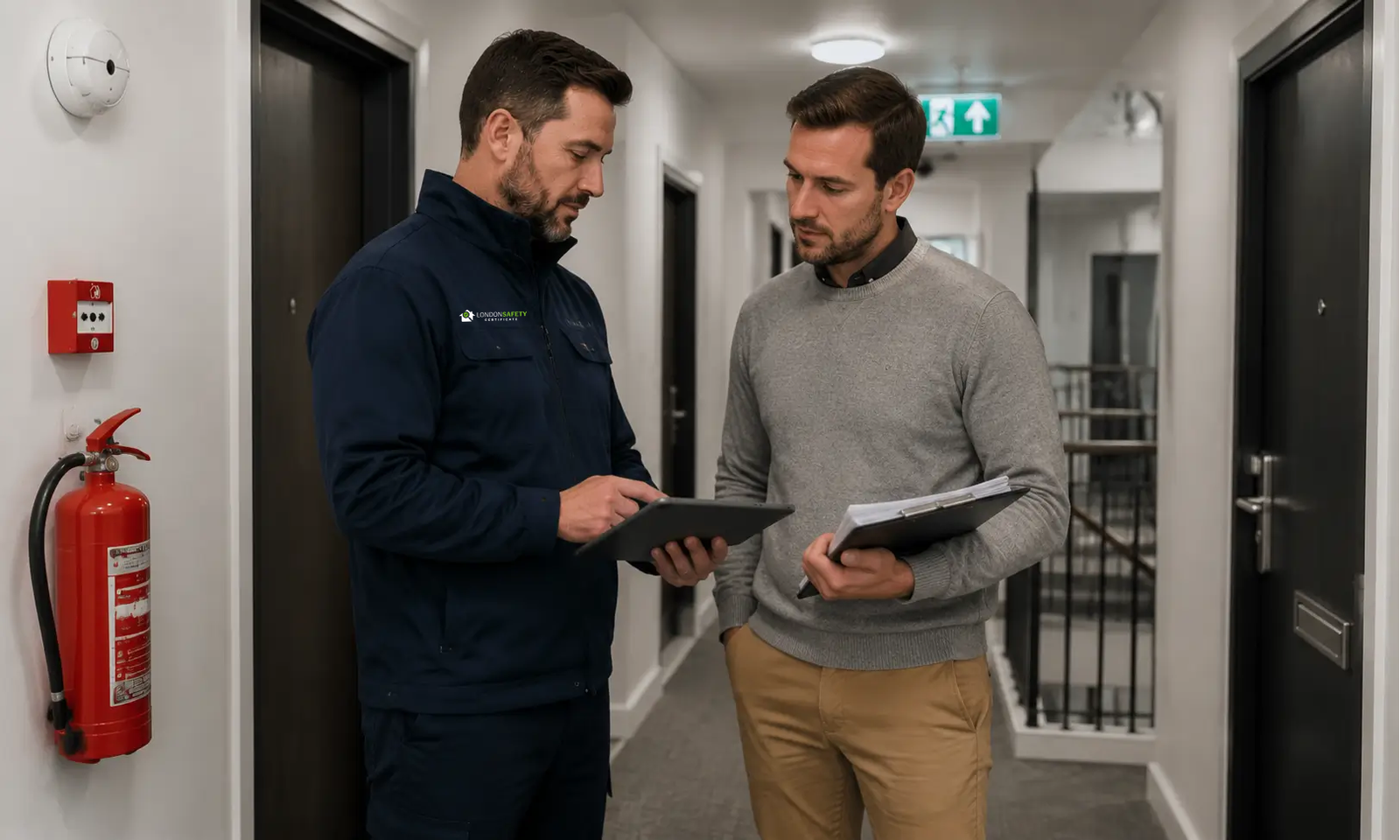
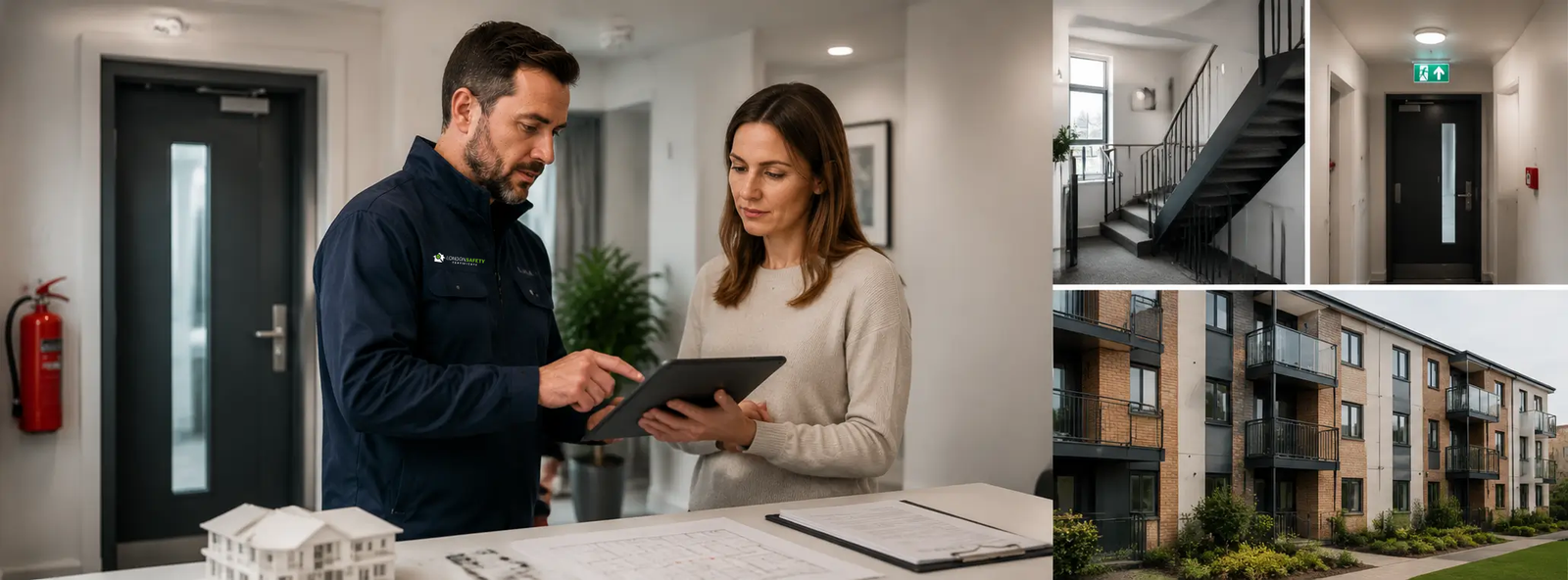
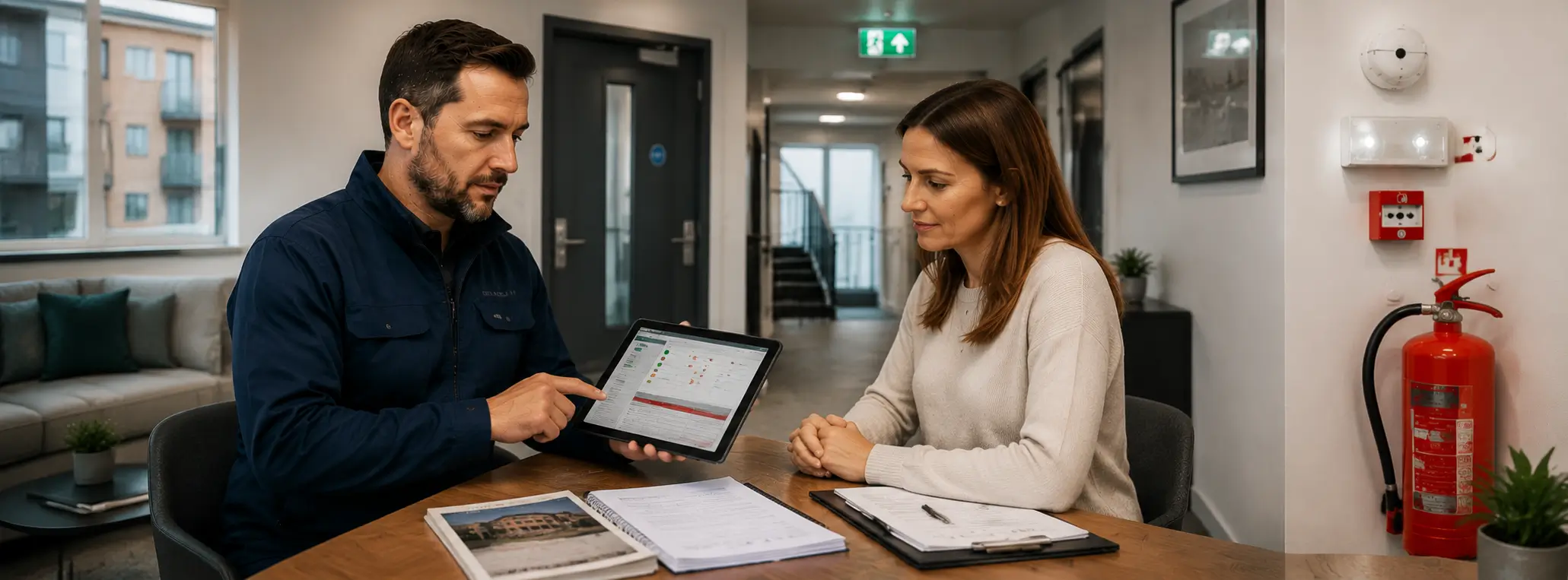
Our Fire Risk Assessment London service includes an on-site inspection of your property and/or communal areas, identification of fire hazards and the people most at risk, and a review of escape routes and key fire safety measures (where applicable). We assess practical risks on the ground and record clear findings based on what we see during the visit.
You’ll receive a written Fire Risk Assessment report with a practical action plan and prioritised recommendations (what to fix first). Physical remedial works, fire alarm installation, fire door replacement, and emergency lighting installation are not included unless agreed separately.

Need a Residential Fire Risk Assessment?
Get a professional assessment carried out by qualified assessors to identify fire hazards and improve your home's safety.
Call us today!
02081455369
Legal requirements (England)
Fire safety duties in England are typically managed under the Regulatory Reform (Fire Safety) Order 2005. This applies to workplaces and to the common parts of buildings containing 2 or more domestic premises (for example, shared corridors, stairs, entrance halls, and plant rooms). The “responsible person” must carry out and keep under review a fire risk assessment and implement appropriate fire safety measures.
If you’re a landlord, freeholder or managing agent responsible for communal areas, keeping a suitable and sufficient fire risk assessment on file is a key part of meeting your responsibilities.
What you receive after the assessment
After completion, you receive:
A written Fire Risk Assessment report (digital copy)
Clear findings and prioritised actions
Practical next steps to improve safety and compliance
Recommended review timing based on the property and risk profile
Fire Risk Assessment FAQs
(01) How much does a fire risk assessment cost in London?
(02) Do you offer fixed-price fire risk assessments in London?
(03) Who is responsible for arranging a fire risk assessment?
(04) Is a fire risk assessment a legal requirement?
(05) How long does a fire risk assessment take?
Fire Risk Assessment London cost
Your Fire Risk Assessment London cost depends on property type, size, layout, number of floors, and whether communal areas are included. We offer clear fixed pricing by property type:

Studio Apartment
£ 84.99

Communal Area
£ 139.99

1–3 Bedrooms
£ 149.99

3–6 Bedrooms
£ 199.99
If the layout is unusual (multiple stair cores, complex communal routes, mixed-use buildings), we confirm scope before attendance so there are no surprises.

Need a Residential Fire Risk Assessment?
Get a professional assessment carried out by qualified assessors to identify fire hazards and improve your home's safety.
Call us today!
02081455369
Fire Risk Assessment London process (Step 1–5)
We follow a structured, on-site process to identify fire hazards, assess risk, and produce a clear written report with prioritised actions. This is focused on fire safety controls, escape routes and occupant risk (not electrical testing), so it won’t overlap with your EICR process sections.

Confirm scope
We confirm the property type, number of floors, whether communal areas are included (stairs/corridors/entrances), and any access requirements. This ensures we assess the correct areas and your report matches the compliance need (landlord, managing agent, insurer, etc.).


On-site inspection
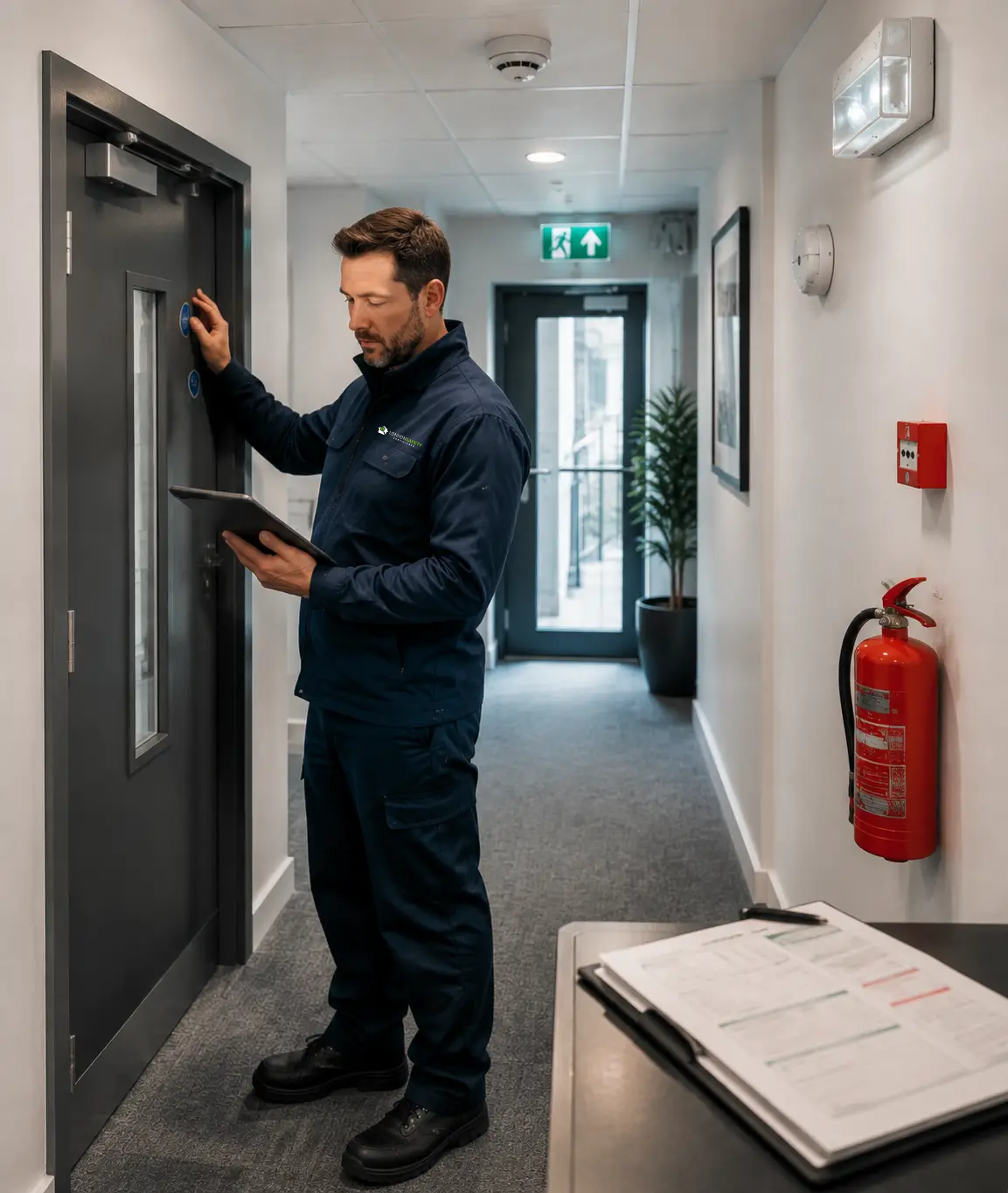
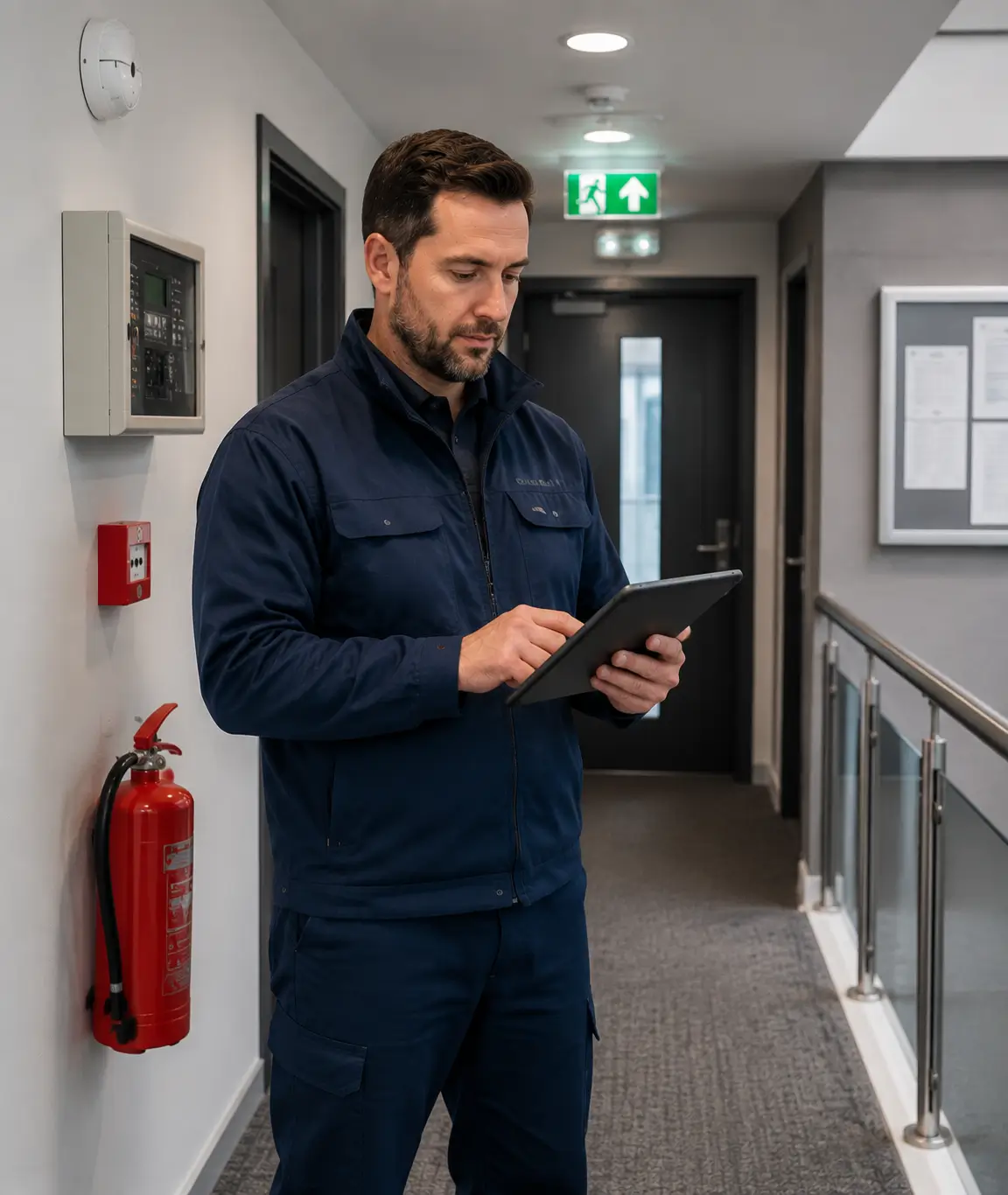
We inspect the premises to identify fire hazards, ignition sources (e.g., electrics, cooking areas), combustible storage, and the condition of key fire safety controls. We also check escape routes for practicality routes, exits, and obvious obstructions that could delay evacuation.


Evaluate risk
We assess who may be at risk (including vulnerable occupants), and the likelihood/severity of harm if a fire occurs. This helps us prioritise actions based on real-world risk, not generic checklists.

Action plan
We provide a prioritised list of recommendations showing what to address first and what can be scheduled later. Actions are written in plain English so you know exactly what needs improving and why.


Report issued
You receive a written Fire Risk Assessment report for your records, including findings and the action plan. If anything needs urgent attention, we flag it clearly and explain the next step.

We keep the process clear and practical so you know exactly what to do next.
Professional Residential Fire Risk Assessment
Safe. Thorough. Compliant.
- Qualified fire safety professionals
- Identification of fire hazards and potential risks
- Assessment of existing fire safety measures
- Clear recommendations and assessment report provided
Need help or have questions?
Call us today for expert advice.
Common issues found in London properties
Common issues we often highlight include blocked or cluttered escape routes (especially in communal areas), inadequate signage where required, poor housekeeping around combustibles, and fire doors not closing properly or showing damage (where applicable). Your report will prioritise actions so you know what to fix first, what can be scheduled, and what evidence to keep for compliance records.