
A fire risk assessment is a legal requirement for the responsible person in premises covered by fire safety law. In England and Wales, the main legislation is the Regulatory Reform (Fire Safety) Order 2005, which requires the responsible person to carry out a suitable and sufficient fire risk assessment, keep it under review, and use it to identify the fire precautions needed to keep people safe.
In practical terms, this means fire risk assessment is not optional where the law applies. It is part of the core legal duty to identify fire hazards, assess the risk to relevant persons, put suitable precautions in place, and maintain those arrangements properly.
Last Updated: 2026
Reviewed By: London Safety Certificate Compliance Team
Table of Contents
Is a Fire Risk Assessment Required by Law?
Yes. A fire risk assessment is required by law where you are the responsible person for premises covered by the Fire Safety Order. That usually includes workplaces and the common parts of multi-occupied residential buildings.
The legal requirement does not stop at completing the document. The responsible person must also act on the findings, provide appropriate fire safety measures, plan for emergencies, and make sure staff receive relevant information, instruction, and training.
When Is a Fire Risk Assessment Required?
A fire risk assessment is required when you are responsible for premises that are not a single private dwelling and fall within the scope of fire safety law. This commonly includes:
- workplaces
- shops, offices, and commercial premises
- factories and warehouses
- schools and public buildings
- the common parts of blocks of flats
- the common parts of multi-occupied residential buildings
That is why the question is not only what is the legal requirement for fire risk assessments, but also when is fire risk assessment required. It is required wherever the law places that duty on the responsible person. For the wider meaning and purpose of the assessment itself, see what is a fire risk assessment.
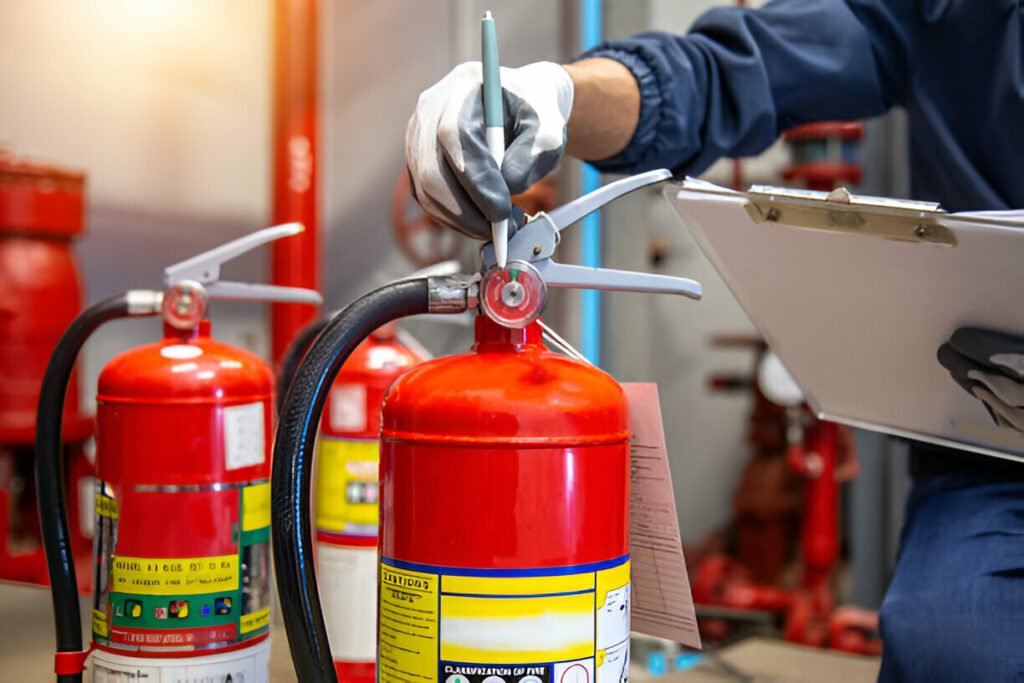
Who Is the Responsible Person?
The responsible person is the person or organisation with control over the premises. In a workplace, this is usually the employer. In other premises, it may be the owner, occupier, landlord, managing agent, or another person with control over part or all of the building.
This matters because the legal duty sits with the person who can manage the fire risk and put the necessary precautions in place. The law is based on control and responsibility, not just ownership in name.
What Must the Responsible Person Do?
The responsible person must:
- carry out a suitable and sufficient fire risk assessment
- review it regularly
- identify the fire hazards and risks in the premises
- put in place appropriate fire safety measures
- plan for an emergency
- provide staff information, instruction, and training
- keep the necessary records
This is the practical meaning of the legal requirement. A fire risk assessment is the starting point, but compliance also depends on what is done afterwards.
What Should a Fire Risk Assessment Cover?
A proper fire risk assessment should examine the premises in enough detail to identify what needs to be done to prevent fire and protect people.
In most cases, that means reviewing:
- potential ignition sources
- combustible materials and fire load
- means of escape
- fire doors and compartmentation
- fire detection and alarm arrangements
- emergency lighting where needed
- firefighting equipment
- emergency procedures
- the people at risk in the building
- the adequacy of existing fire precautions
The assessment should be specific to the actual building and the actual use of the premises. A copied template or a generic checklist is not enough on its own. For the core process behind a fire risk assessment, see fire risk assessment must cover the following steps.
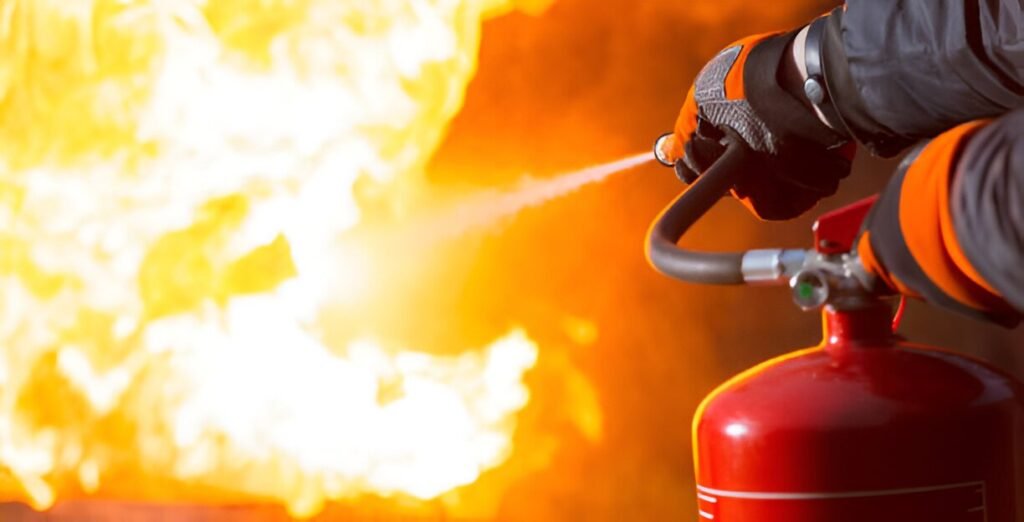
Training for Fire Safety Compliance
To ensure compliance with fire safety regulations, it’s essential to provide comprehensive fire safety training to all employees. Not just a one-time event, this training should be an ongoing process that covers compliance regulations, risk evaluation, emergency planning, and assessment procedures.
Fire safety training is critical in helping employees understand the risks associated with fire hazards, the steps to take in case of a fire, and how to prevent fires in the first place. It’s also a legal requirement in many jurisdictions, with penalties for non-compliance.
Let’s consider a brief overview of some key elements in fire safety training:
| Topic | Importance | Legal Requirement |
|---|---|---|
| Compliance Regulations | Helps ensure workplace safety | Yes |
| Risk Evaluation | Identifies potential hazards | Yes |
| Emergency Planning | Prepares employees for emergencies | Yes |
| Assessment Procedures | Teaches how to conduct assessments | Yes |
Fire Risk Assessment Policies
A fire risk assessment policy should set out how the organisation manages its legal fire safety duty in practice. A good policy should make clear:
- who the responsible person is
- who carries out or arranges the assessment
- how often it is reviewed
- how actions are recorded and completed
- how staff are informed and trained
- how emergency procedures are maintained
- how defects, incidents, and changes are reported
This is where fire risk assessment becomes more than a document. A policy turns the legal duty into a working system that can be followed and checked.
Fire Risk Assessment in Multi-Occupied Residential Buildings
The legal position is especially important in multi-occupied residential buildings. The Fire Safety Act 2021 clarified that, in these buildings, the fire risk assessment must consider the structure, external walls, and flat entrance doors where relevant. The Fire Safety (England) Regulations 2022 then added further duties for responsible persons in multi-occupied residential buildings, with additional requirements for taller buildings.
This means landlords, freeholders, managing agents, and others responsible for common parts should not treat fire risk assessment as a one-off exercise. In the right building type, it is a live legal duty that must be reviewed and managed properly. For the wider legal framework around fire duties, see fire safety regulations.
How Often Must a Fire Risk Assessment Be Reviewed?
The law requires the responsible person to review the fire risk assessment regularly and keep it up to date. In practice, the assessment should be reviewed whenever there is reason to think it is no longer valid or there has been a significant change, such as:
- changes to the building layout
- changes in occupancy
- new work processes
- changes to storage or equipment
- defects in fire precautions
- fire incidents or near misses
A fire risk assessment that is not reviewed properly can quickly become unreliable, even if it was acceptable when first written.
What Happens If You Do Not Comply?
Failure to comply with fire safety law can lead to enforcement action, notices, prosecution, fines, and in serious cases imprisonment. The legal consequences can be severe because the duty is there to protect life, not just paperwork.
That is why the legal requirement for fire risk assessments should be treated as a core compliance duty, not an optional precaution.
Final Answer
The legal requirement for fire risk assessments is that the responsible person must carry out a suitable and sufficient fire risk assessment for premises covered by fire safety law, review it regularly, and use it to identify the fire precautions needed to keep people safe. In England and Wales, that duty sits mainly under the Regulatory Reform (Fire Safety) Order 2005, with further clarification and added duties for certain residential buildings under later legislation.
So if the question is is a fire risk assessment required by law, the answer is yes where the Fire Safety Order applies. And if the question is when is fire risk assessment required, the answer is whenever you are the responsible person for premises that fall within that legal scope. For the different types and scope of fire risk assessment, see fire risk assessment types.
Frequently Asked Questions
-
Is a fire risk assessment required by law?
Yes. Where the Fire Safety Order applies, the responsible person must carry out a suitable and sufficient fire risk assessment.
-
When is fire risk assessment required?
It is required where you are the responsible person for premises covered by fire safety law, including workplaces and the common parts of multi-occupied residential buildings.
-
Who is the responsible person?
Usually the employer, owner, occupier, landlord, managing agent, or another person with control over the premises or part of it.
-
What should a fire risk assessment cover?
It should identify hazards, assess the fire risk, consider who may be affected, review existing precautions, and record what further action is needed.
-
How often should a fire risk assessment be reviewed?
It should be reviewed regularly and whenever there is reason to think it is no longer valid or there has been a significant change.
-
What happens if the responsible person does not comply?
There can be enforcement action, prosecution, fines, and in serious cases imprisonment.
Conclusion
In conclusion, adhering to fire safety regulations isn’t just a legal requirement, it’s a crucial step towards safeguarding lives and property.
Conducting regular fire risk assessments, implementing safety measures, and providing proper training can significantly reduce the risk of devastating fire incidents.
Remember, ignoring these regulations can lead to hefty fines or even imprisonment.
Stay safe, stay compliant, and ensure you’re doing your part in creating a fire-safe environment.