
What Color Is the Live Wire? In most modern homes, the live conductor is brown in the UK and EU, and brown, black, or red in North America. Blue or white is usually neutral, while green and yellow, green, or bare wire, indicate earth or ground. Multi-phase systems and appliance cords may use additional colors. Older installations can use nonstandard colors, so verification is essential. Always test with a suitable tester and isolate power before touching any conductor. This guide continues with practical testing steps, labeling tips, and safety signs that show when professional help is needed.
Key Takeaways
- In most North American homes, live (hot) wires are typically black or red, neutral is white, and ground is green or bare.
- In current UK/EU and Australian wiring, brown is live, blue is neutral, and green-yellow is protective earth.
- Multi-phase systems and older installations may use additional or nonstandard colors; always verify rather than assume.
- Always test with a non-contact voltage tester or multimeter and isolate the breaker before touching any conductor.
- Label and document verified conductors during maintenance to prevent errors and ensure future safety and compliance.
Table of Contents
Quick Answer: Which Wire Is Live in Common Home Systems
What Color Is the Live Wire? Which conductor carries the live feed depends on regional wiring conventions and the device type. In many North American residential systems, the live conductor is typically black or red, with white reserved for the neutral and bare or green for the ground. In much of Europe and other regions that follow IEC standards, brown denotes live, blue denotes neutral, and green and yellow denote protective earth. Multi-phase installations may use additional colors for other live phases, commonly black, brown, and grey, or brown and black, depending on local code. Appliance cords and flexible leads can vary, with some using brown for live and blue for neutral, even where fixed wiring differs. Older installations may show nonstandard colors, and color alone may not reflect current conditions after renovations. Anyone maintaining or modifying property should follow local regulations and standards, since color conventions provide useful guidance but are not a substitute for safe testing, informed verification, and compliant practice.
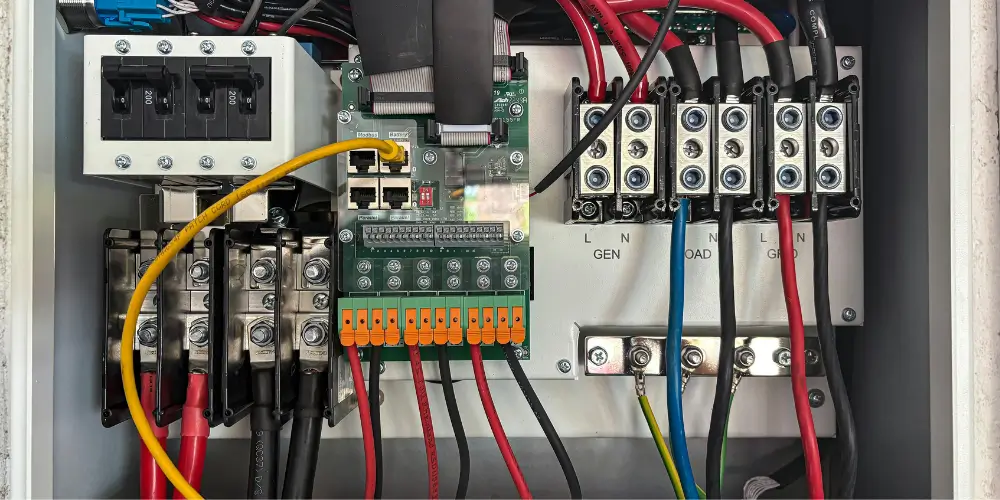
Identify Live Wires Safely: Tools and Step‑by‑Step
Use a non-contact voltage tester or multimeter first to confirm whether conductors are live, and always assume any exposed wire is energized until proven otherwise. The detached observer selects insulated tools, safety glasses, and gloves, then isolates power at the breaker panel and labels the circuit. With power off, the tester is checked on a known live source, then applied to each conductor to detect residual voltage. For a multimeter, set the correct AC range, verify the leads and probe insulation, and measure between conductor and ground and between conductors to identify phase and neutral candidates. After measurements, re-energize only if necessary and repeat testing at accessible points to confirm continuity and live status. Document findings and restore coverings before re-energizing permanently. If readings are ambiguous or wiring appears nonstandard, the observer defers to a licensed electrician. This method prioritises autonomy while minimising risk through disciplined verification and clear decision points.
UK & EU Wire Colors: Brown Live, Blue Neutral, Green‑Yellow Earth
Although wiring conventions have evolved, the current UK and EU standards standardize conductor identification with brown for live (line), blue for neutral, and green‑yellow for protective earth; this color scheme reduces ambiguity during installation, testing, and maintenance. In single‑phase and three‑phase systems, the brown conductor carries the phase(s) supplying power, while the blue conductor returns current to the source under normal operation. The green‑yellow striped conductor is reserved exclusively for protective earth and must never be used as a live or neutral conductor; its role is safety grounding and fault clearing. This standardized palette supports modular work, equipment interchange, and independent choices by installers who value clear, consistent signals. When retrofitting older installations, practitioners should confirm whether legacy colors exist and clearly label any interim conductors. Regardless of skill level, following the brown/blue/green‑yellow convention minimizes risk, expedites troubleshooting, and preserves the autonomy of those maintaining or modifying electrical systems.
US, Canada, Australia Wire Colors: Common Home Systems
In North America and Australia, common residential wiring color schemes differ from the UK/EU standards and vary by system type: in the United States and Canada, typical single‑phase branch circuits use black or red for hot (line) conductors, white or gray for neutral, and bare or green for grounding conductors; in Australia, active conductors are usually brown (line), blue (neutral), and green‑yellow (earth) under current standards, though older installations may show differing hues.
The guide describes straightforward, freedom-minded comparisons so readers can recognize common colors when inspecting or discussing home systems. Visualizing typical setups helps:
- Single-phase US/Canada: black (hot), white (neutral), green/bare (ground).
- Split-phase US: red and black (two hots), white (neutral), green/bare (ground).
- Australia (modern): brown (active), blue (neutral), green‑yellow (earth).
Readers are reminded that local codes and updates matter; colors communicate function, but verification with a tester and adherence to regional regulations remain essential for safe, autonomous decision-making.
Older Wiring & Multi‑Core Cables: Colors to Watch and Why
Older wiring and multi‑core cables present a patchwork of color schemes that can confuse even experienced readers: prior standards, regional variations, and informal repairs often produce conductors whose hues no longer match modern conventions. The section notes common legacy combinations (red/black, red/white/green, cloth‑insulated neutrals) and multi‑core sets where colors repeat or are repurposed. Freedom‑seeking readers are urged to treat color as a hint, not an authority: labeling, testing, and clear documentation restore choice and safety.
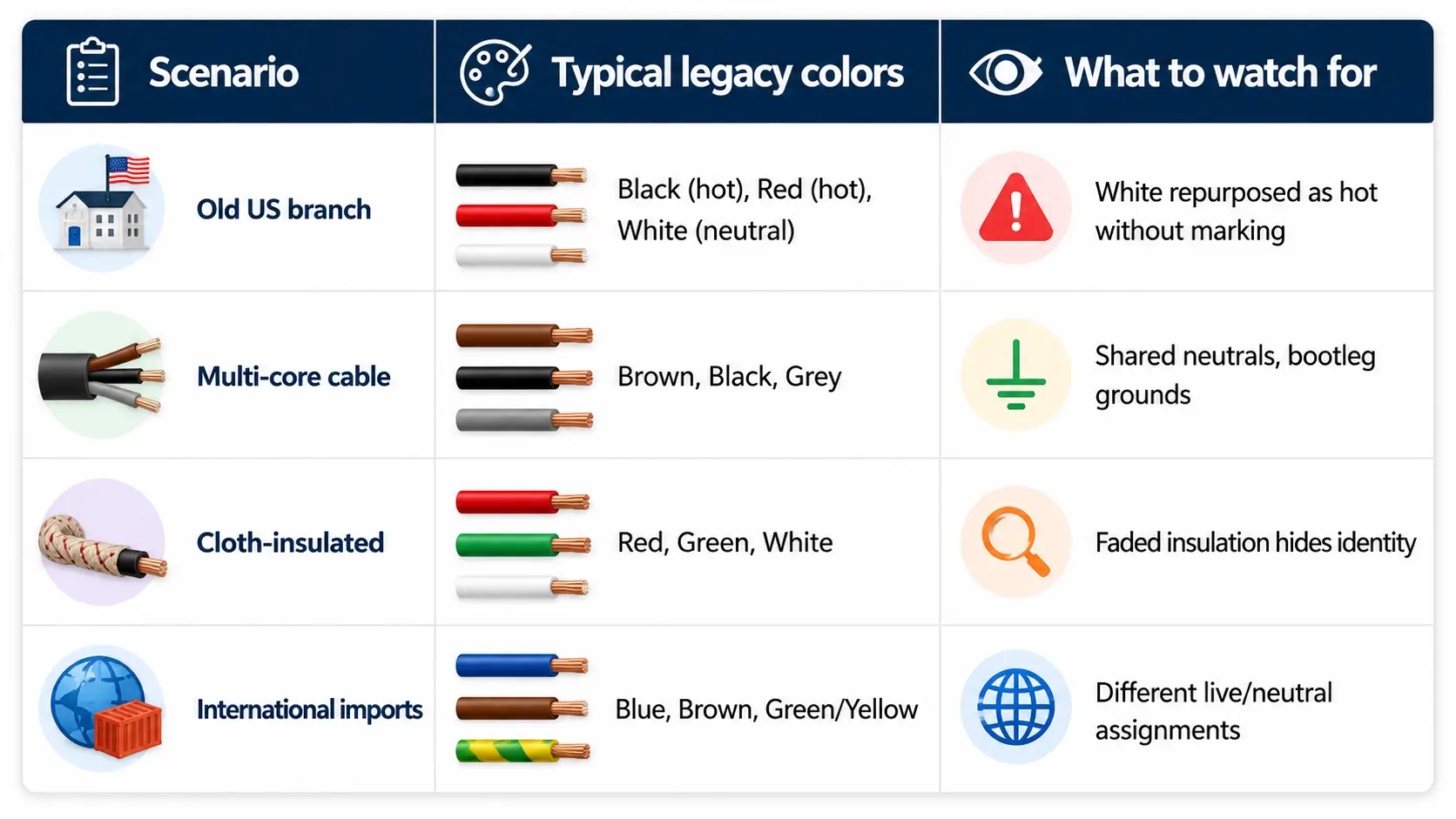
Assess each conductor, mark it, and record findings before making changes.
Common Mistakes and Red Flags: When to Call a Professional
Mismatched or obscured colors often signal deeper problems that go beyond routine DIY fixes, so readers should learn the clear warning signs that indicate the need for professional help. A detached observer notes that fading, paint-covered, or spliced wires with inconsistent color coding can hide energized conductors or past amateur repairs. Immediate consultation is advised when any of the following appear:
- Visible damage: charred insulation, melting, or burn smells that suggest overheating or arcing.
- Confusing terminations: multiple cables tied together, taped color changes, or junctions without proper enclosures.
- Intermittent faults: lights flicker, breakers trip unpredictably, or outlets feel warm under load.
These red flags indicate compromised safety systems, improper neutral or earth connections, or overloaded circuits that require professional remediation. A professional electrician restores code-compliant color clarity, tests continuity and insulation resistance, and documents corrective action. Freedom-minded readers benefit from knowing when to step back and delegate risk to licensed expertise rather than press forward with uncertain fixes.
Replacing Fixtures: Marking, Testing, and Documenting Safely
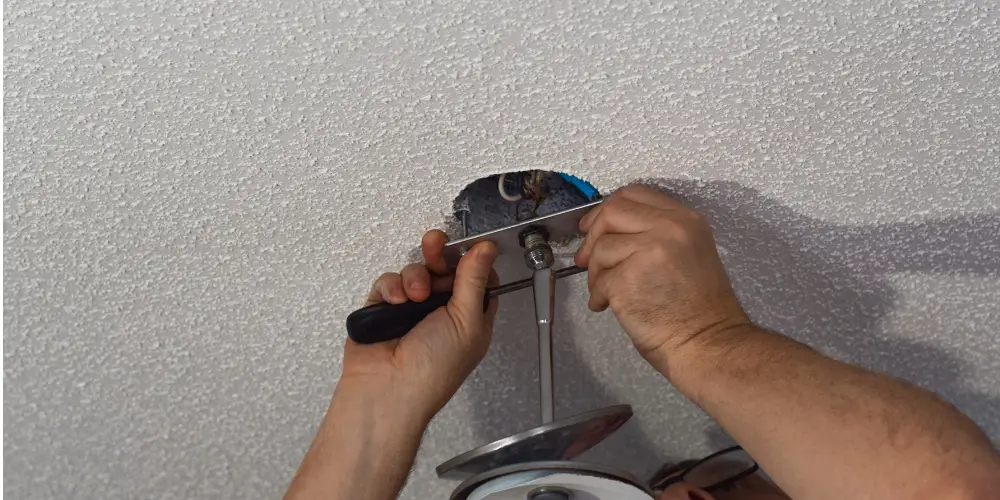
Begin by de-energizing the circuit and clearly marking its breakers and switches to prevent accidental re-energization during fixture replacement. The technician confirms power is off with a reliable tester at the fixture, then tags the panel and switch with visible labels. Photographs and brief notes document original wiring colors, connections, and mounting orientations before disassembly, enabling faithful reassembly or future troubleshooting. When removing a fixture, each conductor is immediately capped or isolated to prevent contact with metallic parts or other conductors. If splices are disturbed, they are re-made with appropriately sized connectors and secured inside an accessible box. Grounding continuity is verified, and any damaged insulation is repaired or replaced. All new fixtures are matched to the existing color-coded conductors to preserve circuit clarity. Finally, a concise entry is added to the maintenance records stating the date, work performed, tester readings, and the person responsible, thereby supporting autonomy and safe, independent maintenance.
Quick Checklist: Test, Label, and Record Before You Finish
Confirm the power is off with a reliable tester, then verify continuity in each conductor and ground, and the absence of voltage, before closing the box. The technician moves with deliberate independence, methodically confirming markings, tightening terminals, and ensuring insulation integrity. Each step is recorded so future work remains unrestricted by uncertainty.
- Test: check hot, neutral, and ground individually; record readings and take a photo of meter results.
- Label: attach clear, durable labels to conductors and the device, noting circuit ID and date.
- Record: enter details in a log or app location, tester model, readings, and any deviations from expectations.
Documentation is the final act of autonomy: it preserves choices and enables safe, free action later. A concise entry prevents guesswork and protects occupants. The detached observer sees a simple ritual: test, label, record, then close, confident that the electrical system and future users are respected.
Need help with electrical testing or safety checks? Contact London Safety Certificate to arrange a professional inspection, accurate testing and clear documentation for your property.
Frequently Asked Questions
Can Wire Insulation Color Change Over Time or With Heat Exposure?
Yes. They note that insulation can darken, discolor, crack, or become brittle after heat, UV, chemicals, or aging, compromising identification and safety; replacements or testing preserve freedom from uncertainty and electrical hazard.
Are Live Wire Colors Different for Three‑Phase Residential Supply?
Yes. He notes three‑phase residential supplies often use distinct phase colors per region; some jurisdictions assign brown, black, grey (or red, yellow, blue), while others differ. Freedom‑minded readers should verify local standards before work.
How Do Wire Colors Vary in RVS, Boats, or Solar Installations?
In RVs, boats, and solar setups, wire colors vary: RVs often follow household AC and DC conventions; boats may use A/C, D/C, and marine-specific markings; solar systems use red/black for DC, green/ground, and labeled positive/negative.
Do Smart Home Components Use Nonstandard Wire Color Coding?
Yes. Smart home components sometimes use nonstandard wire color coding; manufacturers prioritize function and compactness, so installers should verify labels, diagrams, and continuity rather than assuming conventional colors to preserve autonomy and avoid hazardous assumptions.
Is It Legal to Reuse Old Colored Wires When Installing New Circuits?
Yes, it can be legal to reuse old-colored wires if they meet code, are undamaged, and are properly reidentified; however, the person should verify local regulations and confirm the wiring’s color coding matches required safety and inspection standards.
Conclusion
In conclusion, identifying the live wire requires caution, proper tools, and knowledge of regional color standards. Brown is the live (hot) conductor in the current UK/EU wiring; in North America, the live (hot) conductors are typically black, red, or other colored insulated wires, with a white neutral and a green or bare earth. Older or mixed wiring can differ, so always test, label, and document before working. When in doubt or when colors or insulation are unclear,r consult a qualified electrician.