
What Should Boiler Pressure Be in a normal domestic system? Boiler pressure is typically about 1 to 1.5 bar when cold and 1.5 to 2.0 bar when hot, with around 1.5 bar being a common target for combi boilers and most household heating systems. Correct pressure helps with efficient circulation, even radiator heat, and a lower risk of leaks. Low readings can indicate a leak or a faulty expansion vessel, while high readings may suggest trapped heat or a failed pressure-relief or expansion component. Continue reading for practical checks, quick fixes, and when to call a professional.
Key Takeaways
- Cold boiler pressure should usually read about 1.0–1.5 bar; target around 1.5 bar for most combi and conventional systems.
- When the system is heating, pressure typically rises to 1.5–2.0 bar; values above 2.5 bar indicate a problem.
- Check the gauge weekly and after bleeding radiators or performing maintenance to catch slow pressure drops.
- Low pressure often stems from leaks or a faulty expansion vessel; repressurise via the filling loop if below 1.0 bar.
- High pressure may indicate excess water, trapped heat, or a failed expansion vessel; bleed the radiators and call an engineer if it persists.
Table of Contents
How to Read a Boiler Pressure Gauge in 2 Minutes
How can one quickly interpret a boiler pressure gauge? A reader should note the dial’s units (bar or psi), the needle position, and any colored zones. First, confirm units printed on the face; this prevents misreading numerical values. Next, observe the needle relative to the marked ranges. Green often indicates acceptable operation, red signals concern. Identify the current value and compare it mentally to typical operating windows without explaining what those windows are here. Check for steady versus fluctuating needle movement: steady implies stable pressure, rapid swings suggest system activity or a fault. Inspect the gauge for damage, condensation, or a stuck needle that could invalidate the reading. Where present, note an adjacent temperature gauge to correlate system load briefly. Finally, record the observed value and time, and if the reading appears abnormal or uncertain, recommend professional inspection rather than attempting corrective actions without further guidance.
Normal Boiler Pressure (And Why It Matters)
What Should Boiler Pressure Be in a normal heating system? Boiler pressure refers to the steady operating range a closed heating system maintains to circulate water safely and efficiently. The right pressure helps radiators warm evenly, pumps work without strain, and seals stay intact. Maintaining correct pressure prevents cold spots, reduces energy waste, and lowers the risk of leaks or system shutdowns. Regular checks can also catch gradual drops from slow leaks or pressure increases caused by thermal expansion.
When pressure shifts outside the intended range, the system can trigger safety cuts or suffer component wear, leading to costly repairs and inconvenience. Clear indicators on the gauge help an owner decide whether simple re-pressurising is needed or professional attention is warranted. Understanding normal pressure helps plan preventive maintenance and builds confidence that the boiler will perform reliably through seasonal demand.
| Feeling | Reaction |
| Calm | Confidence in the system |
| Unease | Prompt inspection |
| Relief | Routine maintenance done |
| Alarm | Call professional |
| Satisfaction | Efficient heating restored |
Typical Pressure Ranges: Combi, System and Conventional Boilers
Typical pressure ranges differ by boiler type because design and usage determine the required operating head for reliable circulation. Combi boilers typically run at 1.0–1.5 bar when cold and around 1.5–2.0 bar when hot; manufacturers often specify about 1.5 bar as the target for everyday operation. System boilers, which feed a separate hot water cylinder, usually operate slightly higher: about 1.0–1.8 bar cold and 1.5–2.0 bar hot, reflecting the need to maintain adequate flow to the cylinder and radiators. Conventional (regular) boilers, paired with an open-vent system and header tank, often sit between 1.0–1.5 bar cold and up to 2.0 bar hot, depending on system height. Variation arises from building height, radiator layout and installer set-up. Owners should consult the boiler manual for the exact recommended range and check pressure when the system is both cold and at normal operating temperature to confirm it aligns with manufacturer guidance.
Why Boiler Pressure Drops: Common Causes and Quick Fixes
Pressure fluctuations outlined for combi, system and conventional boilers can signal underlying faults when readings fall below the recommended range; a sudden or gradual drop in boiler pressure usually stems from a few common sources. The most frequent cause is a leak visible drips from radiators, pipe joints, valves, or the boiler itself reduce system water volume. Another routine issue is bleeding radiators: releasing trapped air without topping up the system lowers pressure. A faulty expansion vessel or its pressure relief components can absorb system water or fail to maintain correct pre-charge, producing persistent low readings. Corroded or damaged filling loop valves may not admit water when required, while internal component leaks (heat exchanger, pump seals) allow slow loss. Quick fixes include checking for external leaks and tightening joints, repressurising via the filling loop to the manufacturer’s target, and ensuring radiator vents are closed after bleeding. If loss recurs or a fault is suspected, a qualified engineer should inspect and repair to prevent further damage.
Common Causes of High Boiler Pressure and How to Reduce It
A rise above the recommended bar or psi on a combi, system or conventional boiler often indicates excess water volume, trapped heat, or a malfunctioning safety component. Common causes include a faulty expansion vessel that no longer absorbs thermal expansion, a leaking or closed automatic air vent causing trapped air pockets to collapse the system and push pressure upward, and a malfunctioning pressure relief valve or fill loop allowing unintended water ingress. Corrosion or sludge can restrict flow, raising local temperatures and pressure readings. To reduce pressure safely, isolate and repair leaks that permit additional water, replace or recharge a failed expansion vessel, and service or replace defective safety valves and automatic vents. Flushing to remove debris and bleeding radiators to release trapped air can also lower readings. When component faults are suspected, a qualified heating engineer should inspect and carry out repairs to restore stable, correct boiler pressure and guarantee safe operation.
How to Repressurise a Boiler (Safe Step‑by‑Step)
After diagnosing common causes of high readings and addressing any faults, attention may turn to restoring the boiler’s operating pressure. The process is straightforward but requires calm attention to seals, valves and the pressure gauge. First, confirm the system is cold and isolate the electrical supply if practical. Locate the filling loop (a silver braided hose or dedicated valve) and check that both isolation valves are closed. Open the bleed valves on a radiator to let trapped air escape while watching the gauge.
- Slowly open the filling loop valves in small increments until the pressure rises to the manufacturer’s recommended range (typically 1–1.5 bar cold).
- Close the filling loop valves fully, ensuring the valve handles align with the closed position; resecure any locking clips and remove temporary hoses if used.
- Re-pressurise any radiators if needed, restore power, run the boiler through a short cycle, and recheck the gauge for stability and leaks.
When to Call an Engineer: Warning Signs and Safety Risks
When should a professional be contacted? A homeowner should call a qualified engineer if pressure repeatedly falls or spikes, if the pressure gauge reads in the red, or if audible warnings occur. These signs can indicate leaks, failing safety valves, or internal faults that pose safety risks.
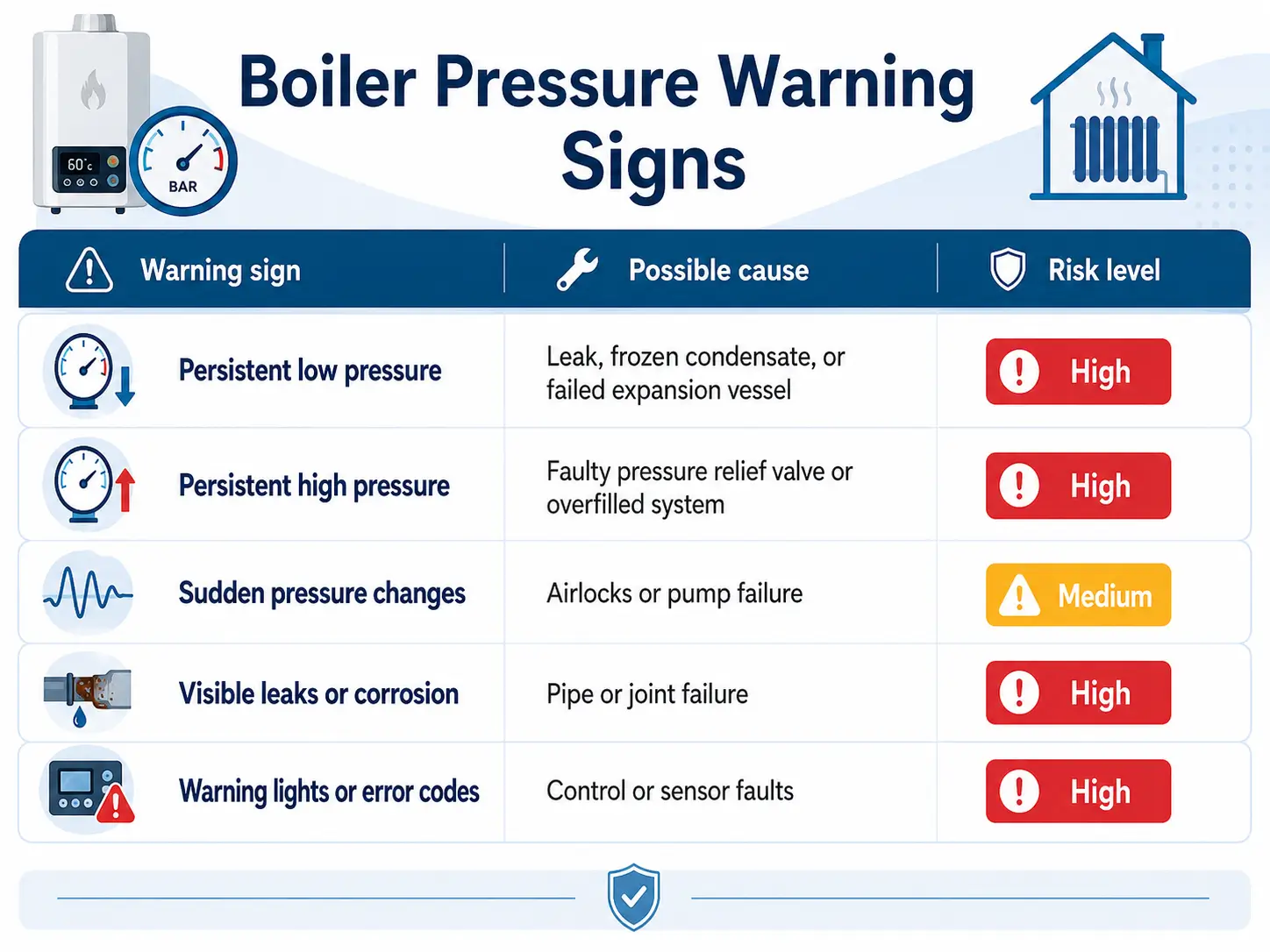
An engineer can diagnose underlying faults, test safety devices, and recommend repairs or shutdown if necessary. Prompt professional assessment reduces the chance of scalding, carbon monoxide release, or boiler failure. Contact London Safety Certificate for a professional boiler inspection.
Simple Maintenance Tips to Keep Boiler Pressure Stable
Noting the warning signs that require an engineer, homeowners can still take simple maintenance steps to help keep boiler pressure within the correct range and reduce the frequency of professional visits. Regular checks of the pressure gauge ideally weekly allow early detection of slow drifts. Bleeding radiators removes trapped air that can cause pressure fluctuations. Keeping the boiler and surrounding area clean and unobstructed improves ventilation and reduces strain on components. Annual servicing by a qualified engineer remains essential to identify latent faults.
- Check the pressure gauge weekly and top up via the filling loop to the manufacturer’s recommended level if it falls below 1 bar (or as specified).
- Bleed radiators when cold to release air pockets; recheck pressure afterward and repressurise if necessary.
- Inspect visible pipework and valves for leaks or corrosion; tighten minor fittings and schedule an engineer for persistent issues.
These concise routines promote stable operation and can prevent avoidable pressure-related problems. Know about the Benefits of a Boiler Service: Why Regular Maintenance Matters.
Frequently Asked Questions
Can Low Boiler Pressure Damage Radiators or Piping in the Long Term?
Yes. They state low boiler pressure can cause inadequate circulation, leading to cold spots, corrosion from oxygen ingress, and stress from repeated thermal cycling, potentially shortening radiator and pipe lifespan unless corrected, and the system is properly maintained.
Can Smart Thermostats Affect Boiler Pressure Readings?
No, a smart thermostat does not directly change boiler pressure; it only controls demand. Indirectly, frequent short cycling prompted by aggressive scheduling could cause minor pressure fluctuations, but underlying pressure issues arise from the boiler system itself.
Is Boiler Pressure Different in Summer Versus Winter?
Yes, boiler pressure often runs slightly lower in summer and higher in winter due to temperature-related expansion and contraction of system water and varying heating demand, though a well-maintained system should stay within safe operating limits year-round.
Can My Boiler Pressure Drop After Installing a New Radiator?
Yes pressure can drop after installing a new radiator. Air introduced, a leak, or insufficient system refill causes losses. The homeowner should check for visible leaks, bleed radiators, and repressurise per manufacturer instructions, or call a heating engineer.
Do Water Quality or Hardness Influence Boiler Pressure Stability?
Yes. He notes that hard water and mineral buildup can restrict pipes, valves, and heat exchangers, causing pressure fluctuations and reduced flow. Corrosion from poor water quality similarly damages seals and system integrity, destabilising pressure over time.
Conclusion
Maintaining correct boiler pressure guarantees efficient heating, prevents damage and reduces safety risks. Regular checks and basic maintenance like bleeding radiators, inspecting the expansion vessel, and correctly repressurising address most issues. Recognising signs of persistently high or low pressure and acting promptly can avoid costly repairs; where uncertainty or recurring faults occur, a qualified engineer should be called. Overall, simple routine care keeps boilers reliable, safe and energy‑efficient throughout their service life.