

How to Fit a Consumer Unit? To properly fit a consumer unit in the UK, begin by isolating the main power supply using a lock-off kit to guarantee safety. Select a suitable location that complies with regulatory requirements, allowing for easy access and maintenance. Mount the unit securely using heavy-duty brackets and wall plugs appropriate for the wall type, guaranteeing alignment and stability. Prepare for wiring by safely removing necessary knockouts and installing cable glands and grommets to protect wire integrity. Connect the unit to the power supply following current electrical codes, utilising correct cable sizes and types. Proper installation secures safety and paves the way for operational efficiency, hinting at further nuances of guaranteeing a successful set
Key Takeaways
- Ensure the installation area meets safety standards and allows for maintenance access.
- Securely mount the consumer unit using robust brackets suitable for the wall type.
- Follow UK electrical codes and ensure a qualified electrician performs all work.
- Safely isolate the main power supply using a lock-off kit before starting installation.
- Conduct initial and periodic inspections to ensure the installation conforms to regulatory standards.
Table of Contents
What Does Fitting a Consumer Unit Involve?
Fitting a consumer unit in the UK involves more than just the physical installation; it also encompasses understanding the distinctions between fitting and wiring each component.
Compliance with legal standards, such as the UK Wiring Regulations and local building codes, guarantees safety and legality.
It is advisable to engage a certified electrician to handle the installation, as this not only assures professional execution but also adherence to all regulatory requirements.
Difference Between Fitting and Wiring
Understanding the difference between fitting and wiring a consumer unit is vital in electrical installation. Fitting involves physically mounting the unit and confirming that it is securely attached to the wall or designated area. Wiring, however, pertains to connecting the unit to the power supply and verifying that all circuits are properly connected and secured.
Here are key aspects to reflect on:
- Fitting Techniques: Ensure that the locations comply with safety standards, providing easy access for maintenance and sufficient air circulation. Use robust fittings to support the consumer unit’s weight and consider the environment (e.g., damp areas requiring additional protective measures).
- Wiring Methods: Implement wiring according to the latest wiring regulations. This includes correcting the type and size of cables and using seals, caps, lands, and bushings to protect wires entering the unit. Verify that all connections are tight and secure to prevent potential electrical faults.
- Component Compatibility: Confirm that all unit components, such as Bs, RCDS, and busbars, are compatible and meet the required installation practices and standards.
This compatibility is vital for the safe operation of the consumer unit.
Legal Considerations in the UK
In addition to mastering a consumer unit’s physical installation and wiring, it is also important to know the legal requirements governing these activities in the UK. These requirements are structured around guaranteeing regulatory compliance and adherence to safety standards.
When fitting a consumer unit, one must meticulously follow the installation guidelines set forth by the UK electrical codes. These codes are updated periodically to reflect the latest safety protocols and technological advancements.
Each installation must be carried out by a qualified electrician competent in the BS 7671 regulations, often called the Wiring Regulations. These regulations encompass the design, installation, inspection, and testing of electrical safety and functionality.
Additionally, after the consumer unit is installed, it must undergo a series of rigorous inspection requirements. This includes verification and periodic inspections, which assess installation conformity to electrical codes.
Failure to comply with these legal standards can lead to severe penalties, including fines and mandatory rectifications. Consequently, professionals must keep abreast of the current electrical codes and confirm that all installations are compliant and certified.
Check if You Need a Qualified Electrician
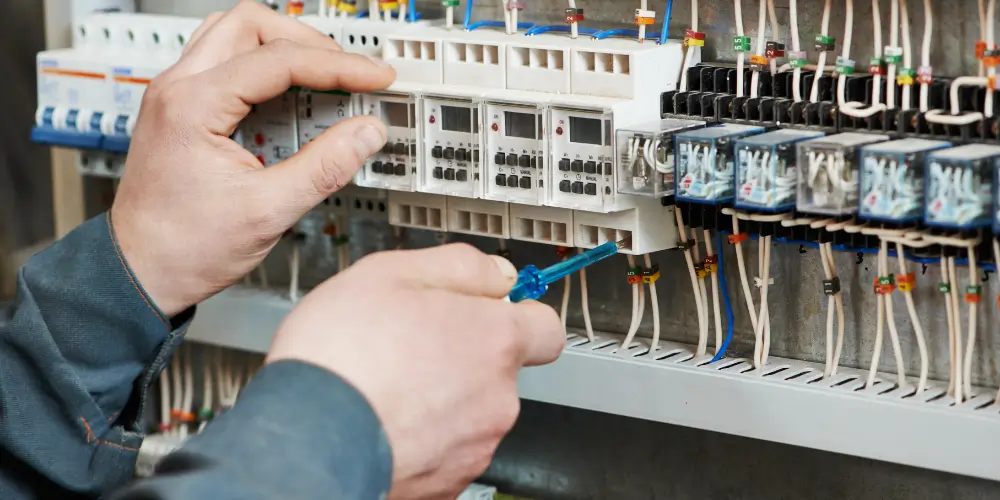
When considering the installation of a consumer unit in the UK, it is essential to determine whether this task requires the expertise of a qualified electrician.
Regulations often prohibit DIY electrical work for safety and compliance, particularly in complex residential or commercial systems.
Familiarise yourself with the Competent Person Scheme, which provides a framework for recognising professionals to self-certify their work in compliance with building regulations.
When DIY Is Not Allowed
Attempting electrical installations, such as fitting a consumer unit, without proper qualifications and knowledge can be illegal and unsafe. In the UK, stringent safety regulations and electrical codes govern DIY electrical work to guarantee safety and efficacy. The fitting of a consumer unit is particularly sensitive due to its central role in a home’s electrical system.
Here are conditions where a qualified electrician is mandatory:
ompliance with Electrical Codes
Electrical installations must adhere to the UK’s Wiring Regulations, which are detailed in BS 7671. DIY attempts without understanding these codes can lead to non-compliance and severe hazards.
Professional Installations Requirement
Certain electrical works, including the installation of consumer units, are classified under “notifiable” jobs. This classification requires the work to be done by a professional.
Consumer Unit Certifications
For a consumer unit to be legal, it must be certified. An technician can ascertain that the unit meets all required performance standards. Understanding these DIY standards restrictions is essential.
Competent Person Scheme Overview
The Competent Person Scheme facilitates the identification and employment of qualified electricians for notifiable electrical work, including the installation of consumer installations. Electricians must demonstrate competent person qualifications to guarantee compliance with strict electrical safety standards. This verification is essential for maintaining the integrity of electrical installations in residential settings.
Adherences are mandatory when installing a consumer unit. These regulations ensure risks such as electrical fires or shocks. The role of electricians registered under the Competent Person Scheme is pivotal. They are authorised to self-certify without additional installation control, streamlining the installation certification process.
This not only guarantees a higher standard of safety but also facilitates a more efficient project timeline.
Homeowners seeking to install or replace a consumer unit should verify the credentials of any electrician by checking their inclusion in the Competent Person Scheme. This guarantees that all installations are performed to the highest standards and are compliant with current regulations, offering peace of mind that the electrical systems are safe, functional, and legally compliant.
Turn Off the Main Power Supply
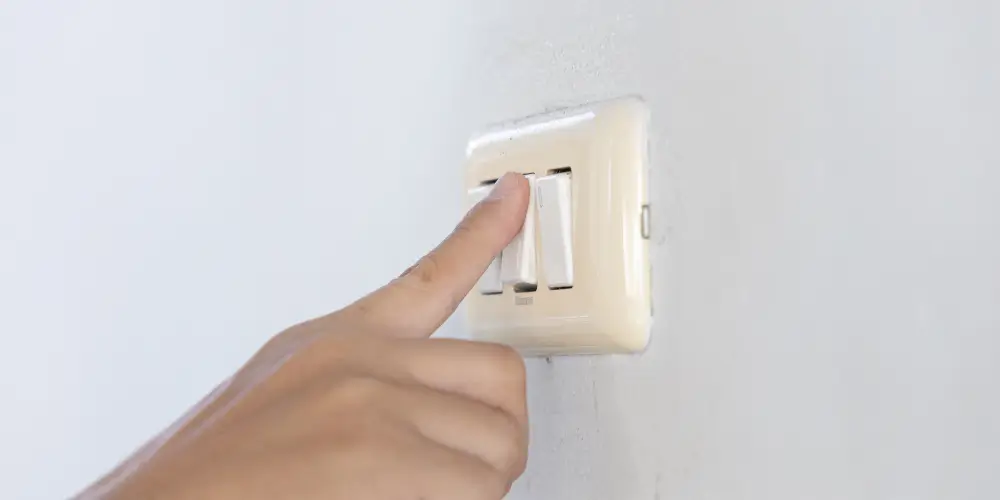
Before installing a new consumer unit, it is critical to safely isolate the main power supply to prevent any electrical hazards.
Use a lock-off kit to shut off the power securely; this tool guarantees that it cannot be inadvertently reactivated while you are working.
Additionally, always verify that the power is disconnected using a voltage tester. This step enhances your safety during installation.
How to Isolate Safely
Isolating the main power supply is essential in guaranteeing safety when installing a consumer unit. This process involves several critical safety precautions and a thorough risk assessment to prevent electrical accidents.
Understanding and implementing proper isolation procedures guarantees that the work environment remains secure for all tasks related to the consumer unit installation.
Here are the key steps to follow:
- Identify the Main Switch**: Locate the main switch on your consumer unit. This is the primary control point for turning off the electricity supply to your property. Confirm that you have clear access to this switch and that it is properly labelled.
- Engage the Emergency Shutoff**: Activate the emergency shutoff mechanism. This is usually a large, red switch near the main switch or meter. Its purpose is to immediately cease all electrical flow, serving as a critical part of the isolation procedures.
- Test for De-energisation**: After turning off the circuit breakers, use a voltage tester** on all circuits within the consumer unit to confirm that they are de-energised. This step verifies that the isolation is effective and prevents accidental exposure to live wires during installation.
Always confirm that these steps are carried out under the guidance of a qualified electrician to maintain high safety and compliance with local electrical codes.
Lock-Off Kits and Safety Tips
After confirming that the main power supply is isolated, using lock-off kits provides additional security during the installation of a consumer unit.
Lock-off kits benefit the electrical installation by guaranteeing no accidental re-energisation, adhering to essential electrical safety protocols. These kits typically include lock-out devices that fit various switches and circuit breakers, effectively securing the emergency shut-off state.
It is vital to integrate the use of appropriate safety gear essentials. This includes insulated gloves, goggles, and flame-resistant clothing to protect against electrical arcs and potential shorts.
Additionally, every professional must adhere to stringent safety standards encompassing proper tool usage. Tools used should be specifically designed for electrical work, featuring insulated handles and appropriate ratings for the current exposure.
Always verify the integrity of your lock-off device after installation and test the circuit to confirm no current flow before beginning any work.
Remove the Old Consumer Unit
Before removing the old consumer unit, verify that all connections are safely disconnected to prevent electrical hazards.
Carefully label each wire and component during disassembly to facilitate the installation of the new unit.
Finally, adhere to local regulations regarding the disposal of the old consumer unit to guarantee environmental compliance and safety.
Disconnecting Old Components
The initial step in replacing a consumer unit is safely disconnecting and removing the old one. This process involves meticulous attention to safety precautions and requires specific tools. Understanding the steps thoroughly is essential to avoid common mistakes that can lead to electrical hazards or equipment damage.
Here are important steps for disconnecting old components:
- Verify Power is Off: Confirm that all power sources to the consumer unit are completely disconnected. Use a voltage tester to confirm there is no live power. This is a vital safety precaution to prevent any risk of electrocution.
- Document Existing Connections: Before removing any connections, take detailed photographs or make thorough diagrams of the wiring setup. This aids in troubleshooting issues during the new unit’s installation and provides a reference to guarantee that all connections are correctly re-established.
- Remove Connections and Components: Use appropriate tools such as insulated screwdrivers and wire cutters to dismantle the unit. Carefully detach wires, ensuring they are labelled to facilitate reconnection. Keep track of screws and fixtures for potential reuse.
Time estimates for this task vary, but allocating sufficient time guarantees thoroughness. By adhering to these guidelines, the disconnection phase can be executed precisely, setting a strong foundation for installing the new consumer unit.
Disposing of the Old Unit Safely
Once the old consumer unit has been effectively disconnected, proper disposal is essential to guarantee environmental safety and compliance with local regulations.
Removing and recycling old units adheres to electrical safety guidelines and mitigates environmental impact. It is prudent to identify components within the unit that qualify as hazardous waste, such as certain electronic boards and batteries, and confirm they are disposed of according to hazardous waste disposal protocols.
Consult local disposal regulations to find authorised recycling centres or hazardous waste facilities equipped to handle such materials. These facilities can safely process and recycle the metal components and plastics often found in consumer units, preventing harmful substances from contaminating landfill sites.
Additionally, verify that any disposal documentation is meticulously maintained. This includes receipts or certificates from the recycling centre or hazardous waste facility, which may be required for compliance with local environmental policies or future auditing purposes.

Inspect the Wall or Backboard Area
Before proceeding with installing a new consumer unit, it is essential to thoroughly assess the condition and suitability of the wall or backboard area.
Evaluate compliance with fire safety requirements, ensuring the surface can securely support either a surface-mounted or flush-fitted unit.
This inspection should confirm the absence of any structural damage or material degradation that might compromise the installation’s safety or functionality.
Fire Safety Requirements
Verifying that the wall or backboard area where the consumer unit is installed meets fire safety requirements is critical for overall safety and compliance with regulations.
The installation environment must support the efficient operation of the consumer unit and adhere to stringent fire safety standards to protect the premises and its occupants.
Here are key considerations for inspecting the wall or backboard area:
- Material and Composition: Verify that materials used for the wall or backboard are non-combustible or fire-resistant by local building codes. This reduces the risk of fire spread should an electrical fault occur.
- Proximity to Fire Safety Devices: Confirm that the installation site is strategically chosen to maintain the recommended distances from fire alarm systems and emergency lighting fixtures. This helps maintain the functionality of these critical safety systems without interference from the consumer unit’s electromagnetic fields.
- Accessibility and Safety Inspections**: The location should facilitate easy access for regular electrical safety inspections and be clear of obstructing fire exit routes.
Additionally, consider the ideal smoke detector placement to enhance emergency response capabilities.
Adhering to these guidelines guarantees that the installation complies with legal requirements and enhances safety protocols.
Surface vs Flush Fitting Options
Inspect the wall or backboard area carefully when selecting surface and flush fitting options for installing a consumer unit. Evaluating wall material, space availability, and accessibility can greatly influence decision-making. Surface installation benefits include easier maintenance access and less invasive wall work, making it a preferable choice for solid walls where chiselling out a cavity for a flush unit could be problematic.
Flush fitting advantages involve a more integrated and less obtrusive appearance, which is often vital in areas where aesthetic considerations are a priority. However, this option requires a sufficiently deep cavity within the wall to accommodate the unit, which may not be available in all settings.
Here is a comparative table highlighting key considerations:
| Feature | Surface Installation | Flush Fitting |
| Aesthetic | Less integrated | Highly integrated |
| Space Requirement | None beyond unit dimensions | Requires cavity depth |
| Accessibility | Easier maintenance access | Potentially difficult if not well planned |
| Installation Complexity | Less invasive | More invasive, needs wall preparation |
Understand these factors about your specific environment to optimise functionality and appearance while adhering to safety standards.
Mark the New Unit’s Mounting Position
Once the wall or backboard where the consumer unit will be mounted has been inspected, the next step is to accurately mark the unit’s position.
Confirm that the markings align with the structural supports behind the wall. This will provide a stable base for securing the unit.
It is essential to verify that the backing material is fire-resistant to comply with safety regulations and minimise risk.
Securing the Unit Properly
Before installing your new consumer unit, it is crucial to mark its mounting position accurately. This guarantees that all subsequent steps are correctly executed, leading to a secure and efficient installation.
Once the position is marked, focus on the following key securing methods to guarantee the unit performs effectively and safely:
Mounting Techniques
Employ robust mounting brackets suitable for the type of wall (brick, concrete, or drywall) on which the unit will be installed. Confirm that these brackets are spaced evenly to distribute the consumer.
Vibration Dampening
Install vibration dampeners between the mounting brackets and the unit. This minimises the risk of damage from any potential vibrations caused by the electrical currents or external disturbances.
Alignment Checks
Before fully securing the unit, use a level to check the alignment. This prevents operational issues and uneven load distribution, which could lead to premature wear.
Tighten all screws and bolts to the manufacturer’s recommended torque settings to complete the installation.
Ensuring Fire-Resistant Backing
After securing the unit properly, an essential next step in installing a consumer unit is ensuring it has fire-resistant backing. This measure is critical for meeting safety standards and mitigating the fire risk associated with electrical faults.
It is paramount to select the right fire-resistant materials for the backing board. Materials such as non-combustible building boards or specially treated wood products that comply with national fire safety regulations should be considered.
When choosing backing board options, consult the latest installation guidelines to ensure compatibility with your consumer unit and adherence to fire safety protocols. The backing should be robust enough to resist ignition and limit the spread of flames, providing a protective barrier between the consumer unit and the building structure.
Installation of the fire-resistant backing involves precise measurements and careful placement to cover the area behind the consumer unit fully. Secure the backing board firmly to the wall, making sure no gaps or loose fittings could compromise its effectiveness.
Review and maintain the installation regularly to uphold safety standards and continue effective fire risk prevention, safeguarding the property and its occupants from potential electrical hazards.
Drill and Install Fixings
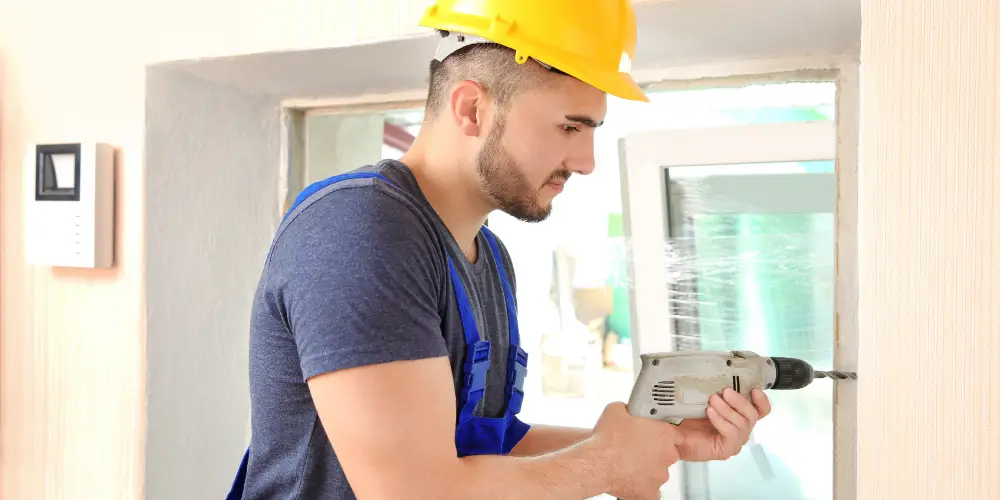
Once you have marked the position for your new consumer unit, the next step is to drill holes and select appropriate wall plugs to guarantee a secure installation.
To prevent structural compromise, it is essential to choose wall plugs compatible with the wall’s material and the unit’s weight.
Securely fasten the unit to the wall using screws that fit snugly into the plugs, applying even pressure to avoid material damage.
Choosing Suitable Wall Plugs
Selecting the appropriate wall plugs to secure a consumer unit is vital for guaranteeing a stable and safe installation. The choice of wall plugs depends on several factors, including the wall material, load capacity, and the specific requirements of the installation environment.
To achieve ideal security and functionality, consider the following:
- Wall Material: Different materials, such as brick, concrete, or plasterboard, require specific wall plugs. For example, expansion wall plugs are ideal for solid materials like concrete. In contrast, plasterboard demands specialised toggles or spring-loaded plugs that distribute weight more evenly.
- Load Capacity: The wall plug must support the weight of the consumer unit and any additional forces that might occur due to the electrical connections. To avoid potential failure, verify the wall plugs’ load capacity and confirm they exceed the total expected load. Confirm that the wall plug’s depth matches the wall’s drilling depth. Deeper installations generally provide better hold. Also, check plug compatibility with the screw types you intend to use, ensuring a snug fit that prevents loosening over time.
Selecting the correct wall plugs is a fundamental step in the installation process, essential for the long-term reliability and safety of the consumer unit.
Securing the Unit Firmly
To guarantee a solid and safe installation of the consumer unit, begin by marking the drilling points on the wall accurately according to the unit’s dimensions. Using a spirit level, verify that these marks align precisely to maintain the unit’s structural integrity and operational efficiency.
Opt for a drill bit that corresponds to both the size of the wall plugs and the wall’s material, considering factors such as wall stability and the expected load distribution.
Proceed to drill into the marked spots, creating clean and measured holes that will snugly accommodate the wall plugs. This precision guarantees that the fixings provide a secure mounting, vital for handling dynamic loads due to wire movements and possible environmental vibrations.
Insert the wall plugs, ensuring they fit tightly within the holes.
Finally, align the consumer unit over the plugs and use screws suited for the plug and wall type. Tighten these screws to a firm fit, avoiding overtightening which might damage the wall or the unit’s mounting points.
This secure attachment aids in vibration dampening, adhering to safety standards, and promoting overall system longevity.
Prepare Cable Entry Points
Preparing cable entry points is critical in fitting a consumer unit to guarantee safety and functionality.
Begin by removing the necessary knockouts or fitting cable glands to the unit’s body, which will serve as the primary entry points for wiring.
Next, grommets are installed at these entry points to protect cables from abrasion and damage and maintain the integrity of the electrical connections.
Knockout Removal or Gland Fitting
Before wiring the consumer unit, it is essential to prepare cable entry points by removing knockouts or fitting cable glands. This stage guarantees that the installation meets safety standards and maintains structural integrity.
Key Steps for Preparing Cable Entry Points:
- Identify and Select Knockout Types: Consumer units come with various sizes of pre-punched knockouts. Select the appropriate knockout size that matches the cable dimensions you plan to use. Use a step drill or knockout punch tool to remove these knockouts cleanly, guaranteeing no sharp edges that could damage the cables.
- Choose Suitable Gland Options: Cable glands provide a secure means of entering the wires into the consumer unit and offer added protection against strain and environmental factors. Assess the type of cable and environment to choose between plastic or metal glands, which could be either compression or armoured types.
- Follow Installation Techniques and Safety Measures: Always guarantee the power is off before starting any work on the consumer unit. Use insulated tools to remove knockouts and fit glands, following the manufacturer’s instructions to maintain the unit’s integrity and compliance with electrical standards.
Using Grommets for Cable Protection
Following the removal of knockouts or installation of cable glands, the next step involves using grommets to enhance cable protection at a consumer unit’s entry points. Grommets are vital in safeguarding the cables from abrasion and damage as they pass through the unit’s metal or plastic frames.
Selecting the appropriate grommet type is essential and depends largely on the cable sizes and environmental factors where the consumer unit is installed. Rubber grommets are commonly used due to their flexibility and durability. They are suitable for various cable diameters and offer a snug fit that prevents cable movement that could lead to insulation wear.
Grommet installation techniques must be precise to guarantee excellent protection. Measure the diameter of the cable and choose a grommet with a slightly smaller inner diameter for a tight fit. Insert the grommet into the pre-prepared hole, ensuring it sits flush against the unit to eliminate gaps.
This setup not only protects the cables from mechanical damage but also contributes to the overall integrity and safety of the electrical installation by mitigating risks associated with dust, moisture, and other environmental contaminants.
Fit the Consumer Unit to the Wall
Once the consumer unit’s position is marked on the wall, verify it is aligned horizontally and vertically using a spirit level to avoid operational issues post-installation.
Secure the unit firmly to the wall using appropriate fixings, which should be chosen based on the wall material—masonry screws for concrete walls or wall plugs and screws for plasterboard.
Finally, all fixings must be tightened to verify stability and to prevent any movement of the unit, which can compromise the safety and functionality of the electrical system.
Aligning the Unit Correctly
Verifying that the consumer unit is aligned correctly is vital for operational efficiency and safety. Precise alignment facilitates ideal function and minimises risks associated with electrical installations. Here’s how you should proceed:
Measure and
Mark
Before attaching the consumer unit, use accurate measuring tools to determine the exact location based on the consumer unit dimensions. Employ wall alignment techniques to mark the position clearly on the wall. This step guarantees that the unit starts in the correct.
Utilise Levelling
Tools
Deploy a spirit or laser level to check the consumer unit’s alignment. Place the level on top of the unit and adjust until it is perfectly horizontal. Levelling tools are essential, as even slight deviations can lead to operational inefficiencies or increased risk of component stress.
Select Suitable Mounting Brackets
Choose mounting bracket options that offer adjustability** for alignment error corrections. This flexibility allows for fine-tuning the position of the consumer unit during installation. Confirm that the brackets are robust enough to support the unit’s weight.
These detailed steps are indispensable for installing a consumer unit that is both safe and effective.
Final Fixing and Tightening
After confirming the consumer unit is properly aligned, the next critical step involves securely fixing it to the wall. The integrity of the installation hinges on this phase; hence, meticulous attention to detail is paramount.
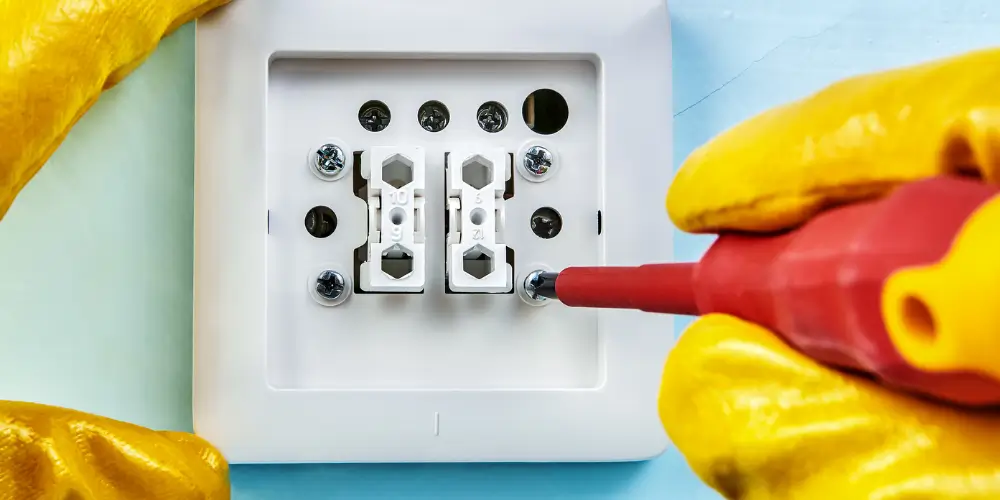
Begin by selecting suitable fixings—typically, heavy-duty wall plugs and screws that match the wall type, whether brick, block, or plasterboard.
Using a power drill, create pilot holes at the marked positions corresponding to the fixing holes on the back of the consumer unit. Confirm these holes are of appropriate depth and width to accommodate the wall plugs snugly.
Insert the plugs, align the unit over them, and initiate the process of tightening screws. Employ a torque screwdriver to achieve a consistent and secure fit, preventing over-tightening that might damage the wall or the unit’s casing.
Proceed with final checks, involving a thorough review of all screws for uniform tightness and the overall stability of the unit. Conduct safety inspections to verify that no installation part compromises electrical safety.
Final adjustments may be necessary to confirm that the unit is perfectly level and flush with the wall surface. This meticulous installation guarantees robust, secure connections and enhances the consumer unit’s safety and functionality.
Install the Blanks and Labels
Upon securing the consumer unit to the wall, the next essential step involves installing blanks in unused breaker slots to maintain safety and compliance with standards.
Each circuit within the unit must be clearly labelled to facilitate easy identification and future maintenance. Use durable, legible labels that resist environmental factors such as moisture and heat, ensuring long-term readability and functionality.
Covering Unused Breaker Slots
Covering unused breaker slots in a consumer unit is vital for maintaining safety and organisational standards. This practice prevents the entry of dust and debris and reduces the risk of accidental contact with live components.
Utilising specialised breaker covers is a critical safety measure, guaranteeing that these open slots are securely sealed.
For effective coverage of unused slots, consider the following installation tips:
- Select Appropriate Covers: Verify that the breaker covers are compatible with your consumer unit model. Use covers designed for your unit’s make and model to ensure a secure fit and maximum protection.
- Secure Installation: Fit the covers firmly into the slots. They should snap or slide into place without excessive force, providing a flush finish with the surface of the consumer unit. This helps maintain the integrity of the unit’s protective barrier.
- Regular Inspection: Periodically check the condition of the covers. Replace any that are damaged or have become loose over time to maintain continuous safety standards.
Implementing these steps will enhance the safety and functionality of your consumer unit, aligning with best practices in electrical system management.
Labelling Each Circuit Clearly
Labelling each circuit within a consumer unit is essential for safety and efficiency in electrical systems management. Effective circuit identification involves using durable label materials that withstand environmental conditions, typically in electrical installations. Labels should be made from heat-resistant, non-conductive plastic or laminated paper designed for high durability and legibility.
For a systematic approach, integrate colour coding to distinguish between different types of circuits. For example, red labels should be used for power circuits, blue for lighting, and yellow for special systems like alarms. This method enhances visual clarity and facilitates quick identification during maintenance or emergency situations.
Label placement is critical; affix labels directly beside each circuit breaker or fuse, ensuring they are easily visible during installation and routine checks. Each label must clearly state the circuit descriptions, providing detailed information such as the area served (e.g., kitchen lighting, bathroom power socket) and any particular notes relevant to the circuit’s function or specific safety instructions.
Adhering to these guidelines guarantees that any modifications or troubleshooting can be performed efficiently, reducing the risk of errors or accidental misconnections.
Always update the labelling immediately following any changes to the circuit configurations to maintain accuracy and safety compliance.
Check for Compliance with UK Standards
When fitting a consumer unit in the UK, it is vital to guarantee compliance with BS 7671 and the applicable Building Regulations.
Specifically, the installation must adhere to the requirements for fire-rated consumer units to enhance safety in case of electrical fires.
This adherence guarantees legal compliance and enhances the electrical installation’s safety and functionality.
BS 7671 and Building Regs Overview
Before installing or upgrading a consumer unit in the UK, it is fundamental to guarantee compliance with BS 7671 and the relevant Building Regulations. The BS 7671, also known as the Wiring Regulations, is a national standard that dictates the parameters for electrical installations to ensure safety and functionality.
To effectively navigate these requirements, consider the following key elements:
- BS 7671 Updates: BS 7671 is regularly updated to reflect new technologies and safety practices, so it is imperative to consult the latest version. Each amendment can introduce significant changes in installation standards and safety requirements.
- Electrical Safety and Compliance Checks**: These are essential to prevent hazards such as electrical fires, shocks, and other risks. Compliance checks should be thorough and conducted by a certified electrician to verify that all aspects of the electrical installation** adhere to the current standards.
- Wiring Regulations Adherence: This involves meticulously reviewing the installation practices and materials used against the stipulated guidelines in BS 7671. This guarantees the consumer unit and associated circuits are safe, efficient, and capable of handling the intended load.
Adhering to these guidelines verifies compliance and enhances the electrical installation’s reliability and safety.
Fire-Rated Consumer Units Requirement
To promote fire safety, all newly installed consumer units on domestic premises must be constructed with non-combustible materials, typically steel, to comply with UK standards. This requirement is critical to the broader fire safety measures to mitigate electrical fire risks inherent in residential settings.
The selection of consumer unit materials is not merely a compliance issue but a fundamental aspect of guaranteeing the safety and longevity of electrical installations. Steel, known for its durability and fire-resistant properties, provides a robust defence against the spread of fires, aligning with the latest fire-resistant technology and installation standards.
Here is a brief overview of key considerations:
| Factor | Detail |
| Material | Non-combustible (Steel) |
| Standard | Complies with UK fire safety regulations |
| Benefit | Reduces the risk of electrical fires |
When installing a consumer unit, it is imperative to adhere to these standards strictly. The use of certified, fire-rated materials not only complies with regulatory requirements but also greatly enhances the overall safety of the electrical system. Technical precision in installation ensures that the unit’s fire-resistant capabilities are fully operational, effectively safeguarding against potential fire hazards.
Frequently Asked Questions
What Is the Lifespan of a Typical Consumer Unit?
A typical consumer unit’s lifespan is around 25-30 years. Factors like usage intensity and environmental conditions, regular maintenance practices, and timely addressing of signs of wear can greatly enhance this durability. Replacement is essential when functionality declines.
Can a Consumer Unit Be Painted to Match Interior Decor?
Yes, a consumer unit can be painted to enhance interior design. Utilise appropriate painting techniques and materials for electrical safety, ensuring colour matching aligns with home improvement goals while maintaining the unit’s aesthetics and functionality.
Are There Any Smart Consumer Units Available?
Yes, smart consumer units integrating advanced technology, like a Swiss army knife, offer remote access, energy monitoring, and adherence to rigorous safety standards. Installation options vary, ensuring adaptability to specific user needs and environments.
What Is the Cost Difference Between Single and Three-Phase Consumer Units?
The difference between single and three-phase consumer units hinges on installation expenses, maintenance costs, and energy efficiency. Three-phase units, adhering to higher safety standards, generally incur greater initial and ongoing financial commitment.
How Does Weather Affect Outdoor Consumer Units?
Outdoor consumer units, like sentinels in varied climates, must withstand moisture, UV exposure, and temperature fluctuations. Following installation guidelines guarantees ideal moisture resistance and insulation, safeguarding functionality despite environmental adversities.
