
Smoke alarms are not normally the main subject of an EICR.
An EICR, or Electrical Installation Condition Report, checks the condition of the fixed electrical installation. This includes wiring, circuits, consumer unit, protective devices, earthing, bonding and electrical safety observations.
A missing standalone smoke alarm is usually a fire safety or landlord compliance issue, not automatically an EICR C1, C2 or C3 code.
However, if smoke alarms are mains-powered or connected to the fixed electrical installation, the electrician may comment on the electrical supply, circuit condition, damage, unsafe wiring or defects found during the inspection.
In simple terms:
- Missing battery smoke alarm = usually not an EICR fail by itself
- Missing smoke alarms in a rental property = landlord/fire safety issue
- Faulty hardwired smoke alarm circuit = may be an EICR observation
- Exposed live parts or unsafe wiring linked to alarms = may be coded
- Smoke alarm compliance is separate from an EICR
Last Updated: 2026
Reviewed By: London Safety Certificate Compliance Team
Key Takeaways
- An EICR checks the fixed electrical installation, not full smoke alarm compliance.
- Missing standalone smoke alarms do not normally fail an EICR by themselves.
- A mains-powered smoke alarm circuit may be assessed if it forms part of the fixed wiring.
- Unsafe alarm wiring, exposed live parts or electrical defects may receive an EICR code.
- Landlords still have separate legal duties for smoke alarms in rental properties.
- In England, landlords must have at least one smoke alarm on every storey used as living accommodation.
- C1, C2, C3 and FI should only be used for electrical observations found during inspection.
Table of Contents
Quick Answer: Does an EICR Check Smoke Alarms?
| Question | Answer |
|---|---|
| Are smoke alarms part of an EICR? | Not normally as a full fire safety check |
| Does an EICR fail if smoke alarms are missing? | Usually no, not for standalone alarms alone |
| Can smoke alarm wiring be noted on an EICR? | Yes, if it is part of the fixed electrical installation |
| Is no smoke alarm automatically C1? | No |
| Is no smoke alarm automatically C2? | No |
| Is no smoke alarm automatically C3? | Not as a blanket EICR rule |
| Do landlords still need smoke alarms? | Yes, under separate smoke alarm rules |
| What should landlords do? | Check both EICR compliance and smoke alarm compliance separately |
Understanding EICR Codes
An Electrical Installation Condition Report (EICR) is a formal document generated following a thorough assessment of a building’s electrical systems to guarantee they meet the required safety standards.
The primary objective of EICR codes, including those specific to smoke alarms, is to identify any deficiencies that may pose potential safety hazards.
What is an EICR?
EICR, or Electrical Installation Condition Report, is a formal document generated by a qualified electrician or approved contractor that assesses the safety of electrical installations within a property. This assessment is essential for understanding the EICR basics, a foundational component in ensuring that all electrical systems meet current safety standards.
Electrical inspections, as part of the EICR, involve a thorough examination of the electrical circuits, equipment, and associated materials. This includes checking for wear and tear, identifying any potential electric shock risks, and making sure that the installation has not been altered in a manner that could compromise safety.
The primary aim is to guarantee compliance with the prevailing wiring regulations and standards.
Compliance guidelines within the EICR framework detail the conditions and standards required for electrical systems. These guidelines serve as a benchmark for risk assessments conducted during inspections, helping to identify areas that do not meet legal safety requirements.
The assessment categorises risks with specific codes, which inform the property owner of necessary remedial actions.
Through its structured approach, the EICR guarantees that electrical installations do not pose any undue risk to occupants, aligning with statutory requirements for electrical safety.
Purpose of EICR Codes
Why are EICR codes essential for property safety?
Electrical Installation Condition Reports (EICR) codes are critical regulatory tools designed to enforce safety standards in residential and commercial properties. They serve as systematic procedures for evaluating electrical installations against the national standards for the safety of electrical systems. The primary purpose of these codes is to identify any deficiencies that could pose safety hazards, thereby preventing potential electrical fires and guaranteeing that the installations are in a condition suitable for continued use.
EICR codes are pivotal for integrating smoke alarm systems. Compliance with smoke alarm standards is a key component of these codes, highlighting the necessity for proper installation and maintenance to safeguard occupants from fire risks through better EICR code understanding.
Additionally, the implications of EICR evaluations extend beyond mere compliance; they involve educating property owners and tenants on their responsibilities towards maintaining these safety measures. This promotes a culture of fire safety education and proactive prevention strategies.
Furthermore, compliance challenges often arise due to the evolving nature of electrical standards and tenant turnover. Addressing these challenges through rigorous EICR evaluations ensures ongoing adherence to safety norms, thereby mitigating risks associated with electrical faults and enhancing overall property safety.
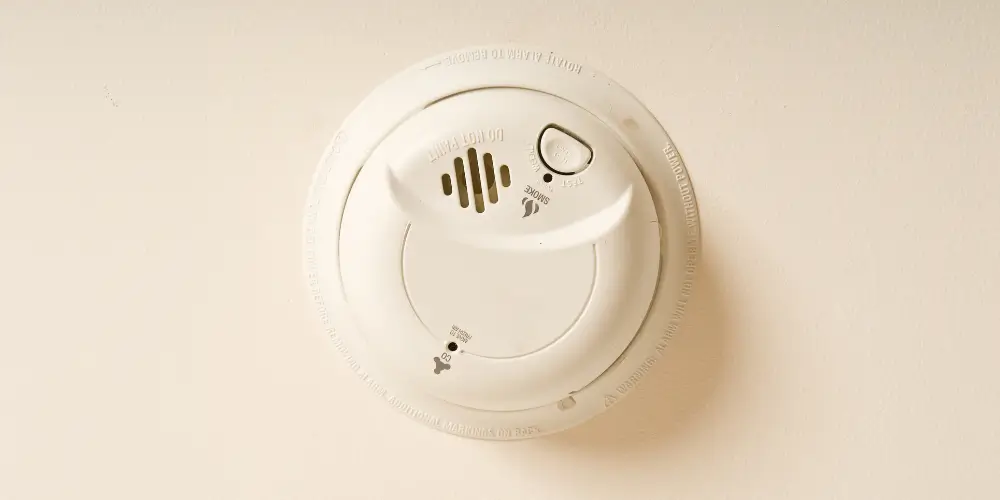
Importance of Smoke Alarms
Smoke alarms play a vital role in fire safety by providing early warning of fire, thereby allowing for timely evacuation and potentially saving lives.
In London, the installation and maintenance of these devices adhere to national safety guidelines and meet specific legal requirements that vary by area and building type.
Understanding these requirements is essential for complying with them and enhancing the protective measures afforded by smoke alarms under the Electrical Installation Condition Report (EICR) standards.
Role in Fire Safety
A vast majority of residential fire-related fatalities occur in homes without functioning smoke alarms. This statistic underscores the critical role smoke alarms play within the broader spectrum of fire safety mechanisms. Integrating these devices into thorough fire prevention strategies greatly enhances the protective measures against the often devastating impact of residential fires.
Smoke alarms act as the first line of defence, providing early warning signals that can facilitate timely evacuation and emergency response. Effective community awareness programs are pivotal in educating homeowners and residents about the necessity of regular maintenance of these devices to guarantee their operational integrity.
Additionally, emergency response training often incorporates the function and importance of smoke alarms, equipping individuals with the knowledge to react swiftly and safely during a fire incident.
Residential safety audits often emphasise the placement and functionality of smoke alarms, integrating them as a key component of home safety evaluations. Advances in technology integration solutions have further improved the effectiveness of smoke alarms, with features such as interconnected systems that alert all occupants simultaneously and smart alarms that can notify homeowners remotely.
Consequently, smoke alarms are indispensable tools in the architecture of residential fire safety, greatly mitigating risks and enhancing protective responses.
Legal Requirements in London
Understanding the legal requirements for smoke alarms in London is essential for guaranteeing compliance and enhancing fire safety in residential properties. The regulations mandate that all landlords install smoke alarms on every floor of their properties where a room is used wholly or partly as living accommodation. This requirement is part of broader fire safety compliance measures aimed at reducing risks and safeguarding occupants.
| Key Aspect | Detail | Implication |
| Installation | Mandatory on every occupied floor | Non-compliance can lead to penalties |
| Maintenance | Regular checks required | Guarantees operational effectiveness |
| Awareness | Must inform tenants of installations | Increases safety equipment utilisation |
Landlord responsibilities extend beyond mere installation to guaranteeing that all safety equipment, including smoke alarms, is maintained and functional. Tenants, on the other hand, must be made aware of these installations and their operational status. This dual responsibility guarantees a high level of tenant awareness and contributes to overall safety in residential settings. Additionally, adherence to smoke alarm regulations is not merely a legal formality but a critical component of fire safety management, demanding precision and vigilance from all stakeholders involved.
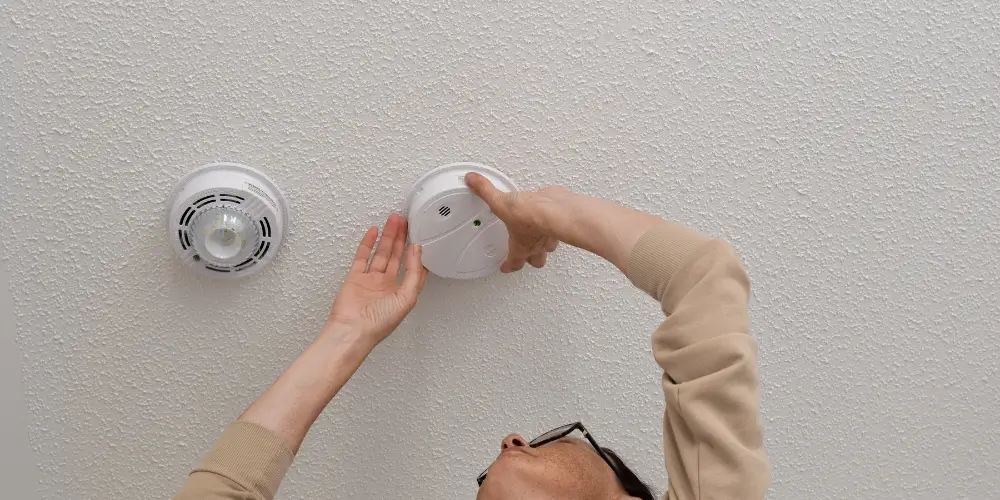
EICR Codes Related to Smoke Alarms
Specific codes in the Electrical Installation Condition Report (EICR) are vital for identifying the presence and functionality of smoke alarms within a property.
Common codes such as C1, indicating immediate danger due to missing smoke alarms, and C2, suggesting potential danger, are assigned based on the absence or malfunction of these devices.
Recognising and addressing these codes is essential for ensuring compliance with safety standards and reducing fire-related risks.
Identifying Missing Smoke Alarms
Identifying missing smoke alarms within residential or commercial properties is a critical aspect of the Electrical Installation Condition Report (EICR). The assessment meticulously examines the presence and functionality of smoke alarms, which are indispensable for meeting regulatory compliance and guaranteeing occupant safety.
This process involves a thorough inspection, not only to check the existence but also to evaluate the adequacy of smoke alarm installation in accordance with the latest standards and technological advancements in alarm technology.
Professionals conducting these inspections are required to have a deep understanding of various smoke alarm systems and their installation parameters. This knowledge guarantees that the systems are appropriately integrated into the building’s electrical network and can provide reliable warnings in case of fire.
Additionally, EICR inspectors are also tasked with verifying that the property has undergone recent residential compliance checks and adheres to preventative safety measures.
The integration of fire safety education into the inspection process empowers property owners with the essential knowledge to maintain and periodically test smoke alarm systems, guaranteeing their operational integrity between scheduled reviews.
This all-encompassing approach underscores the importance of proactive safety measures in fire prevention and protection strategies.
Common Codes Assigned
During Electrical Installation Condition Reports (EICR), specific codes are assigned to identify and categorise the status of smoke alarms in properties. These codes reflect the urgency and nature of the issues found, influencing both the safety outcomes and the EICR implications for property compliance. The coding system is essential for delineating the severity of risks and prescribing necessary remedial actions to enhance fire safety education.
| Code | Description | Implication |
| C1 | Danger present, immediate risk | Urgent action required; non-compliance with regulations |
| C2 | Potentially dangerous | Remedial action is needed soon to guarantee the safety |
| C3 | Improvement recommended | Advised upgrade to enhance safety technology |
| FI | Further investigation required | Unclear issues; more detailed assessment needed |
| NA | Not applicable/no issues found | Compliant, no action needed |
Understanding these codes is pivotal in maintaining Building compliance and guaranteeing the effective deployment of appropriate Smoke alarm types. The technical allocation of these codes enables a structured approach to managing fire risks. It underscores the critical role of advanced safety technology in residential and commercial settings. Each code not only dictates immediate action but also contributes to a broader understanding of fire safety protocols and prevention strategies.
Safety Implications
The absence of smoke alarms greatly elevates the risk of injury or fatality in residential fires by delaying the detection and response times.
Compliance with EICR codes for smoke alarms directly correlates with enhanced occupant safety, reducing potential harm in fire incidents.
It is critical to evaluate the impact of these regulations on both the immediate and long-term safety outcomes for building occupants.
Risks of No Smoke Alarms
The lack of smoke alarms in residential or commercial buildings greatly increases the risk of fatalities and injuries in the event of a fire. The absence of these critical devices means that the detection of smoke and early signs of fire is considerably delayed, reducing the time available for evacuation and emergency response.
This oversight can exacerbate fire hazards, transforming manageable incidents into catastrophic losses.
From an insurance perspective, buildings without smoke alarms are seen as high-risk properties. This perception can lead to increased premiums or denial of coverage, placing a financial burden on homeowners and commercial property owners.
Additionally, the lack of smoke alarms may contravene local safety regulations, potentially leading to legal repercussions, fines, and invalidated insurance claims.
Homeowner responsibilities extend beyond property maintenance to include ensuring the safety and welfare of occupants. Community awareness programs and regulatory bodies emphasise the installation of smoke alarms as a fundamental safety measure.
Similarly, landlords bear a critical duty to install and maintain smoke alarms to safeguard tenant safety. Failure to do so not only endangers lives but also exposes property owners to liability and potential litigation.
Impact on Occupant Safety
Ensuring the presence of functional smoke alarms in buildings greatly enhances the safety of occupants by providing early warning in case of fire, thereby allowing more time for evacuation. This measure considerably impacts emergency preparedness by fostering an environment where timely and informed responses to fire incidents are possible.
Implementing smoke alarms enhances occupant awareness, which correlates directly with the effectiveness of evacuation procedures. This reduces potential casualties and injuries in emergencies.
Incorporating regular fire drills and safety education into the building management protocols further leverages the presence of smoke alarms. These practices educate occupants on the ideal response strategies during fire incidents, which are critical in minimising panic and confusion.
A robust risk assessment should identify the absence of smoke alarms as a major deficiency, highlighting the building’s increased vulnerability to fire-related accidents.
Moreover, smoke alarms play a pivotal role in the systematic approach to safety by serving as the initial alert system in a layered emergency response framework.
Their integration with other safety measures, such as fire extinguishers and clear, accessible evacuation routes, forms a thorough safety network that considerably mitigates the risks associated with fires.
Regulatory Standards
The UK Building Regulations specify stringent criteria for the installation and maintenance of smoke alarms to guarantee safety and compliance.
Landlords are particularly mandated to adhere to these standards, guaranteeing that all residential properties meet the Electrical Installation Condition Report (EICR) requirements.
This not only safeguards tenants but also legally protects the landlords from potential liabilities.

UK Building Regulations
Within the framework of UK Building Regulations, specific standards are mandated for the installation and maintenance of smoke alarms in residential and commercial buildings to guarantee safety and compliance.
These regulations are designed to enhance building safety and secure a high standard of fire prevention. Compliance with these standards is not merely a recommendation but a legal requirement that must be rigorously followed to minimise risk and protect occupants.
The technology behind smoke alarms must meet specified criteria that support early detection and reliability in a variety of building layouts and usage patterns.
The regulatory framework is robust, requiring that all installed alarms be systematically tested and maintained to remain effective in alerting occupants of fire hazards. This rigorous approach helps mitigate potential fire risks, safeguarding both property and lives.
Additionally, while building owners and managers typically have the primary responsibility for installing and maintaining these devices, tenants also have certain responsibilities to secure the functionality of smoke alarms.
This shared responsibility model is vital for continuous operational effectiveness and forms an integral part of overall regulatory compliance strategies in fire safety.
Compliance for Landlords
Under UK Building Regulations, landlords are responsible for guaranteeing that all smoke alarms in their properties meet strict compliance standards. This entails not only the installation but also the regular maintenance and testing of these devices to ascertain functionality and safety. Landlord responsibilities extend to providing compliance training and guaranteeing tenant awareness of safety procedures and the proper use of installed smoke alarms.
Property inspections play an essential role in maintaining these safety standards. Regular checks are mandated to verify that smoke alarms are operational and correctly positioned according to legal requirements. These inspections must be documented meticulously to provide evidence of compliance should disputes arise or regulatory audits be conducted.
The following table outlines key aspects of compliance for landlords regarding smoke alarms:
| Aspect | Description |
| Installation | Guarantee proper installation as per manufacturer’s guidelines |
| Maintenance | Regular checks and replacements as necessary |
| Documentation | Maintain records of inspections and maintenance activities |
| Education | Inform tenants about smoke alarm testing and evacuation procedures |
Adherence to these standards not only fulfils legal obligations but greatly enhances tenant safety, potentially saving lives in the event of a fire.
Identifying Non-Compliance
Identifying non-compliance in the context of smoke alarm installation involves recognising key indicators, such as the absence of required smoke alarms in specified locations.
Inspectors play an essential role in this process. They use detailed checklists aligned with the EICR code to document any discrepancies or violations systematically.
This method guarantees that all findings are reported accurately, facilitating timely enforcement and compliance rectification.
Signs of Missing Smoke Alarms
Recognising the absence of smoke alarms in residential properties is essential for ensuring compliance with safety regulations. Identifying signs of missing alarms involves a systematic assessment of both visible installations and documentation. The absence is initially suggested by a lack of physical devices in critical areas defined by building codes, such as bedrooms, living rooms, and nearby kitchen spaces.
Detection systems serve as the frontline in fire prevention, and their non-existence can often be correlated with outdated or missing inspection records. A professional evaluation should include scrutinising property maintenance logs for gaps in safety device updates or installations.
Another indicator is the absence of wiring or mounting brackets typically used for smoke alarms, which can be spotted during a thorough physical inspection of the premises.
Safety awareness campaigns consistently emphasise the importance of functional alarms, and any alternative solutions, such as heat detectors or integrated fire systems, should also be documented and verified. If such alarm alternatives are not present or if their functionality does not align with the latest safety standards, this, too, is a critical non-compliance issue.
Consequently, the technical evaluation for missing smoke alarms is a multifaceted process that focuses on both physical evidence and compliance documentation.
How Inspector Report Issues
When inspectors identify non-compliance concerning smoke alarm installations during property evaluations, they follow a structured protocol to document and report these issues. This process is underpinned by rigorous inspector training, guaranteeing that each assessment adheres to established reporting protocols. Inspectors utilise standardised inspection checklists, which guide them through an all-encompassing review of smoke alarm systems, noting any deviations from legal and safety standards.
Here’s a breakdown of their process:
| Stage | Action |
| Initial Assessment | Verify the presence and placement of alarms. |
| Detailed Inspection | Check functionality and compliance with codes. |
| Documentation | Record findings and evidence of non-compliance. |
| Reporting | Submit a detailed report to the appropriate authority. |
Each step is vital and reflects the inspector’s responsibilities to guarantee safety and regulatory compliance. Common findings include improperly located alarms, expired units, or faulty installations, which are meticulously documented. The final report is a significant document that communicates the level of compliance to property owners and regulatory bodies, influencing necessary remediations to uphold safety standards. This technical and analytical approach is indispensable for maintaining the integrity and efficacy of safety inspections.
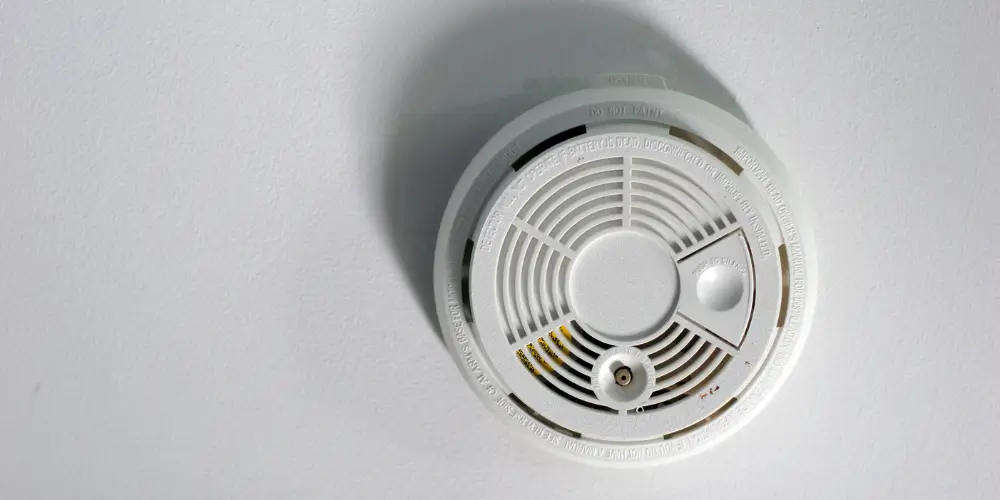
What EICR Code Is Given for No Smoke Alarms?
For standalone battery smoke alarms, there is usually no automatic EICR code simply because the alarm is missing.
An EICR is not the same as:
- a smoke alarm compliance check
- a fire alarm certificate
- a fire risk assessment
- a landlord smoke alarm inspection
- a fire safety certificate
If the smoke alarm is mains-powered and connected to the fixed electrical installation, the electrician may record an EICR observation if there is an electrical defect.
Possible examples:
| Situation | Possible EICR Outcome |
|---|---|
| No standalone battery smoke alarm | Usually outside EICR coding |
| Mains smoke alarm circuit damaged | C2 possible |
| Exposed live parts at alarm point | C1 possible |
| Smoke alarm wiring unsafe or poorly terminated | C2 possible |
| Alarm circuit cannot be verified | FI possible |
| Alarm installation could be improved but not dangerous | C3 possible |
| Missing smoke alarms in rental property | Separate landlord/fire safety issue |
Is it possible to fail an EICR for no smoke alarms?
While a C3 code is given for missing smoke alarms as an improvement recommendation, it is important to note that the absence of smoke alarms does not, by itself, cause an EICR to fail. However, the broader implications of non-compliance with smoke alarm regulations can greatly impact a property’s overall safety and legal standing.
EICR, or Electrical Installation Condition Report, assesses the safety of electrical systems and is a vital document, particularly for landlords. Failure to install smoke alarms does not directly lead to an EICR failure. Still, it raises serious concerns under fire safety standards that could indirectly influence the EICR outcomes.
Landlords must understand that adhering to smoke alarm regulations is part of their fundamental responsibilities. These regulations are designed to enhance tenant safety and provide early warnings in the event of a fire, thus reducing the risk of fatalities and injuries.
Tenant awareness is also important. Tenants should be informed about the significance of having functional smoke alarms and should verify that these are tested regularly. The synergy between tenant awareness and landlord responsibilities creates a safer living environment.
Accordingly, the EICR implications of missing smoke alarms extend beyond the electrical certification process. They touch on broader safety issues and compliance with legal standards that govern residential and commercial properties.
Confirming that smoke alarms are installed and maintained is not just about passing an EICR but about upholding safety and legal obligations that protect both the property and its occupants.
Are Smoke Alarms a Legal Requirement for Landlords?
Yes. Smoke alarm rules are important, but they are separate from the EICR.
For rented properties in England, GOV.UK’s smoke and carbon monoxide alarm requirements state that at least one smoke alarm should be installed on every storey used as living accommodation. Landlords should also make sure alarms are in working order at the start of each new tenancy.
This means a landlord can have:
- a satisfactory EICR but still poor smoke alarm compliance
- missing smoke alarms but no automatic EICR fail
- a separate fire safety issue that needs urgent correction
- mains-powered alarm wiring defects that may appear on an EICR
Smoke Alarm Compliance vs EICR
| Check / Certificate | What It Covers |
|---|---|
| EICR | Fixed electrical installation condition |
| Smoke alarm check | Smoke alarms present and working |
| Fire alarm certificate | Fire alarm system testing/servicing |
| Fire risk assessment | Fire hazards, escape routes, precautions and management |
| Landlord smoke alarm duty | Smoke alarms on storeys used as living accommodation |
| CO alarm duty | Carbon monoxide alarms where required |
EICR Codes for Smoke Alarm Electrical Defects
If the issue is with the electrical part of a hardwired smoke alarm installation, an EICR code may be used.
| EICR Code | Meaning | Smoke Alarm Electrical Example |
|---|---|---|
| C1 | Danger present | Exposed live parts at a smoke alarm point |
| C2 | Potentially dangerous | Damaged hardwired alarm circuit or unsafe wiring |
| C3 | Improvement recommended | Alarm circuit labelling or minor improvement recommended |
| FI | Further investigation required | Alarm circuit cannot be verified without further checks |
NICEIC EICR guidance explains the EICR classification codes as C1 danger present, C2 potentially dangerous, C3 improvement recommended and FI further investigation required.
Use EICR codes only where there is an electrical observation, not simply because a battery smoke alarm is missing.
Does an EICR Replace a Smoke Alarm Check?
No. An EICR does not replace a smoke alarm check.
An EICR may confirm whether electrical circuits and fixed wiring are safe, but it does not automatically prove that:
- smoke alarms are installed in the correct locations
- every required storey has a smoke alarm
- alarms are suitable for the property layout
- alarms are interlinked where required
- alarms are tested at tenancy start
- the property meets fire safety management duties
- a fire alarm system has been serviced
Landlords, letting agents and property managers should treat smoke alarm compliance as a separate safety task.
What Should Landlords Check?
Landlords should check:
- smoke alarm on every storey used as living accommodation
- alarms working at the start of each tenancy
- carbon monoxide alarms where required
- manufacturer instructions for placement and testing
- tenant access for testing/replacement
- battery condition where applicable
- mains-powered alarm circuit condition
- interlinked alarms where the property type requires them
- fire risk assessment recommendations where applicable
London Fire Brigade landlord fire safety guidance states that landlords are required by law to have at least one smoke alarm on every floor of their properties and carbon monoxide alarms in rooms containing solid fuel burning appliances.
Frequently Asked Questions
Does an EICR check smoke alarms?
Not normally as a full smoke alarm compliance check. An EICR checks the fixed electrical installation. Hardwired smoke alarm wiring may be noted if there is an electrical issue.
Are smoke alarms part of an EICR?
Standalone smoke alarms are not normally part of the EICR result. Mains-powered alarm circuits may be considered where they form part of the fixed electrical installation.
What EICR code is given for no smoke alarms?
There is no automatic EICR code for missing standalone smoke alarms. If there is an electrical defect with hardwired alarms, the code depends on the risk.
Is no smoke alarm a C1 on an EICR?
No, not automatically. C1 is for danger present in the electrical installation. Missing smoke alarms are usually a separate fire safety issue.
Can an EICR fail because smoke alarms are missing?
Usually no, not because standalone smoke alarms are missing. But a property may still fail landlord or fire safety duties separately.
Do landlords need smoke alarms?
Yes. In England, landlords must have at least one smoke alarm on every storey used as living accommodation.
Are hardwired smoke alarms checked during an EICR?
The electrician may inspect the electrical supply or circuit if it forms part of the fixed installation, but an EICR is not the same as a fire alarm service.
What should I book if smoke alarms are missing?
Book smoke alarm installation or fire alarm support. Book an EICR if you also need the fixed electrical installation inspected.
Summary: EICR Code for No Smoke Alarms
Missing standalone smoke alarms do not normally receive an automatic EICR code. An EICR checks the fixed electrical installation, not full smoke alarm compliance.
If a smoke alarm is mains-powered and there is an electrical defect with the fixed wiring, the electrician may record an EICR observation such as C1, C2, C3 or FI depending on the risk.
For landlords, smoke alarms are still a legal safety requirement, but this should be treated separately from the EICR. A property may need both a satisfactory EICR and proper smoke alarm compliance.