
What is a portable appliance test (PAT) inspects plug-in devices and their cords for safety, combining visual checks with electrical tests such as earth continuity, insulation resistance, and polarity to identify faults that could cause electric shock, fire, or damage. No universal legal mandate exists, but duty-holders must ensure equipment is safe and properly maintained, so businesses with public access, offices, schools, construction sites, and others commonly use PAT as best practice. Continue for details on who arranges, frequencies and choosing a tester.
Key Takeaways
- What is a portable appliance test (PAT) inspects and electrically tests portable appliances, plugs and cords to ensure they are safe to use.
- PAT combines visual checks for damage with tests like earth continuity, insulation resistance, and polarity.
- There is no universal legal requirement; duty-holders must ensure equipment is safe and maintained based on risk assessment.
- Common settings needing PAT include hospitality, retail, offices, schools, and construction sites with higher risk or public access.
- Testing frequency and responsibility depend on equipment risk, environment, and employer-assigned schedules or competent providers.
Table of Contents
What a PAT Check
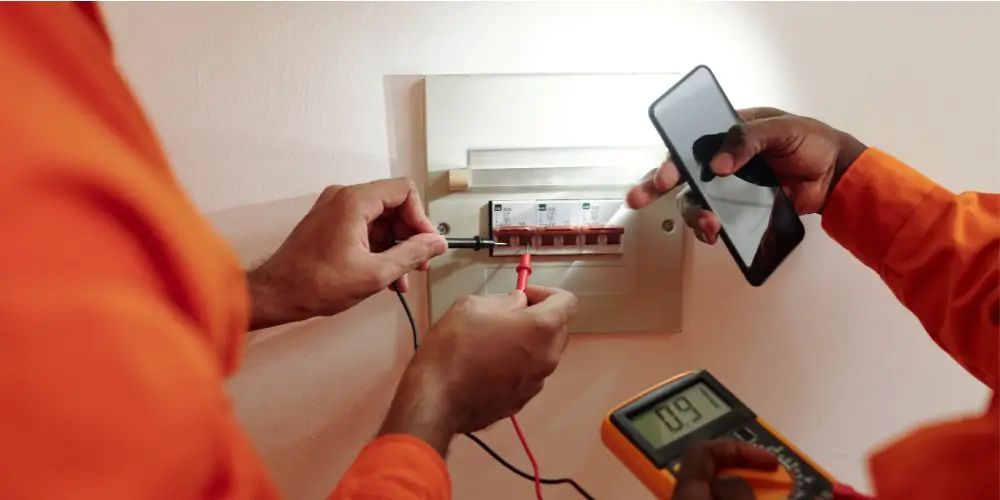
A Portable Appliance Test (PAT) inspects electrical appliances and their associated plugs, cords, and sockets to verify safety and correct functioning; it combines a visual examination with specific electrical tests, earth continuity, insulation resistance, polarity, and, where applicable, leakage and substitute earth tests to identify faults that could cause electric shock, fire, or equipment damage. The process records results, tags compliant items, and isolates or labels defective units. Visual checks look for damaged insulation, exposed conductors, loose connections, incorrect wiring, and inappropriate modifications.
Functional tests confirm switches, indicators, and thermostats operate as intended. Earth continuity ensures protective earth paths are intact; insulation resistance verifies the separation between live parts and earth; polarity checks confirm correct live, neutral, and earth placement; leakage and substitute earth tests detect hidden faults under load or when earth paths are interrupted. Documentation of findings provides traceability and supports risk-based maintenance schedules, empowering owners to manage appliances with confidence while minimising disruption and liability.
Do You Legally Need PAT Testing?
Does a legal obligation for PAT testing exist as a blanket requirement? The answer is no: law does not demand universal PAT testing for every individual or device. Instead, legal expectations focus on ensuring electrical equipment is safe and maintained. Responsibility typically falls on duty-holders who must manage risk, record inspections, and act proportionately. PAT testing can be one method among inspections, visual checks, and maintenance to demonstrate compliance, especially for portable appliances.
- Legal duty emphasises sensible risk management and proof of safety measures rather than compulsory testing.
- Frequency and method depend on equipment type, environment, and risk assessment, not a fixed legal schedule.
- PAT testing is often treated as best practice for demonstrating maintenance and is useful when defending safety decisions.
- Where formal records are required, documented testing supports freedom to choose suitable safety approaches.
Thus, PAT testing is a practical tool to meet obligations, not an absolute legal mandate.
Workplaces That Need PAT Testing
Having established that PAT testing is a risk-management option rather than a blanket legal requirement, the discussion can move to where regular testing is most commonly applied. Environments with frequent public access and high turnover, such as hospitality, retail, and rental venues, often adopt scheduled PAT to reduce avoidable risk. Offices and shared workspaces, where many portable devices circulate among staff and visitors, typically benefit from routine checks to maintain operational freedom and minimise disruptions.
Educational institutions and healthcare settings, where vulnerable populations and critical equipment coexist, usually prioritise more frequent inspection. Construction sites and workshops, exposed to dust, moisture, and rough handling, commonly require stricter regimes. Small businesses and home-based enterprises may take a proportionate approach, testing items that present higher risk. Ultimately, selection of workplaces for PAT aligns with activity level, equipment type, and consequence of failure, allowing organisations to balance safety and autonomy without unnecessary constraint.
Who Arranges and Records PAT Tests
While legal responsibility for electrical safety rests with the employer or duty holder, the practical task of arranging and recording PAT tests is commonly delegated to a competent in-house employee, a retained facilities manager, or an external accredited contractor; each option requires clear assignment of roles, a schedule, and a system for logging results and remedial actions. Responsibility assignment should align with competence, supported by documented procedures that enable autonomy and accountability. Scheduling must reflect risk, usage patterns, and statutory expectations, while records should be searchable, time-stamped, and retained for inspection.
Choice of recorder paper log, spreadsheet, or dedicated inspection software affects the accessibility and portability of data. Consent to act and clarity about escalation routes are essential when faults are found. Recordkeeping practices must support freedom of operation: rapid retrieval, ease of delegation, and secure sharing with inspectors or stakeholders without bottlenecks.
- Defined roles and written procedures
- Risk-based scheduling and review cycles
- Digital logs with audit trails
- Clear escalation and remediation pathways
What Happens in a PAT Inspection
A PAT inspection typically begins with a visual check of the appliance and its cable, followed by a sequence of electrical tests to verify earth continuity, insulation resistance, polarity, and leakage; results are recorded, and items that fail are tagged as unsafe and either repaired, removed from service, or scheduled for further action according to the organisation’s escalation procedures. The inspector notes make, model, condition and any previous test dates, ensuring labels are clear. Portable testers are connected and configured to suit class and fuse ratings; live function tests may follow if safe to do so.
Measured values are compared against pass/fail criteria; marginal readings prompt retests or dismantling for deeper checks. Passes receive a dated label and entry in the log, enabling traceability. Failures are isolated, documented and returned for repair or disposal. The process balances safety with minimal disruption, empowering users to maintain independence while ensuring electrical equipment remains reliable and compliant.
How Often PAT Tests Should Be Done
How frequently PAT tests should be carried out depends on the risk posed by the equipment and its environment; high-use, portable, or harsh-condition items require more frequent inspection than fixed, low-risk devices. Inspections should align with sensible risk management: more freedom to operate comes with responsibility to guarantee safety without unnecessary bureaucracy. Frequency is determined by equipment type, usage intensity, maintenance history, and statutory guidance; professional judgement balances safety and practicality.
- Portable tools and extension leads: inspect and test frequently due to movement and wear.
- Consumer electronics in low-demand settings: longer intervals are acceptable when regularly visually checked.
- High-risk environments (construction, outdoors) require short, regular test cycles.
- Newly acquired or repaired appliances: test soon after introduction to the workplace.
A pragmatic schedule combines scheduled tests, routine visual checks, and prompt action on defects, enabling autonomy while maintaining safe electrical practice.

PAT Testing Cost, Certification, and Choosing a Tester
Several factors influence PAT testing cost, including the number and type of appliances, travel and access time, test frequency, and whether inspection-only or full combined testing is chosen. Costs typically scale per item or per hour; bulk rates apply to larger estates or equipment fleets. Certification involves documented test records and labels indicating pass/fail status and next test due date; reputable providers supply clear, transferable certificates that support compliance without tying owners to ongoing services.
Choosing a tester should balance independence, competence, and value. Look for trained technicians familiar with relevant standards, valid insurance, calibrated equipment, and transparent pricing. Freelance testers can offer flexibility and lower fees; accredited firms provide consistency and governance. Request sample reports, check references, and confirm what is included: retests, retagging, remedial work, and travel charges. For those seeking freedom, prioritise providers that offer control over scheduling, data ownership, and follow-up options rather than locking you into long-term contracts.
Reduce Testing Frequency and Keep Devices Safe
Reducing testing frequency without compromising safety requires evidence-based risk assessment and consistent asset management. The piece emphasises tailoring PAT intervals to device type, usage, and environment so operators retain control while minimising unnecessary checks. Priority is given to high-risk items; low-risk, well-maintained appliances can be monitored visually and tested less often. Clear recordkeeping and labeling enable selective scheduling and rapid identification of units needing attention. Training empowers staff to act autonomously within defined safety parameters.
- Maintain an up-to-date asset register with usage profiles and historical test results.
- Apply a formal risk matrix to classify appliances and justify extended intervals.
- Implement routine visual inspections and immediate reporting protocols for faults.
- Use condition-based triggers (age, repair history, environment) to prompt tests.
This approach balances liberty and responsibility: it reduces burdensome testing where safe, while preserving rigorous oversight where risk dictates, keeping devices reliable and users free to focus on productive tasks.
Frequently Asked Questions
Can Tenants Request PAT Tests From Landlords?
Yes. Tenants can request PAT tests from landlords; the landlord retains responsibility for electrical safety in many jurisdictions. A tenant’s request may prompt discussion, negotiation, ora formal complaint if the landlord declines to act.
Are Battery-Powered Devices Included in PAT Testing?
Yes, battery-powered devices are included when they present a risk, especially if mains charging or removable batteries are involved. The tester assesses safety pragmatically, prioritising liberty of use while ensuring reasonable protection for users.
Does PAT Testing Cover Extension Leads Used Temporarily?
Yes, temporary extension leads typically fall under PAT testing when used in workplaces or events. The person recognises the duty to inspect and test them periodically to ensure safety and compliance, without imposing excessive constraints.
Can PAT Testing Be Done Remotely or via Self-Assessment?
No PAT can be performed fully remotely; a person may self-assess basic visual checks, but legal, competent electrical testing requires an on-site qualified individual with instruments to safely inspect, test, and record results.
Will PAT Testing Affect Equipment Warranties?
Generally, PAT testing does not void warranties; manufacturers often accept proper, non-invasive inspections and routine testing. However, tampering or intrusive repairs by unauthorised parties can breach warranty terms, so users should follow the manufacturer’s guidance and keep records.
Conclusion
What is a portable appliance test In conclusion, portable appliance testing (PAT) inspects electrical appliances for safety, with legal requirements that depend on workplace risk rather than on a universal mandate. Employers, landlords, and duty holders should arrange and record tests carried out by competent persons following inspection and testing procedures. Frequency varies by equipment type and use; formal certification and costs depend on scope. Effective maintenance, visual checks, and user care can reduce the frequency of testing while keeping devices safe and compliant.