
Wiring a garage consumer unit is specialist electrical work and should not be treated as a DIY job. A garage consumer unit controls and protects the electrical circuits serving a garage, workshop, outbuilding or detached garage. If it is wired incorrectly, it can create serious risks, including electric shock, electrical fire, overheating, nuisance tripping, damaged equipment and failed certification.
If you are searching for how to wire a garage consumer unit, the safest answer is this: the work should be designed, installed, inspected, tested and certified by a competent electrician. Garage wiring is not just about connecting a small fuse box. The electrician must consider the supply route, cable type, circuit load, earthing arrangement, RCD or RCBO protection, cable protection, voltage drop, isolation, external influences and whether the work is notifiable under Building Regulations.
Electrical work in a home, garden, garage, shed or other storage building must comply with Building Regulations. Approved Document P explains electrical safety requirements for dwellings, including design, installation, inspection, testing and provision of information.
Last updated: 2026
Reviewed by: London Safety Certificate Compliance Team
Key Takeaways
- Wiring a garage consumer unit is not suitable DIY work.
- Garage electrical work must be designed and installed safely, especially where the garage is detached or supplied from the house.
- A garage consumer unit may be needed where the garage has sockets, lighting, tools, EV charging equipment, outdoor supplies or workshop equipment.
- The correct cable size cannot be guessed; it depends on load, cable route, installation method, distance, voltage drop and protection.
- The supply may need RCD or RCBO protection, surge protection and suitable isolation depending on the installation.
- Installing a new consumer unit or new circuit is normally notifiable work in domestic properties in England and Wales.
- The work should be inspected, tested and certified before use.
- A garage EICR or electrical inspection may be needed if the existing garage wiring is old, damaged, poorly labelled or repeatedly tripping.
Table of Contents
Quick Answer: Can You Wire a Garage Consumer Unit Yourself?
| Question | Answer |
|---|---|
| Can I wire a garage consumer unit myself? | No. Garage consumer unit wiring should be carried out by a qualified and competent electrician. |
| Is garage consumer unit wiring dangerous? | Yes. Incorrect wiring can cause electric shock, overheating, fire risk and failed circuit protection. |
| Is it notifiable work? | Installing a new consumer unit or new circuit in a domestic property is normally notifiable under Building Regulations. |
| Do I need a wiring diagram? | A garage wiring plan should be designed by an electrician for the specific property, load, cable route and earthing arrangement. |
| What cable size is needed? | It must be calculated. Do not guess cable size from online examples. |
| What certificate should I get? | You should receive the correct electrical certification and Building Regulations compliance documentation where applicable. |

What Is a Garage Consumer Unit?
A garage consumer unit is a smaller electrical distribution board that supplies and protects electrical circuits in a garage, workshop or outbuilding.
It may be used where the garage has its own lighting circuit, socket outlets, power tools, freezer or appliance supply, external lights, outdoor sockets, roller shutter or garage door equipment, workshop equipment, garden room circuits, outbuilding circuits, EV charger supply where designed separately, or small commercial and storage unit circuits.
A garage consumer unit is still part of the fixed electrical installation, so it must be installed safely, protected correctly and tested properly by a competent electrician.
Garage Consumer Unit vs Main House Consumer Unit
In many homes, the main consumer unit is inside the property and supplies circuits across the house. A garage consumer unit may be added where the garage needs its own local circuit protection or where it is supplied as an outbuilding.
| Item | Meaning |
|---|---|
| Main house consumer unit | The main electrical board controlling circuits inside the property |
| Garage consumer unit | A smaller board serving garage circuits |
| Distribution board | A broader term often used for commercial or larger electrical boards |
| Sub-board | A secondary board supplied from another board |
| Garage fuse box | Common everyday wording for a garage consumer unit |
A garage consumer unit should not be added casually. The electrician must confirm whether the main supply, main consumer unit, earthing, bonding and existing circuits are suitable.
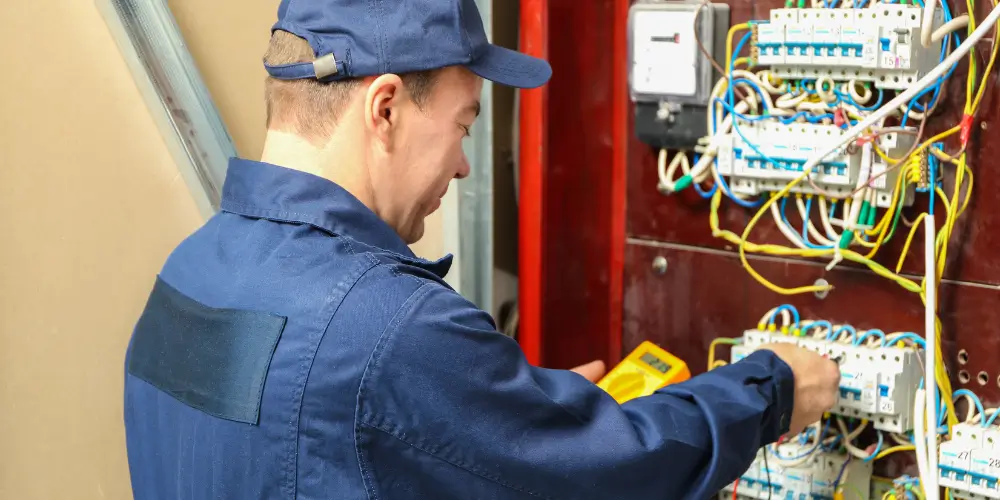
What Does Wiring a Garage Consumer Unit Involve?
Wiring a garage consumer unit involves designing and installing a safe electrical supply to a garage, workshop or outbuilding. It is not a simple plug-in job, because the garage supply must be suitable for the actual use of the space, the expected electrical load and the condition of the existing installation.
A proper garage consumer unit installation may include assessing the existing house electrical installation, checking the main consumer unit, confirming earthing and bonding arrangements, calculating the garage load, selecting the correct supply cable, planning a safe cable route, and considering external influences such as moisture, impact, outdoor conditions and access.
The electrician should also select a suitable garage consumer unit, choose the correct protective devices, install the garage board, connect the garage lighting and socket circuits, label the circuits clearly, inspect and test the installation, issue the correct electrical certification, and complete Building Regulations notification where required.
Why Garage Consumer Unit Wiring Is Not DIY Work
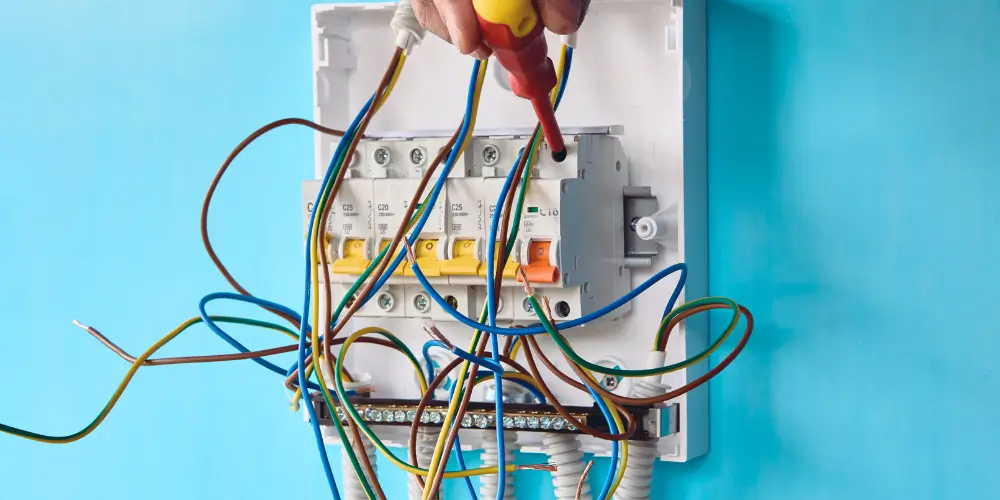
Garage wiring can be more complicated than a normal indoor circuit because garages are often detached, damp, unheated, used for tools, or supplied through external cable routes.
Poor garage consumer unit wiring can lead to:
- electric shock
- electrical fire
- overheating
- damaged tools or equipment
- overloaded circuits
- incorrect RCD or RCBO protection
- poor earthing
- water-related electrical risk
- unsafe outdoor cable routing
- nuisance tripping
- failed inspection
- invalid or missing certification
- future EICR failure
A garage consumer unit must be safe in real conditions, not just connected in a way that appears to work.
Garage Wiring Regulations UK
Garage wiring in the UK must comply with relevant electrical safety requirements, including Building Regulations and BS 7671 wiring standards.
For domestic properties in England and Wales, installing a new consumer unit or new circuit is normally notifiable work. Electrical Safety First states that replacing a consumer unit in domestic premises in England or Wales is notifiable work under the Building Regulations unless completed through the correct self-certification route.
Planning Portal guidance also makes clear that electrical work in a home, garden, garage, shed or storage building must comply with Building Regulations.
In simple terms, garage consumer unit work should be:
- designed properly
- installed by a competent person
- inspected and tested
- certified
- notified where required
- recorded for future property and compliance use
Part P and Garage Consumer Units
Part P applies to electrical safety in dwellings. It is relevant to garage wiring where the garage is part of a domestic property or associated with a home.
Part P is about protecting people from fire and injury caused by unsafe electrical installations. Approved Document P explains requirements around electrical design, installation, inspection, testing and providing information after work is completed.
If your garage consumer unit work creates a new circuit, replaces a consumer unit or changes the installation significantly, you should expect certification and notification requirements to apply.
Wiring Garage Consumer Unit to Main Consumer Unit
Many searches ask about wiring a garage consumer unit to the main consumer unit. This is a common setup, but it must be designed properly.
The electrician must consider:
- whether the main consumer unit has capacity
- spare ways and protective device suitability
- existing supply condition
- earthing arrangement
- bonding condition
- route from house to garage
- whether the cable is internal, external or underground
- protection against impact or moisture
- voltage drop over distance
- expected garage load
- RCD/RCBO requirements
- safe isolation and testing
- certification and notification
A garage supply should not be added simply because there is space in the main board. The whole installation needs to be assessed.
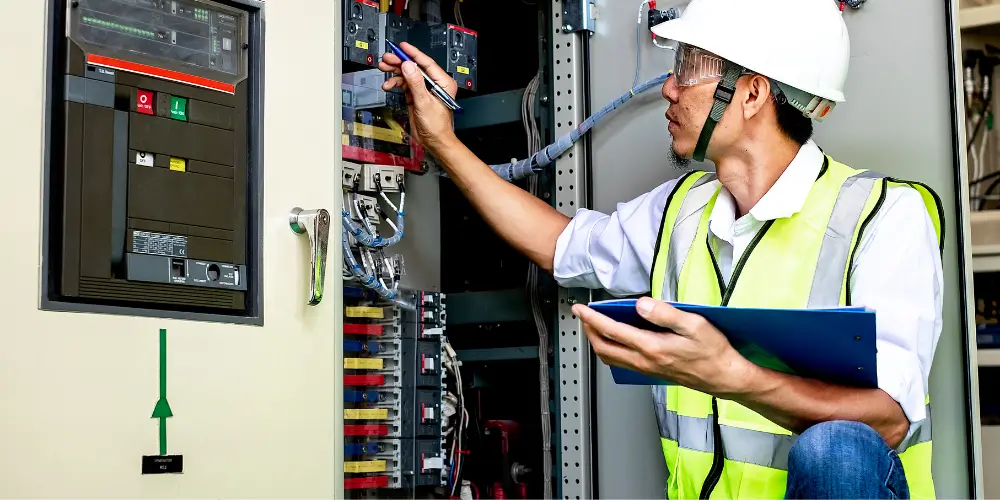
Detached Garage Power Supply
A detached garage power supply needs extra care because the cable often has to run externally, underground, overhead or through areas exposed to weather and damage.
Important issues include:
- cable route
- cable protection
- depth and protection if buried
- mechanical damage risk
- outdoor conditions
- water ingress
- earthing arrangement
- voltage drop
- isolation
- future access for inspection
- whether the garage will be used as a workshop
Detached garage wiring is where many poor installations fail. The cable route and protection are just as important as the garage consumer unit itself.
What Size Cable Is Needed for a Garage Consumer Unit?
The correct cable size for a garage consumer unit should not be chosen from a generic online table. It depends on the actual electrical design, the expected load in the garage and how the supply cable will be installed.
A competent electrician will normally consider the following before selecting the cable size:
- Expected electrical load in the garage
- Distance from the main supply to the garage
- Cable type, such as armoured cable where suitable
- Installation method, including clipped, buried, in conduit or external runs
- Voltage drop over the cable length
- Protective device rating
- Earthing arrangement
- Thermal conditions
- Risk of moisture, impact or external damage
- Whether the garage will supply heavy equipment
- Future expansion requirements
Searches around 16mm cable, armoured cable and garage supply cable size are common, but guessing the cable size is unsafe. The cable must be calculated and selected for the specific installation, not copied from another property. A qualified electrician should assess the existing electrical installation, calculate the load, choose the correct cable and test the completed garage consumer unit installation properly.
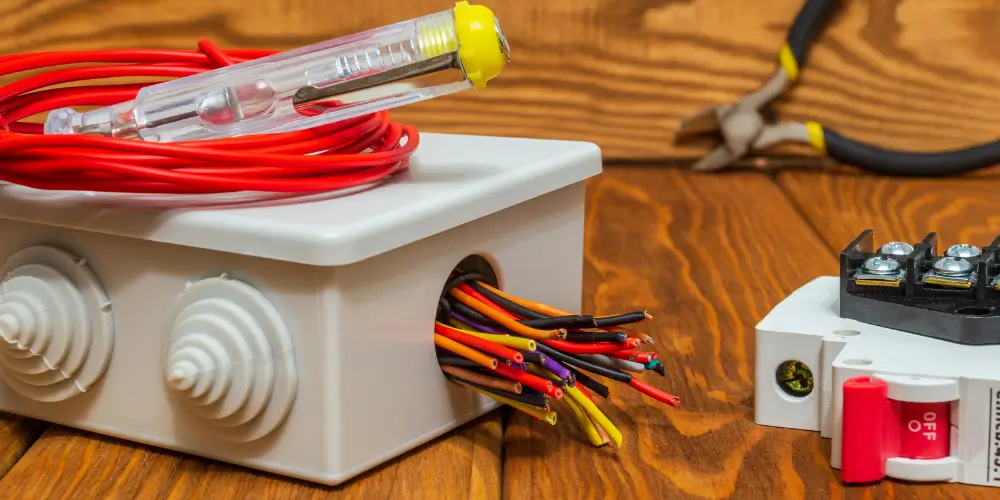
Does a Garage Consumer Unit Need Armoured Cable?
Many garage supplies use armoured cable where the cable runs externally, underground or through areas where mechanical protection is needed. However, the correct cable type depends on the route, installation method, environment and design.
A competent electrician will decide whether the installation needs:
- steel wire armoured cable
- conduit or trunking protection
- suitable external-grade cable
- underground cable protection
- additional mechanical protection
- specific glands and terminations
- suitable earthing arrangements
The main point is simple: the garage supply cable must be suitable for the environment and the way it is installed.
Does a Garage Consumer Unit Need RCD or RCBO Protection?
Garage circuits often need suitable residual current protection because garages can involve sockets, outdoor equipment, tools, damp conditions and external wiring routes.
Protection may be provided by RCDs or RCBOs depending on the design of the installation.
| Protection Device | What It Does |
|---|---|
| MCB | Helps protect against overload and short circuit |
| RCD | Helps protect against certain earth leakage faults |
| RCBO | Combines overcurrent and residual current protection for an individual circuit |
| SPD | Helps protect against certain voltage surges |
| Main switch | Allows local isolation of the garage consumer unit |
The right arrangement depends on the design. A garage circuit should not be protected by guesswork.
Does a Garage Consumer Unit Need Surge Protection?
Surge protection may be required or recommended depending on the installation, equipment and risk assessment. It can be particularly relevant where sensitive electronics, EV chargers, tools, garage door controls, CCTV, alarms or smart equipment are connected.
Whether surge protection is needed should be assessed by the electrician as part of the design.
What Consumer Unit Do I Need for a Garage?
Surge protection may be required or recommended depending on the installation, equipment and risk assessment. It can be particularly relevant where sensitive electronics, EV chargers, tools, garage door controls, CCTV, alarms or smart equipment are connected.
Whether surge protection is needed should be assessed by the electrician as part of the design.
Choosing the Right Garage Consumer Unit
The right garage consumer unit should be selected based on how the garage will actually be used, not just by looking at the number of ways on the board. A basic garage with one light and one socket will usually have different requirements from a garage used as a workshop, gym, utility area, storage space, commercial unit or EV charging point.
Before choosing a garage consumer unit, the electrician should consider the number of circuits required, socket demand, lighting demand, outdoor electrical supplies, power tool usage, heating or appliance loads, EV charging requirements, future expansion, property type, available supply capacity, protection requirements, electrical certification and Building Regulations notification where applicable.
A suitable garage consumer unit should provide the correct level of protection for the circuits it supplies. The design, protective devices, cable size, earthing arrangement and testing are more important than simply choosing a board with enough spare ways. A properly designed garage consumer unit helps make the installation safer, more practical and easier to manage in the future.
Garage Consumer Unit Wiring Diagram
A garage consumer unit wiring diagram should only be used as a general explanation of how a garage electrical supply may be arranged. The actual design should be produced or checked by a competent electrician because every installation can be different.
Generic online wiring diagrams can be misleading because properties may have different earthing arrangements, main consumer unit layouts, circuit requirements, cable routes, protective devices, supply distances, garage usage, external influences and certification requirements.
A wiring diagram may help a property owner understand the basic concept of a garage supply, but it should not be used as a DIY instruction sheet. The final garage consumer unit design must be assessed, installed, inspected and tested by a competent electrician to make sure it is safe and suitable for the property.
What Should Be Checked Before Installing a Garage Consumer Unit?
Before installing or wiring a garage consumer unit, the electrician should check:
| Area Checked | Why It Matters |
|---|---|
| Main consumer unit | Confirms capacity, condition and suitability |
| Earthing arrangement | Important for fault protection |
| Main bonding | Missing or poor bonding may need remedial work |
| Garage load | Determines cable and protection requirements |
| Cable route | Affects cable type, protection and voltage drop |
| External conditions | Moisture and impact risks must be considered |
| Existing garage wiring | Old wiring may be unsafe or unsuitable |
| RCD/RCBO protection | Helps protect circuits where required |
| Isolation | Safe local and main isolation must be considered |
| Certification route | Confirms what paperwork and notification are needed |
A proper inspection before installation can prevent unsafe shortcuts.
Can You Add a Garage Consumer Unit Without Rewiring?
Yes, in some cases a garage consumer unit can be added without rewiring the whole property. However, the existing electrical installation must be suitable.
A full rewire may not be needed, but remedial work may be required if there are issues such as:
- unsafe main consumer unit
- poor earthing
- missing bonding
- damaged existing wiring
- insufficient capacity
- no suitable spare way
- old or unsafe garage wiring
- repeated tripping
- failed test results
- poor previous DIY work
A new garage consumer unit should not be connected to an unsafe installation.
What Happens If a Garage Consumer Unit Is Wired Wrong?
Incorrect garage consumer unit wiring can create serious safety problems.
| Problem | Possible Risk |
|---|---|
| Wrong cable size | Overheating, voltage drop or failed protection |
| Poor connections | Heat build-up, arcing or fire risk |
| Wrong protective device | Circuit may not disconnect safely under fault conditions |
| Poor earthing | Increased electric shock risk |
| No suitable RCD/RCBO protection | Higher risk during faults or outdoor use |
| Bad cable route | Damage from moisture, impact or ground movement |
| No certification | Problems with compliance, insurance, sale or letting |
| Poor labelling | Future testing and fault finding become harder |
If you suspect a garage consumer unit has been wired incorrectly, stop using the affected circuits and arrange an inspection.
Garage Consumer Unit for Workshops
A garage used as a workshop usually needs more careful electrical planning than a basic storage garage. Workshop garages may have power tools, compressors, welders, saws, chargers, workbench sockets, lighting, heating, dust extraction, garage door equipment and outdoor supplies, all of which can increase electrical demand.
The electrician should assess the expected load, how the workshop will be used and whether dedicated circuits are needed for heavier equipment. Heavy tools should not simply be added to an old garage socket without checking the electrical supply, protective devices, cable size and overall installation safety.
Garage Consumer Unit for External Lights and Outdoor Sockets
A garage consumer unit may supply external lights or outdoor sockets, but these circuits need careful design because they are exposed to outdoor conditions.
Important factors include:
- weatherproof fittings
- suitable cable type
- RCD/RCBO protection
- safe cable routing
- correct enclosure ratings
- protection from impact
- separation from water sources
- correct isolation and labelling
Outdoor electrical circuits should be treated seriously because moisture and damage increase risk.
Garage Consumer Unit for EV Chargers
An EV charger should not be added casually to a garage consumer unit. EV charging requires proper design and assessment by a competent installer.
The installer may need to consider:
- supply capacity
- load demand
- earthing arrangement
- charger manufacturer requirements
- protective devices
- cable route
- notification and certification
- whether the garage supply is suitable
If you are planning to add EV charging, tell the electrician before the garage consumer unit is designed.
Garage Consumer Unit Inspection and Testing
After a garage consumer unit is installed, replaced or modified, the electrician should inspect and test the work before it is put into use.
- Continuity testing: checks that the circuit conductors are properly connected throughout the installation.
- Insulation resistance testing: checks whether cable insulation is in safe condition and not breaking down.
- Polarity checks: confirms that live, neutral and earth conductors are connected correctly.
- Earth fault loop impedance testing: checks whether the protective devices can operate safely during a fault.
- RCD or RCBO testing: confirms that protection devices trip correctly within the required time.
- Circuit identification: makes sure each garage circuit is correctly identified and connected.
- Circuit labelling: ensures lighting, sockets and other circuits are clearly labelled on the garage consumer unit.
- Protective device checks: confirms that the correct circuit breakers, RCDs or RCBOs have been selected.
- Earthing and bonding checks: checks that the earthing arrangement is suitable for the garage supply.
- Supply cable checks: confirms that the cable feeding the garage consumer unit is suitable and protected.
- Lighting and socket testing: checks that garage lights, sockets and connected circuits are working safely.
- Fault identification: records any defects found during inspection or testing.
- Test result recording: keeps a clear record of the electrical test results.
- Electrical certification: provides formal evidence that the work has been inspected and tested.
- Building Regulations notification: should be completed where the work is notifiable.
Does a Garage Consumer Unit Need an EICR?
A garage consumer unit does not always need a separate EICR, but an inspection may be recommended if the condition of the garage wiring is unclear. This is especially important where the garage has old wiring, visible damage, repeated tripping, poor labelling, missing RCD protection or previous DIY electrical work.
An EICR can confirm whether the garage electrical installation is safe for continued use and whether any remedial work is needed before new circuits, sockets, workshop equipment or outdoor supplies are added. It can also identify problems such as damaged cables, poor earthing, overloaded circuits, overheating, unsafe consumer unit condition, missing protection, incorrect circuit identification or defects requiring further investigation.
For rented properties, garages and outbuildings may also form part of the wider electrical safety check where they are included in the fixed electrical installation. If the garage electrics have not been inspected for several years, arranging an EICR is a sensible starting point before carrying out further electrical work.
How Often Should a Garage Consumer Unit Be Inspected?
Inspection frequency depends on property type, use, environment and risk.
A garage used for basic domestic storage may not need the same inspection frequency as a workshop, commercial garage, rental property, HMO, business premises or garage with EV charging equipment.
For rented properties in England, landlords must have the fixed electrical installation checked at least every 5 years by a properly qualified person. For commercial or higher-use garage spaces, inspection frequency should be risk-based and follow the competent person’s recommendation.
The safest rule is to follow the recommended next inspection date on the latest EICR.
How Much Does Garage Consumer Unit Installation Cost?
The cost of garage consumer unit installation depends on the property layout, the condition of the existing electrical installation and the amount of work required. An attached garage with a short cable route may cost less than a detached garage or outbuilding that needs a longer supply cable, external cable protection or more complex installation work.
Main cost factors include whether the garage is attached or detached, the cable route and distance, the type of cable required, the number of circuits, the expected electrical load, the condition of the main consumer unit, earthing and bonding arrangements, RCD or RCBO protection, surge protection requirements, inspection and testing, electrical certification, Building Regulations notification and any remedial work needed before the garage consumer unit can be connected safely.
A proper quotation should clearly explain what is included and what may cost extra. Very cheap garage wiring quotes may not include correct testing, certification, notification, fault finding or remedial work, which can create extra costs later if the installation needs to be corrected, re-tested or re-certified.
Garage Electrical Installation for London Properties
London garages can vary significantly. Some are attached to houses, some are detached, some are under blocks of flats, some are part of commercial units, and some are used as workshops, storage areas or utility spaces.
London Safety Certificate can help with:
- garage electrical inspection
- garage consumer unit replacement
- EICR checks
- consumer unit remedial work
- electrical fault finding
- certification and compliance support
- landlord electrical safety checks
- commercial garage electrical checks
If your garage wiring is old, unsafe, repeatedly tripping or has no proper certification, arrange a professional inspection before adding more electrical load.
Frequently Asked Questions
Can I wire a garage consumer unit myself?
No. Garage consumer unit wiring should be carried out by a qualified and competent electrician. It involves safety-critical electrical design, installation, testing and certification.
Is garage consumer unit wiring notifiable?
Installing a new consumer unit or new circuit in a domestic property in England and Wales is normally notifiable electrical work under Building Regulations.
Can a garage consumer unit be supplied from the house consumer unit?
Yes, but only if the existing installation is suitable. The electrician must check capacity, earthing, bonding, cable route, protective devices and testing requirements.
What size cable is needed for a garage consumer unit?
The cable size must be calculated by a competent electrician. It depends on load, distance, cable route, installation method, voltage drop and protective device rating.
Does a garage consumer unit need RCD protection?
Garage circuits often need suitable RCD or RCBO protection, especially where sockets, outdoor circuits, tools or external conditions are involved. The exact arrangement depends on the design.
Does a garage consumer unit need surge protection?
Surge protection may be required or recommended depending on the installation, equipment and risk assessment.
Do I need an EICR before installing a garage consumer unit?
Not always, but an EICR can be useful if the existing installation is old, unknown, damaged, repeatedly tripping or previously altered.
Can a garage consumer unit power external lights and sockets?
Yes, if the circuits are properly designed, installed, protected, tested and certified for outdoor use.
What happens if a garage consumer unit is wired incorrectly?
Incorrect wiring can cause electric shock, fire risk, overheating, nuisance tripping, failed circuit protection and compliance problems.
How long does garage consumer unit installation take?
A simple garage installation may take less time than a detached garage or workshop supply. The time depends on cable route, circuits, access, testing and whether remedial work is needed.
How much does it cost to install a garage consumer unit?
The cost depends on the garage type, distance from supply, cable route, number of circuits, protective devices, testing, certification and any remedial work needed.
Should a detached garage have its own consumer unit?
A detached garage may need its own consumer unit depending on the electrical design and use of the garage. A qualified electrician should assess the best arrangement.