
A fire door closer should make the door close fully, securely and without slamming. If a fire door closes too slowly, closes too fast, does not latch, slams shut, stays open, or becomes difficult to open, the closer may need adjustment, repair or replacement.
Fire door closer adjustment is not just a comfort issue. A fire door is designed to help restrict the spread of fire and smoke. If the closer does not shut the door properly, the fire door may fail to protect the escape route or compartment it is meant to protect.
For simple checks, a responsible person, property manager or trained staff member may identify obvious issues such as a door not closing, a damaged closer, missing screws or a door be, or trained staff member may identify obvious issues such as a door not closing, a damaged closer, missing screws, or a dooring wedged open. However, adjustment, repair or replacement should be carried out by a competent person where the door forms part of the fire safety strategy.
Under the Fire Safety (England) Regulations 2022, responsible persons for multi-occupied residential buildings over 11 metres must carry out quarterly checks of communal fire doors and use best endeavours to check flat entrance fire doors annually. GOV.UK guidance also confirms that residents should be told not to tamper with self-closing devices.
Last updated: 2026
Reviewed by: London Safety Certificate Compliance Team
Key Takeaways
- A fire door closer should close the door fully and reliably after every use.
- Fire door closer adjustment should not be treated like normal door maintenance because the door forms part of fire safety protection.
- Common problems include slamming, slow closing, failure to latch, air pressure issues, worn hinges, loose fixings and damaged closers.
- If a fire door does not close properly, it should be inspected and corrected quickly.
- Responsible persons should keep inspection and repair records.
- Communal fire doors in multi-occupied residential buildings over 11 metres in England must be checked at least every 3 months.
- Flat entrance fire doors in those buildings should be checked at least every 12 months using best endeavours.
- A visual check is not the same as a detailed fire door inspection.
- If adjustment does not solve the issue, the closer, hinges, seals, frame or door alignment may need professional repair.
Table of Contents
Quick Answer: Can You Adjust a Fire Door Closer Yourself?
| Question | Answer |
|---|---|
| Can a fire door closer be adjusted? | Yes, many closers can be adjusted, but the work should be done carefully and competently. |
| Should tenants adjust fire door closers? | No. Tenants should report faults and should not tamper with fire door closers. |
| Why does adjustment matter? | The door must close fully and latch to help maintain fire and smoke protection. |
| What if the door slams? | The closer may need adjustment, repair or replacement. The door should not be wedged open. |
| What if the door does not close fully? | The issue should be inspected because the closer, hinges, frame, latch, seals or air pressure may be causing the problem. |
| Who should fix it? | A competent person, fire door inspector or suitable contractor should inspect and correct the issue where the door is part of fire safety protection. |
What Is a Fire Door Closer?
A fire door closer is a device fitted to a fire door to make sure the door closes automatically after it has been opened. It helps the fire door return to the fully closed position so it can perform its intended role in slowing the spread of fire and smoke.
Fire door closers are commonly fitted at the top of the door, concealed within the frame, installed in the floor, or used as part of a controlled closing mechanism. The correct type depends on the door design, location, usage and fire safety requirements.
Fire door closers may be found on flat entrance doors, communal corridor doors, stairwell doors, lobby doors, plant room doors, bin store doors, commercial kitchen doors, office fire doors, school corridor doors, HMO bedroom doors, HMO corridor doors and escape route doors.
The closer must be suitable for the fire door’s size, weight, location and purpose. If the closer is damaged, incorrectly adjusted, too weak, too strong or unable to close the door fully, the fire door may not provide proper protection during a fire.
Why Fire Door Closers Matter
A fire door can only help protect people if it closes properly. If the door is left open, closes too slowly, fails to latch or is damaged, fire and smoke can spread more quickly.
A working fire door closer helps:
- protect escape routes
- reduce smoke spread
- maintain compartmentation
- keep stairwells and corridors safer
- support fire risk assessment measures
- protect flats, rooms and common areas
- reduce reliance on people remembering to close doors manually
The Regulatory Reform (Fire Safety) Order 2005 requires fire safety facilities, equipment and devices to be subject to a suitable system of maintenance and maintained in efficient working order and good repair where necessary. Fire doors and their self-closing devices are part of that practical maintenance responsibility where they are provided as fire safety measures.
Signs a Fire Door Closer Needs Adjustment or Repair
A fire door closer may need adjustment, repair or replacement if the door is not closing correctly or the closer is visibly damaged. Common warning signs include:
- The door slams shut: the closing speed may be too fast or the closer may not be controlling the door properly.
- The door closes too slowly: the door may not return to the closed position quickly enough during normal use.
- The door does not close fully: the fire door may stop before reaching the frame or latch.
- The door does not latch: the closer may not have enough force to pull the door fully into the latch.
- The door is hard to open: the closer may be too strong for the door location or user needs.
- The door bounces back open: the closing action, latch, frame or seals may need checking.
- The door sticks before closing: the door leaf, frame, hinges or floor clearance may be causing resistance.
- The door drags on the floor: the door may have dropped, warped or become misaligned.
- The closer arm is loose: loose arms, screws or fixings can stop the closer working correctly.
- The closer body is leaking oil: this usually indicates internal failure and may require replacement.
- The closer cover is damaged or missing: damaged parts may affect performance and should be inspected.
- The door only closes when pushed: the closer is not doing its job properly.
- The door is affected by air pressure: the closer may need adjustment, or the building pressure conditions may need review.
- The door has been wedged open repeatedly: this can damage the closer, hinges and fire door set.
- The hinges are loose or worn: poor hinge condition can prevent the door from closing properly.
- The frame or seals are damaged: damaged frames, intumescent seals or smoke seals can affect the door’s closing action.
These signs should not be ignored. A fire door closer is a key part of the fire door set, and if the door does not close fully and latch properly, it may not provide the expected protection during a fire.
Fire Door Closer Adjustment: What a Competent Person Checks
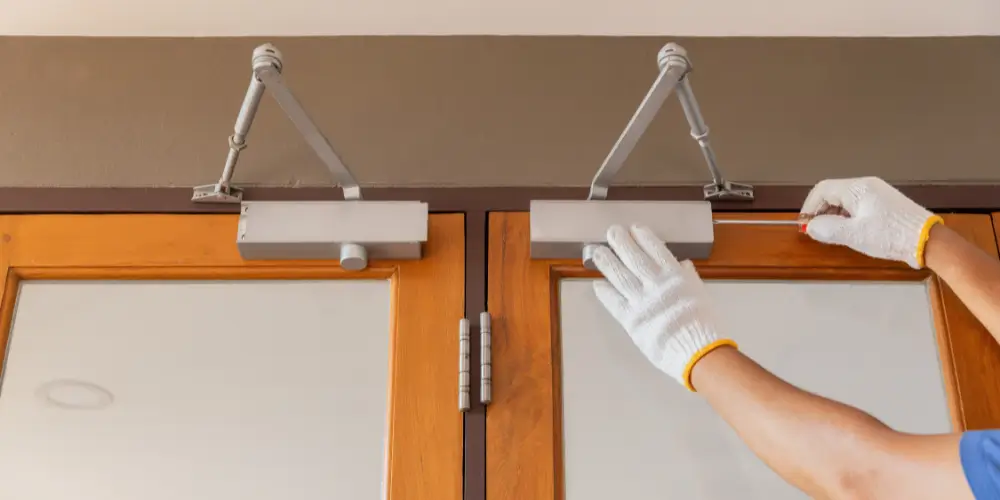
A competent person should not simply turn adjustment screws randomly. They should inspect the full door set and identify the real cause of the problem.
A proper check may include:
| Area Checked | Why It Matters |
|---|---|
| Closing speed | Door should close in a controlled way without slamming or moving too slowly |
| Latching action | Door should latch securely where a latch is fitted |
| Door alignment | Misalignment can stop the door closing properly |
| Hinges | Loose or worn hinges can affect closing and gaps |
| Frame condition | A damaged or distorted frame can stop the door working |
| Door gaps | Excessive gaps can affect smoke and fire performance |
| Seals | Damaged or missing seals can affect fire/smoke resistance |
| Closer fixings | Loose screws or fixings can stop the closer working properly |
| Closer condition | Leaking, damaged or worn closers may need replacement |
| Air pressure | Internal pressure can stop doors closing fully |
| Obstructions | Flooring, mats or stored items can prevent closing |
| Hold-open devices | Must be suitable and linked to fire safety arrangements where used |
The closer is only one part of the fire door system. If the door leaf, frame, hinges or latch are faulty, adjusting the closer alone may not fix the problem.
Fire Door Closing Speed
A fire door should close in a controlled, smooth and reliable way. If it closes too fast, it may slam, damage the frame, injure someone or fail to latch correctly. If it closes too slowly, it may stay open for too long and fail to protect the escape route or fire compartment during a fire.
Fire door closing speed can be affected by several issues, including closer settings, door weight, hinge condition, frame alignment, air pressure, damaged seals, floor coverings, poor installation, a worn closer mechanism or an incorrectly sized door closer.
If the door speed changes suddenly, do not assume it only needs a quick adjustment. A sudden change may point to a mechanical fault, damage, loose fixings, movement in the door set or a failing fire door closer. The full fire door set should be checked before any adjustment is made.
Fire Door Slamming Shut
A fire door that slams shut is a common issue and should not be ignored. It may be caused by incorrect closer settings, worn closer components, pressure changes in the building, damaged hinges, poor door alignment, loose fixings, or a fire door closer that is not suitable for the size and weight of the door.
Slamming should be corrected because it can damage the frame, latch, hinges, seals and ironmongery. It can also create noise problems, tenant complaints, door closer failure, poor latching, risk of injury and repeated misuse, such as people wedging the fire door open.
A fire door should never be wedged open to stop it from slamming, as this creates a serious fire safety risk. The correct approach is to inspect the full fire door set, identify the cause of the slamming and repair, adjust or replace the closer where required.
Fire Door Not Closing Properly
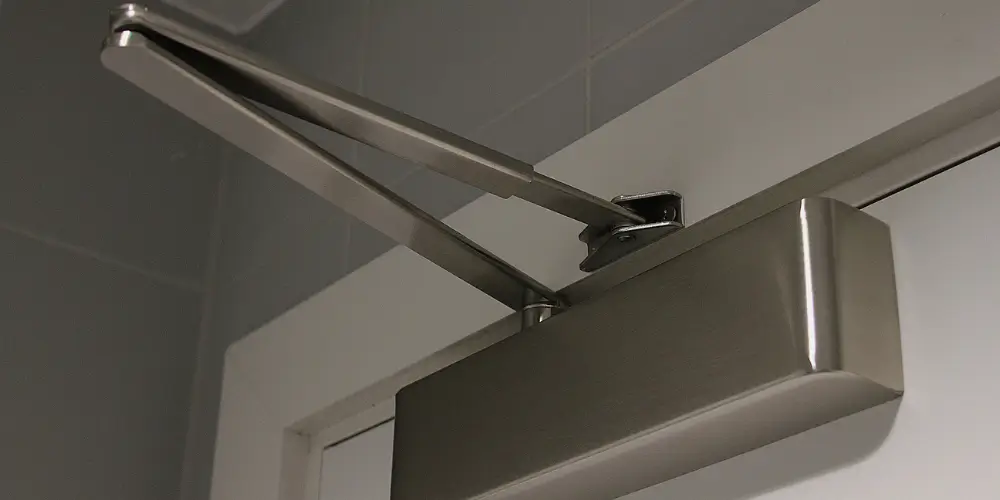
A fire door should return to the frame smoothly, close fully and sit in the correct position without needing to be pushed. If it stops short, catches, bounces back open or fails to latch, the issue should be treated as a fire door defect, not a normal wear-and-tear problem.
The Closer Is Not Always the Cause
The door closer is often blamed first, but the real problem may be elsewhere in the fire door set. The door leaf may have dropped, the hinges may be worn, the frame may have moved, the latch may be out of line, or the smoke seals may be creating too much resistance.
Common Reasons a Fire Door Fails to Close
Common reasons include incorrect closer strength, leaking closer fluid, loose closer arms, dropped hinges, warped door leaf, damaged frame, tight smoke seals, misaligned latch, damaged ironmongery, uneven gaps, flooring obstruction, pressure changes in corridors, unsuitable closer type, poor installation, or misuse such as forcing or wedging the door.
Why This Should Be Treated as a Fire Safety Defect
A fire door that does not close fully cannot perform as intended during a fire. It may fail to protect an escape route, corridor, stairwell, flat entrance or compartment if it remains open, fails to latch or does not sit correctly within the frame.
Why Simple Adjustment May Not Be Enough
Simply increasing the closer force may hide the real issue and create new problems, such as slamming, frame damage, difficult access or faster wear on the door set. The correct solution is to inspect the complete fire door set and fix the fault that is stopping the door from closing and latching properly.
Fire Door Not Latching
A fire door may appear to close, but if the latch does not engage properly, the door is still not working as intended. A fire door should close fully, meet the frame correctly and latch securely where a latch is fitted.
Why a Fire Door May Fail to Latch
This problem is often caused by misalignment between the latch and strike plate, weak or incorrect closer action, dropped hinges, frame movement, poor door fit, damaged ironmongery, tight smoke seals or air pressure in corridors and rooms. In some cases, the door closes but then bounces back open because the latch has not caught properly.
Why Latching Matters
A fire door that does not latch can reopen after closing. This may affect both fire safety and security, especially on flat entrance doors, communal doors, escape routes, plant rooms, bin stores, HMOs and commercial premises. If the door does not remain closed, it may not protect the compartment or escape route as expected during a fire.
Common Causes of Latching Problems
Common causes include latch and keep misalignment, the door not closing with enough controlled force, frame movement, hinge wear, poor door fitting, seals creating resistance, air pressure, a damaged latch, incorrect closer selection or previous poor repairs to the fire door set.
Why Force Is Not the Answer
The solution depends on the actual cause. Simply increasing the closer force can create new problems, such as slamming, frame damage, noisy operation, difficult access and faster wear on hinges or ironmongery. The full fire door set should be checked properly so the fault can be corrected without creating further fire door compliance issues.
Fire Door Not Closing Due to Air Pressure
Air pressure can stop a fire door closing fully, especially in blocks of flats, stairwells, corridors, plant rooms and buildings with ventilation systems.
Signs of air pressure issues include:
- door closes normally when windows are open
- door struggles to latch in certain weather
- door closes differently when other doors are open
- door stops just before the latch
- door closes slowly in one direction but not another
Air pressure problems should be assessed carefully. Increasing closer force may not be the right fix if it makes the door hard to open or causes slamming.
Fire Door Hinge Adjustment
- Door dropped at the hinge side
The door may sit lower than it should, causing it to rub the floor, threshold or frame. - Gaps are no longer even
If the gaps at the top, sides or bottom have changed, the hinges may have moved or worn. - Door catches before closing
A fire door that catches on the frame may not close fully, even if the closer is working correctly. - Latch no longer lines up
Hinge movement can pull the door out of position, stopping the latch from meeting the keep properly. - Loose hinge screws
Loose fixings can allow the door leaf to move, drop or become unstable in the frame. - Worn or damaged hinges
Worn hinges may not support the weight of the fire door properly and can affect closing performance. - Incorrect hinge type fitted
Fire doors need suitable hinges for the door weight, rating and location. Unsuitable hinges can affect safety and performance. - Hinge pockets damaged
Damaged fixing points in the door leaf or frame can stop the hinges from holding securely. - Closer adjustment may not solve it
If the hinges are the real problem, increasing the closer force may only cause slamming or further damage. - Full fire door set should be checked
Hinges, frame, door leaf, closer, latch, seals and gaps should be inspected together before deciding the correct repair.
Door Closer Adjustment Screws
Many people refer to adjustment screws, latch speed, sweep speed, backcheck and closer tension when discussing fire door closer adjustment. These controls vary by brand and model, including Briton, Dorma, Dormakaba, Norton, GEZE, Union and other closer manufacturers.
A competent person should always follow the manufacturer’s instructions for the specific closer model. Guessing which screw to turn can cause the door to slam, fail to latch, become difficult to open or stop closing correctly.
Common closer controls may relate to:
- closing speed
- latching action
- backcheck
- delayed action
- opening resistance
- closing force
Not every closer has the same controls. Some closers should not be adjusted beyond manufacturer limits. If the closer is leaking, damaged or unsuitable, adjustment may not solve the problem.
Briton, Dorma, Norton and GEZE Door Closer Adjustment
Different door closer brands can have different adjustment layouts, valve positions and performance settings. A Briton door closer, Dorma door closer, Norton closer or GEZE closer should not be adjusted by guesswork because each model may operate differently.
Before any adjustment is made, the person carrying out the work should check:
- The closer brand
- The closer model
- The manufacturer’s instructions
- The door size and weight
- The fire rating of the door
- Whether the closer is suitable for the door
- Whether the closer has been damaged
- Whether the closer is leaking
- Whether the closer still closes the door fully and reliably
- Whether the door latches correctly where a latch is fitted
If the closer model cannot be identified or the correct instructions are not available, the fire door should be inspected by a competent person. Incorrect adjustment can cause slamming, poor latching, difficult opening, damage to the door set or failure of the fire door to close correctly.
Should Residents or Tenants Adjust Fire Door Closers?
No. Residents and tenants should not adjust fire door closers, remove closers, disconnect closer arms, wedge doors open or interfere with self-closing devices.
Residents should report:
- doors not closing
- doors slamming
- missing or damaged closers
- doors being wedged open
- smoke seals falling off
- damaged hinges
- broken latches
- doors sticking or dragging
GOV.UK fire door guidance says residents should be told not to tamper with self-closing devices and should report faults or damage immediately.
Do All Fire Doors Need Closers?
Not every fire door has the same requirement, but any fire door that is required to self-close must be fitted with a suitable self-closing device. The purpose of the closer is to make sure the fire door returns to the closed position after use, so it can help protect escape routes and compartments during a fire.
Fire door closers are commonly required on flat entrance doors, communal corridor fire doors, stairwell fire doors, lobby doors, HMO fire doors, doors protecting escape routes, doors to higher-risk rooms, plant room doors, bin store doors and many commercial fire doors.
Whether a closer is required depends on the building type, the location of the door, the fire strategy, the fire risk assessment and the relevant fire safety guidance or regulations. A competent person should check the specific door and building requirements before deciding whether a closer is needed.
Fire Door Closers in HMOs
HMOs often need careful fire door management because they involve shared accommodation, escape routes and multiple occupants.
A fire door closer in an HMO may be needed to protect:
- bedroom doors
- kitchen doors
- corridor doors
- escape routes
- stairways
- shared areas
HMO landlords should check the fire risk assessment, licence conditions and local authority requirements. If a closer is damaged or a door is not closing, the defect should be dealt with quickly.
Fire Door Closers in Flats and Communal Areas
In blocks of flats, fire door closers are especially important for communal doors and flat entrance doors.
In multi-occupied residential buildings over 11 metres in England:
- communal fire doors must be checked at least every 3 months
- flat entrance fire doors should be checked at least every 12 months using best endeavours
These checks should include whether the door closes properly and whether the self-closing device appears to work.
Fire Door Closers in Workplaces and Commercial Premises
In workplaces and commercial buildings, fire door closer checks should form part of routine fire safety management. A faulty closer can stop a fire door from closing properly, which may affect escape routes, protected corridors, stairwells or high-risk areas.
This may apply to offices, shops, restaurants, warehouses, schools, care settings, surgeries, factories, industrial units and mixed-use buildings. In these premises, fire doors are often used frequently, so closers can become loose, worn, damaged or incorrectly adjusted over time.
The responsible person should make sure fire door closers are maintained where required. If a closer is leaking, damaged, loose, slamming, closing too slowly, failing to latch the door or not closing the door fully, the issue should be recorded, inspected and repaired by a competent person.
Can a Fire Door Closer Be Painted?
A fire door closer should not be painted in a way that affects its operation, markings, adjustment access, inspection, certification labels or manufacturer identification.
Painting can create problems if it:
- blocks adjustment points
- covers model information
- hides damage or leakage
- interferes with moving parts
- affects inspection or maintenance
- makes it harder to identify the closer
If appearance is a concern, use a suitable closer finish or ask a competent contractor before painting.
Fire Door Closer Inspection Checklist
| Check | What to Look For |
|---|
| Door closes fully | Door shuts from different opening positions |
| Door latches | Latch engages where fitted |
| No slamming | Door closes under control |
| No excessive delay | Door does not stay open too long |
| Closer secure | Fixings are tight and not loose |
| No oil leak | Leaking closer may need replacement |
| Arm condition | Closer arm is not bent, loose or disconnected |
| Hinges | Hinges are secure and door has not dropped |
| Seals | Smoke and intumescent seals are not damaged |
| Gaps | Gaps are not excessive |
| Frame | Frame is not damaged or distorted |
| Obstructions | Door is not blocked or wedged open |
| Records | Faults and repairs are recorded |
What Records Should Be Kept?
A responsible person, landlord or managing agent should keep clear records of fire door checks, closer faults and any repair work completed. These records help show that fire doors are being monitored, maintained and corrected where defects are found.
Fire door closer records should include:
- Door location
- Date of inspection
- Name of the person who checked the door
- Defect or issue found
- Action taken
- Contractor details where relevant
- Repair or adjustment date
- Follow-up inspection result
- Whether the door was returned to working order
Good records can support fire risk assessments, managing agent inspections, landlord compliance evidence, insurance queries, audits and enforcement visits. A clear record also makes it easier to track repeat problems, overdue repairs and doors that need further attention.
When Should a Fire Door Closer Be Replaced?
Adjustment is not always enough. A closer may need replacing if:
- it is leaking oil
- it no longer controls the door
- it is damaged
- the arm is bent
- fixings no longer hold
- it is the wrong type for the door
- it cannot close the door fully
- it makes the door too hard to open
- it repeatedly loses adjustment
- manufacturer parts are missing or obsolete
A replacement closer should be suitable for the fire door, door size, door weight, usage level and required fire safety function.
Need Fire Door Closer Adjustment in London?
If your fire door closer is slamming, not latching, closing too slowly, leaking, damaged or failing to close the door properly, London Safety Certificate can help.
We provide fire door inspection and fire door certificate services across London for landlords, managing agents, property managers, businesses, HMOs and residential blocks.
Our team can inspect fire doors, identify closer defects, check whether the door closes properly, provide clear reporting and advise on the next steps where remedial work is required.
Frequently Asked Questions
How do you adjust a fire door closer?
A fire door closer should be adjusted according to the manufacturer’s instructions for the specific closer model. The full door set should be checked first because the issue may be caused by hinges, frame alignment, seals, latch, air pressure or closer damage.
Can I adjust a fire door closer myself?
If the door forms part of the building’s fire safety protection, adjustment should be handled by a competent person. Tenants and residents should report faults and should not tamper with fire door closers.
Why is my fire door slamming?
A fire door may slam because the closer is incorrectly set, worn, damaged, leaking or unsuitable. It can also be caused by air pressure, hinge problems, frame issues or poor door alignment.
Why is my fire door not closing properly?
Common causes include a faulty closer, poor adjustment, loose hinges, damaged seals, warped door, misaligned latch, floor obstruction, air pressure or frame damage.
Why is my fire door not latching?
The latch may be misaligned, the closer may not be controlling the final closing action correctly, or the door may be affected by hinges, seals, air pressure or frame movement.
What are door closer adjustment screws?
Adjustment screws or valves control functions such as closing speed, latching action or backcheck depending on the closer model. They should not be adjusted randomly because different brands use different layouts.
How do you stop a fire door banging?
Do not wedge the door open. The closer, hinges, latch, frame and air pressure should be inspected so the correct cause of banging or slamming can be fixed.
How often should fire door closers be checked?
In multi-occupied residential buildings over 11 metres in England, communal fire doors must be checked at least every 3 months and flat entrance fire doors should be checked at least every 12 months using best endeavours. Other buildings should follow the fire risk assessment and maintenance schedule.
Do all fire doors need closers?
Not every door is the same, but fire doors that are required to self-close must have a suitable self-closing device. This is common for flat entrance doors, communal doors, escape route doors, HMOs and higher-risk areas.
Can a damaged fire door closer be repaired?
Sometimes, but it depends on the fault. If the closer is leaking, damaged, unsuitable or no longer controls the door, replacement may be needed.
Can a fire door closer be painted?
It should not be painted in a way that affects its operation, markings, inspection, adjustment access or manufacturer identification.
Who is responsible for fire door closer maintenance?
The responsible person, landlord, building owner, managing agent, employer or person in control of the premises may be responsible, depending on the building and area concerned.