

EICR codes play a critical role in ensuring the safety and compliance of electrical installations. These codes, spanning from C1 to C3 and the FI Code, categorise electrical conditions based on the level of risk they pose. For example, a C1 code indicates an immediate danger that demands urgent correction, such as exposed live wiring. A C2 code highlights potential hazards that require timely intervention. In contrast, a C3 code suggests improvements that, while not immediately dangerous, enhance the safety of the electrical system. The FI Code demands further investigation to assess the potential risks better. Understanding these distinctions can greatly aid in maintaining electrical safety and compliance, providing a foundation for more informed decisions in managing electrical risks.
Key Takeaways
- C1 Code Example: Exposed live electrical parts presenting an immediate risk of shock or fire.
- C2 Code Example: Insufficient earthing or bonding that could lead to potential hazards.
- C3 Code Example: Lack of adequate labelling on the consumer unit, suggesting improvement for safety.
- FI Code Example: Unidentified source of electrical fault that requires further investigation to determine the risk level.
- Compliance with EICR codes ensures safety by identifying and rectifying electrical installation issues promptly.
Table of Contents
Comprehensive Guide to EICR Codes and Their Meanings
Understanding what each EICR code represents helps identify potential electrical hazards and ensure that they meet current regulatory standards.
This knowledge enhances safety and informs necessary corrective actions in residential, commercial, and industrial settings.
What are EICR Codes? An Overview
Several property managers and electricians frequently encounter Electrical Installation Condition Report (EICR) codes, yet understanding their full implications remains a challenge for many.
EICR codes stem from detailed assessments integral to the EICR process, which evaluates the safety and efficiency of electrical installations within commercial and residential properties. Strict safety regulations govern this systematic examination and aim to guarantee property compliance with current electrical standards.
The process involves a series of electrical inspections and testing procedures designed to identify any defects or deviations from the wiring regulations outlined in the BS 7671, also known as the UK national standard. The findings from these inspections are then documented using specific EICR codes, each denoting a particular type of electrical safety issue or non-compliance.
These codes range from immediate dangers that require urgent attention to recommendations for improvements that enhance safety and efficiency.
Understanding and accurately interpreting these codes is critical for maintaining electrical safety and compliance in properties. Mastery of the EICR codes not only aids in pinpointing existing and potential issues but also guides the necessary corrective actions, guaranteeing that all electrical installations meet the required safety standards.
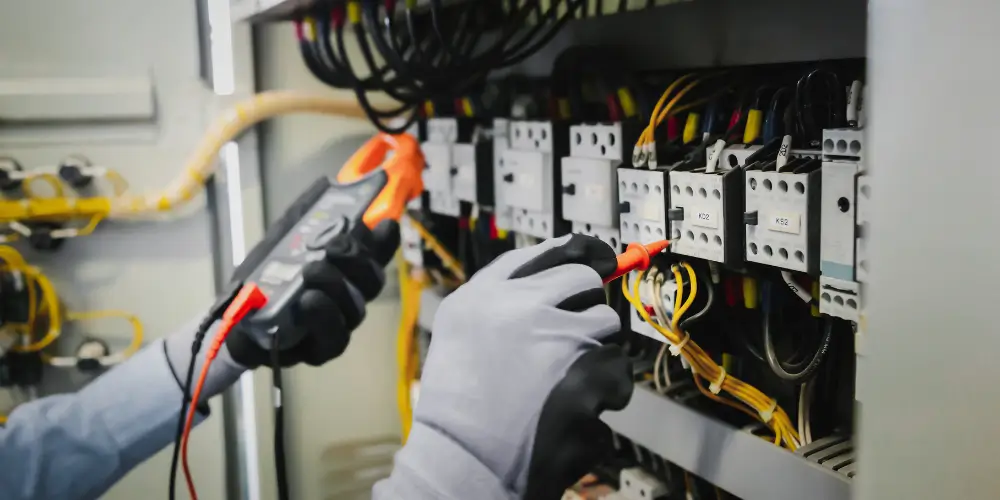
Why EICR Codes Matter for Electrical Safety?
Understanding EICR codes is essential for guaranteeing electrical safety and compliance in both residential and commercial properties. These codes, integral to Electrical Installation Condition Reports, serve as a structured guideline aligning with electrical regulations. They are vital in identifying non-compliance and potential safety hazards within electrical installations.
EICR codes facilitate detailed safety inspections and risk assessments, which are important for maintaining the integrity and safety of electrical systems. By adhering to these codes, inspectors can precisely categorise electrical faults, ranging from immediate dangers to recommendations for improvements. This categorisation enables property owners and facility managers to understand the urgency and nature of issues that need addressing, thereby prioritising corrective actions effectively.
The inclusion of EICR codes in regular audits not only guarantees compliance with current electrical safety standards but also enhances homeowner awareness. It educates property stakeholders about the importance of regular checks and the potential risks of neglecting such assessments.
Compliance with these standards is not merely a regulatory formality but a fundamental aspect of property management that safeguards occupants and structures from electrical mishaps, thereby upholding high safety and operational standards in the built environment.
Detailed Examples of EICR Codes: C1, C2, C3, and FI
Understanding the distinctions between EICR codes—C1, C2, C3, and FI—is essential for evaluating electrical safety and compliance.
Code C1 indicates conditions that pose an immediate danger requiring urgent attention. At the same time, C2 identifies potential hazards that could become a risk if not addressed.
Conversely, C3 suggests improvements for enhanced safety, and FI mandates further investigation to ascertain the extent of potential dangers.
C1 Code: Immediate Danger Scenarios
When evaluating electrical installations, a C1 code represents the most urgent level of concern, indicating that a condition presents an immediate danger to property or human life. Such a designation requires immediate action to mitigate risks and safeguard those potentially affected.
C1 code examples typically include scenarios where live wires are accessible, protective devices are bypassed or absent, or severe damage to equipment threatens direct contact with live components.
Understanding the implications of a C1 code is essential for prioritising safety measures. Qualified professionals must perform prompt C1 code assessments to accurately diagnose the extent of the hazard and strategise the necessary interventions.
The primary focus should be on implementing effective C1 code remedies to rectify the identified dangers swiftly. This might involve repairing or replacing faulty equipment, reconfiguring electrical circuits, or upgrading installations to meet current safety standards.
Effective management of C1 code priorities guarantees that the most severe risks are addressed first, minimising potential harm.
All stakeholders must understand the severity of C1 conditions and respond accordingly, guaranteeing compliance with safety regulations and maintaining a secure environment.
C2 Codes: Potentially Hazardous Conditions
While C1 codes indicate immediate and urgent hazards, C2 codes signify conditions that, while not posing immediate danger, have the potential to become hazardous if not addressed. This category demands scrutiny to guarantee long-term safety and compliance with electrical standards.
C2 code examples typically involve scenarios where the lack of adequate protective measures could lead to dangerous situations, such as the absence of a suitable residual current device (RCD) on circuits in a potentially wet environment.
The implications of the C2 code are significant; they underscore the need for corrective actions to prevent the escalation of risk. For instance, if a circuit’s insulation resistance levels are marginally below the required thresholds, the deterioration could eventually lead to short circuits or fire risks if it continues unchecked.
Consequently, C2 code assessments must be thorough and predictive, focusing not just on current conditions but on potential future failures.
Guaranteeing C2 code safety involves a proactive approach to electrical system maintenance. Implementing the necessary modifications following a C2 diagnosis helps maintain system integrity and protect against latent hazards.
Compliance with C2 recommendations supports a strategic, safety-first approach, mitigating risks before they manifest into more severe problems.
C3 Codes: Recommendations for Improvement
C3 codes, identified in Electrical Installation Condition Reports (EICR), serve as recommendations for improving existing electrical installations to enhance safety and efficiency without necessarily indicating immediate or potential hazards.
These codes often pinpoint areas where upgrades could greatly increase an installation’s compliance with current electrical standards and practices. However, they do not deem the existing conditions directly hazardous.
Common C3 issues include outdated but functional circuit protection devices, lack of earthing in lighting circuits, or inadequate bonding.
These are not immediate threats but could be improved to align with modern safety expectations. For instance, replacing old fuse boxes with modern consumer units containing Residual Current Devices (RCDs) is a typical C3 improvement strategy that enhances safety against electrical shocks.
Understanding C3 code implications is vital for maintaining long-term electrical safety and operational reliability.
It enables property owners and facility managers to plan and budget for necessary upgrades before they escalate into more severe problems.
Adherence to C3 compliance guidelines guarantees a higher standard of electrical safety and optimises the installation’s performance and energy efficiency, thereby reducing overall operational costs.
FI Codes: When Further Investigation is Needed
FI codes, designated in Electrical Installation Condition Reports (EICR), necessitate further investigation to determine the exact nature and severity of potential electrical hazards. When an FI code is issued, it indicates that while immediate danger may not be apparent, unresolved issues could pose significant risks. This directive guarantees that no potential hazard is overlooked, adhering to rigorous safety protocols and compliance standards.
Further Investigation is essential as it allows for a thorough risk assessment, which is vital for maintaining electrical safety and preventing future faults. This process involves a meticulous examination of the electrical system to identify hidden discrepancies that standard inspections might not reveal. The aim is to achieve a detailed understanding of the electrical system’s condition, which is critical for formulating an effective intervention strategy.
Electrical faults that trigger an FI code often require specialised diagnostic tools and expertise to trace and rectify. This underscores the importance of engaging qualified professionals who are adept at manoeuvring through complex electrical systems and guaranteeing that all corrective measures align with established compliance standards.
Ultimately, the FI code serves as a preemptive measure, safeguarding against potential electrical failures and enhancing overall safety.
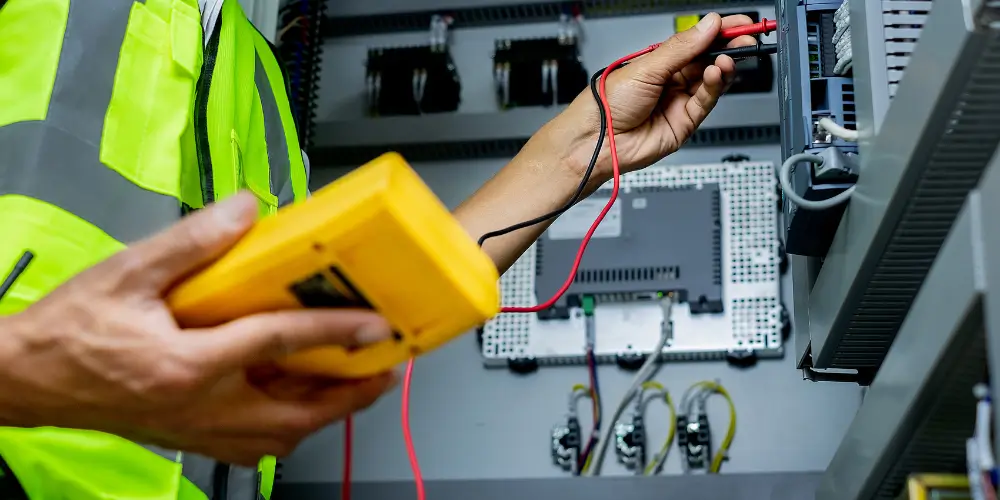
Real-Life Scenarios Illustrating EICR Code Classifications
In electrical inspections, correctly classifying issues according to EICR codes is essential for ensuring safety and compliance.
This segment explores real-life scenarios that typically lead to specific EICR code assignments, such as C1, C2, C3, and FI. Each denotes varying levels of electrical risk and urgency for remedial actions.
Common Instances Leading to C1 Code Assignments
Why are C1 codes so critical in electrical inspection condition reports (EICRs)? The designation of a C1 code highlights conditions that pose an immediate danger to property occupants and require urgent remedial action.
In the context of electrical safety assessments, common C1 violations include exposed live wires, greatly compromised insulation, and faults in electrical panels that present a direct risk of fire or electrocution.
Landlord responsibilities under these circumstances are not just regulatory. Still, they are essential to guarantee tenant safety. Immediate measures, as dictated by urgent repair protocols, must be enacted without delay to mitigate these hazards.
Failure to address such issues can lead to severe legal consequences and endanger lives.
Tenant awareness is also pivotal. Occupants must be educated on recognising signs of electrical hazards and understanding the severity implied by a C1 classification.
This knowledge empowers tenants to demand swift actions and guarantees compliance with safety norms.
Examples of Electrical Issues Resulting in C2 Codes
Shifting focus from the immediate dangers identified by C1 codes, C2 codes in electrical inspection condition reports (EICRs) signify potentially dangerous conditions that require remedial action but are not considered immediately life-threatening. These codes are pivotal for maintaining safety compliance in electrical installations and avoiding future hazards.
C2 code examples typically include scenarios such as inadequate earthing or bonding that might not cause immediate harm but pose significant risks if left unaddressed. Wiring issues, particularly those involving outdated or deteriorating insulation, also frequently result in a C2 classification. Such conditions might not manifest in visible damage or disruption yet. Still, they compromise the wiring integrity, increasing the potential for electrical fires or shocks over time.
To illustrate, consider the following real-life scenarios captured in inspection results:
| Issue Identified | Potential Risk |
| Inadequate earthing | Increased risk of electric shock |
| Outdated wiring insulation | Fire hazard due to short circuit |
| Absence of RCD protection | Severe shock or fire incidents |
Each of these instances highlights the necessity for timely intervention to uphold the integrity and safety of electrical systems.
Situations That May Be Assigned a C3 Code
C3 codes in Electrical Installation Condition Reports (EICRs) are assigned to electrical situations that, while not posing immediate or potential danger, still warrant improvement to enhance system safety and compliance.
For instance, consider a scenario where insulation on wiring is slightly degraded but not yet to the extent where it exposes live wires or risks short circuits. In such cases, assigning a C3 code underscores the need for future remediation to prevent deterioration that could elevate the risk to a more severe code classification.
Further delving into c3 code examples, one might encounter a situation where the earthing or bonding arrangements are functional yet not up to the latest standards. The implications here are subtle but significant, emphasising an upgrade to current standards to guarantee maximum safety.
C3 code recommendations typically suggest enhancements rather than urgent repairs, providing a window for planned upgrades without immediate pressure.
Analysing C3 code interpretations reveals that they are not alarming but rather cautionary advisories that aim to guide property owners towards better compliance and system integrity.
Such scenarios help us understand the nuanced approach required in electrical safety assessments and illustrate the proactive nature of C3 code scenarios in preempting potential electrical hazards.
Cases Where FI Codes Are Applicable
Further exploring Electrical Installation Condition Report (EICR) classifications, the FI (Further Investigation) code is another critical category that merits attention. This designation is pivotal in scenarios where an immediate danger is not apparent. Yet, the existence of potential hazards cannot be ruled out.
FI codes are typically assigned during EICR inspections when the assessor identifies an irregularity that cannot be thoroughly evaluated at the time of inspection due to various constraints, such as limited access to components or incomplete circuit labelling.
Real-life instances where FI codes are applicable include situations where the insulation resistance readings are marginally below the acceptable threshold. This prompts a need for further detailed assessment to determine whether the degradation is localised or indicative of a more extensive issue.
Another example is the discovery of older wiring systems that have been subjected to alterations or additions. These scenarios necessitate a deeper investigation to guarantee compliance with current electrical safety regulations and standards.
Assigning an FI code initiates a critical process that guarantees all potential risks are adequately assessed and addressed. This aligns with compliance requirements and upholds the highest standards of electrical safety.
This code is essential in bridging the gap between immediate fixes and long-term electrical upgrades.

How to Interpret EICR Codes in Your Electrical Safety Report
Understanding the significance of each Electrical Installation Condition Report (EICR) code is essential for maintaining the safety and compliance of electrical installations.
The EICR codes, ranging from C1 to C3, indicate the level of risk associated with each identified issue, guiding property owners on the urgency and type of remedial action required.
Proper interpretation of these codes guarantees regulatory compliance and enhances the safety and longevity of electrical systems.
Decoding the Significance of Each EICR Code
In the domain of electrical safety, Electrical Installation Condition Report (EICR) codes serve as essential indicators of an electrical installation’s health and safety status. These codes, formulated as part of rigorous EICR inspection processes, delineate various levels of compliance and urgency, guiding property owners and electrical professionals in prioritising necessary actions to meet EICR compliance requirements.
Understanding each code’s implications is critical. For instance, a Code C1 indicates ‘danger present’, necessitating immediate remedial action to mitigate direct risks. C2, while less dire, points out potentially dangerous conditions, suggesting urgent corrective measures. C3, on the other hand, highlights non-compliant elements that, although not immediately hazardous, require improvement to uphold safety standards according to the latest EICR code updates.
A solid grasp of EICR reporting standards underpins proficiency in interpreting these codes within the context of an EICR. These standards guarantee that assessments are thorough, consistent, and reflective of current best practices in electrical safety.
Staying updated with EICR code updates is likewise imperative. These modifications reflect evolving technological standards and safety protocols, guaranteeing that the reporting process remains at the forefront of electrical safety and compliance.
Steps to Take Upon Receiving Various EICR Codes
Once the importance of each EICR code is understood, the next step is to respond appropriately to confirm electrical safety and compliance.
The EICR process mandates a robust risk assessment mechanism, especially after identifying codes that signal urgent or potential hazards. For instance, a C1 code indicates immediate danger; the property management must act swiftly to rectify the fault to guarantee occupant safety. This might involve isolating the affected circuit until repairs are complete.
While slightly less urgent, a C2 code still requires quick attention as it points to potentially dangerous conditions. Property managers should schedule repairs promptly, within a defined short timeframe, to mitigate any risk of escalating into a more severe issue.
For codes like FI, which suggest further investigation is needed, it is essential to engage qualified electricians to explore the underlying problems promptly.
Lastly, compliance with safety standards after an EICR must be documented and monitored. Regular follow-ups and subsequent electrical inspections confirm that all corrective actions have been effectively implemented.
This strategic approach not only enhances safety but also protects property owners from legal liabilities arising from electrical failures.

Real-Life EICR Code Examples for Homeowners and Landlords
Understanding the specific EICR codes relevant to residential properties is essential for both homeowners and landlords to ensure compliance and safety.
Common C1 code violations, often found during inspections, indicate immediate dangers within electrical installations that require urgent attention.
Meanwhile, C2 codes highlight potentially hazardous conditions in older electrical systems, and C3 recommendations guide less critical but advisable improvements to enhance overall electrical safety.
Common C1 Code Violations in Residential Properties
Common C1 code violations greatly compromise the safety of residential properties, posing serious risks to occupants. These violations, identified during residential inspections, indicate the presence of immediate and potentially life-threatening hazards in electrical installations. Such hazards necessitate urgent rectification to adhere to stringent electrical safety standards, thereby ensuring property compliance and occupant safety.
The essence of hazard identification lies in recognising conditions that might lead to direct contact with live parts or conditions where protection against electric shock is insufficient. Typical examples of C1 code violations include exposed live wires, faulty or absent earthing connections, and damaged insulation on wiring. Each of these scenarios presents a clear and present danger that could lead to severe injuries or fatalities if not promptly addressed.
Ensuring compliance involves regular and thorough inspections by qualified electricians who assess all aspects of a property’s electrical system. The focus is not only on identifying existing violations but also on implementing preventive measures to avoid future risks.
This proactive approach is essential in maintaining high safety standards and safeguarding the well-being of all property residents. Such diligence in electrical inspections and maintenance is indispensable for upholding the integrity and safety of residential environments.
C2 Codes Found in Older Electrical Installations
In older electrical installations, C2 codes often highlight deficiencies that, while not immediately dangerous, require remedial actions to prevent potential hazards.
These deficiencies are essential in ensuring long-term safety and compliance, and understanding their implications is vital for homeowners and landlords.
C2 code examples typically include issues like inadequate earthing or bonding and the use of outdated wiring that does not comply with current safety standards.
Although such conditions may not pose an immediate threat, if not addressed promptly, they could lead to considerable safety risks, such as electrical shocks or fires.
C2 code analysis involves a detailed examination of the electrical installation to identify components that have deteriorated or are no longer compliant with the Electrical Regulations.
The C2 risk assessment is a critical step in this process.
It evaluates the potential hazards these deficiencies could cause, prioritising them based on the severity and likelihood of occurrence.
This assessment helps planners effectively plan the necessary corrective measures.
Prevention strategies for C2 code issues involve regular maintenance checks and updating the installations as per the latest electrical safety norms.
These proactive measures can greatly mitigate risks, ensuring the safety and integrity of the electrical system in older installations.
Practical Examples of C3 Recommendations in EICRs
While C2 codes pinpoint urgent but not immediately dangerous conditions, C3 recommendations in Electrical Installation Condition Reports (EICRs) suggest improvements that enhance safety and compliance. However, they are not imperative for immediate action.
These recommendations often highlight areas where electrical systems meet the minimum legal requirements but could benefit from upgrades to adhere to the latest standards and best practices.
One typical example of a C3 recommendation might be the suggestion to replace outdated, non-compliant types of circuit breakers. Despite their functionality, older models may not provide the same level of safety as modern equivalents. Implementing this change can greatly reduce the risk of electrical faults and enhance overall electric system resilience.
Another common C3 recommendation is the installation of additional sockets to mitigate the use of multi-way adapters, which can pose fire risks when overloaded. This not only improves safety but also aligns with current usage patterns, reflecting an understanding of modern appliance demands.
Lastly, C3 might suggest the labelling of circuits on the consumer unit. This maintenance suggestion aids in clarity, ensuring that future inspections or electrical work can be carried out more efficiently and safely.
Each of these recommendations serves as proactive steps towards ensuring a safer, more compliant residential environment.
Examples of Modern EICR Observations Under the 18th Edition
The 18th Edition of the Wiring Regulations introduces refined criteria for Electrical Installation Condition Reports (EICRs), highlighting the need for precise observations during inspections. This amendment has improved the stringency of safety regulations, guaranteeing that all modern wiring systems are evaluated with utmost diligence.
The emphasis is on preventing hazards through meticulous electrical inspections and guaranteeing compliance with the latest safety standards.
The shift towards more detailed risk assessments and proactive maintenance practices has led to an increase in the precision of observations recorded in EICRs. Below are key examples of modern observations under the 18th Edition:
- Circuit Overload: Identification of circuits at risk of overload due to insufficient capacity for modern appliance demands.
- Insulation Deterioration: Detection of aged or damaged insulation that could lead to potential electric shocks or fires.
- Earthing and Bonding Issues: Assessment of improper or outdated earthing and bonding vital for preventing electrical shocks.
- RCD Protection: Verification of the presence and functionality of residual current devices is fundamental to mitigating the risk of electric shock.
- Outdated Wiring Types: Recognition of obsolete wiring types that do not conform to current electrical safety standards.
These observations underscore the importance of adapting inspections to incorporate contemporary electrical systems and safety mechanisms.
The 18th Edition’s rigorous approach guarantees that electrical installations are not only compliant but are also ideally safe for ongoing use, reflecting best practices in both risk assessment and maintenance strategies.
This adaptability is essential in an era where electrical demands and technologies evolve rapidly.
What Should I Do If My EICR Has a C1 Code?
Receiving a C1 code on an Electrical Installation Condition Report indicates an immediate danger present within the electrical installation that requires prompt attention to prevent potential harm.
The EICR implications of a C1 code are severe, suggesting that the condition of the electrical components could cause injury or even fatality. This mandates urgent action to mitigate any risks associated with the fault.
Upon identification of a C1 code during electrical inspections, property owners or responsible personnel must initiate immediate corrective measures.
The first step in addressing this significant issue is to disconnect or isolate the affected part of the electrical system, if feasible, to assure safety compliance and prevent any accidents.
Subsequently, a qualified electrician with experience in C1 repair should be contacted without delay. These professionals will assess the severity of the issue and execute the necessary repairs or replacements.
It is vital to understand that C1 codes represent not only a threat to safety but also a legal liability.
Ignoring such warnings can lead to regulatory penalties or more severe consequences if an incident occurs.
Ensuring that all corrective actions are documented is also essential for maintaining up-to-date and compliant electrical installation records.
Can I Ignore a C3 Code in My EICR?
A C3 code on an Electrical Installation Condition Report (EICR) indicates that the electrical system contains issues that are considered non-urgent but still require attention to guarantee ongoing safety and compliance. This classification suggests that while the installation is not immediately dangerous, it fails to comply with current electrical safety standards fully.
Ignoring a C3 code may not lead to immediate safety hazards. Still, it might escalate over time, leading to potential risks or failure to meet legal requirements for electrical safety.
Ignoring EICR findings, especially a C3 code, can have several implications:
- Increased risk of electrical faults**: Minor issues can develop into major problems.
- Potential legal implications**: Non-compliance with safety standards can lead to legal consequences if an incident occurs.
- Insurance complications: Insurance claims might be invalidated due to known non-compliance.
- Decreased property value**: Known electrical issues can affect property valuations negatively.
- Future compliance costs**: Delaying repairs might increase the costs when they become urgent or compound with other issues.
Homeowner responsibilities include maintaining an electrically safe environment. The EICR compliance checklist serves as a guide, ensuring that all electrical installations meet the required safety standards.
While a C3 code does not demand immediate action, it should not be disregarded. Addressing these issues promptly can prevent further deterioration of the electrical system, ensuring safety and compliance.
Consequently, while it might be tempting, ignoring a C3 code is not advisable for anyone aiming to maintain a safe, compliant, and efficient home environment.

How Are FI Codes Resolved in Electrical Safety Reports?
In Electrical Installation Condition Reports (EICR), FI codes signify ‘Further Investigation’ and are used when an assessor cannot determine the safety of an element due to limitations in the inspection or unclear results. Resolving these FI codes is vital for guaranteeing a property’s electrical safety. It requires a structured approach detailed in Electrical Report Procedures.
The resolution process begins with a detailed review of the initial EICR, focusing on the sections marked with FI codes. This review helps in understanding the specific concerns or ambiguities that led to the issuance of the FI code.
Subsequently, Investigation Protocols are initiated, which may involve more invasive or detailed testing techniques not employed during the initial assessment. These protocols are designed to uncover hidden issues that could not be diagnosed earlier due to the non-invasive nature of standard EICR checks.
During this phase, Safety Compliance Checks are integral. These checks confirm that every investigative action taken adheres to current safety standards and regulations, mitigating any risk to the property or personnel involved. The investigative team employs advanced diagnostic tools and expertise to trace and rectify the root causes of the ambiguities.
Finally, Risk Assessment Measures are applied to evaluate the potential hazards of unresolved electrical issues. These measures guide the decision-making process, determining whether an electrical system can be declared safe or if further remedial actions are necessary.
Upon completion of these steps, FI Code Resolutions are documented in a follow-up report, outlining the findings and confirming compliance with safety standards. This thorough approach guarantees meticulous resolution of FI codes, enhancing the overall safety and integrity of the electrical installation.
EICR Codes and Property Safety
Understanding the resolution of FI codes is fundamental for ensuring the safety of electrical installations. Yet, it is only one aspect of maintaining property safety. Effective property maintenance involves a thorough approach to safety regulations, incorporating regular electrical inspections, and a clear understanding of landlord responsibilities and tenant awareness.
Electrical Installation Condition Reports (EICR) are critical in identifying not just immediate risks but also potential areas of concern that could evolve into future hazards. These reports serve as a cornerstone of property safety protocols, ensuring that all electrical systems comply with current safety standards and provide a safe living or working environment.
The role of EICR codes in property safety extends beyond mere compliance; it is about cultivating a culture of safety and responsibility. Here are key aspects where EICR codes contribute greatly:
- Timely Identification of Electrical Hazards: Early detection of issues such as inadequate wiring or potential fire risks.
- Regulation Compliance: Ensuring all electrical installations meet the latest safety regulations.
- Landlord Responsibilities: Clarifying what landlords must address to safeguard tenants.
- Tenant Awareness: Educating tenants on potential electrical hazards and safety practices.
- Preventive Measures: Recommendations for improvements and preventive actions to avert electrical failures.
Incorporating these practices into the routine management of properties enhances tenant safety and extends the longevity of the electrical infrastructure.
Landlords and property managers must recognise that adherence to EICR recommendations and proactive electrical system management are indispensable elements of robust property maintenance.
Frequently Asked Questions
What Are the Costs Associated With Addressing EICR Code Issues?
Addressing EICR code issues involves varied costs: inspection service pricing averages £150 per property. In contrast, electrical repair expenses and remedial work costs depend on compliance fee analysis and the extent of required corrections.
How Often Should an EICR Be Updated or Renewed?
EICR frequency varies by property type, adhering to legal requirements to guarantee safety standards. Generally, every 5 years for rentals, though tenant responsibilities may necessitate more frequent checks depending on usage and local regulations.
Are EICR Codes Applicable Internationally or Just in the UK?
EICR codes are primarily UK-specific; however, global safety practices and documentation requirements may align with international electrical standards. Differences in EICR enforcement highlight the need for careful comparison of EICR regulations internationally.
What Qualifications Should an Electrician Have to Issue an EICR?
To issue an EICR, electricians must have the necessary electrical qualifications, meet regulatory standards, and possess specific EICR training. Licensing requirements and electrician certifications guarantee adherence to national safety and proficiency benchmarks.
Does an EICR Cover All Types of Electrical Installations?
An EICR generally covers all types of electrical installations, evaluating compliance with safety standards and installation types. The scope includes periodic inspection frequency to guarantee ongoing adherence to evolving electrical safety and compliance requirements.
