

To properly fit a fire door, you must adhere closely to UK Building Regulations and specific standards, such as BS 476-22 and BS 8214. First, verify that your fire door and all components, including frame, hinges, and seals, meet the required certifications. Measure the door opening to confirm fit, ensuring the frame is plumb and true. Install intumescent strips and smoke seals to the door and frame, using three certified hinges for secure hanging. Ensure the door closes smoothly with permissible gap limits, and perform regular maintenance checks to maintain its functional integrity. Following these detailed steps will optimise your fire safety compliance and protect against potential liabilities. More insights await as you implement these guidelines effectively.
Key Takeaways
- Verify that the fire door and frame comply with BS 476-22 and other relevant regulatory standards.
- Measure the door opening to ensure the door fits snugly and is aligned properly.
- Install intumescent strips and smoke seals to enhance fire and smoke resistance.
- Use certified hinges and position them correctly for optimal weight distribution.
- Perform a final inspection to ensure correct alignment, sealing, and smooth operation.
Table of Contents
How to Fit a Fire Door in the UK Properly
When fitting a fire door in the UK, you must adhere strictly to the Building Regulations, specifically Approved Document B, which governs fire safety.
You must understand that non-compliance not only compromises safety but also exposes you to legal liabilities.
Verify that the door’s components, such as frames and seals, meet the BS 476-22 standard for integrity and insulation.
Importance of following UK regulations
Adhering strictly to UK regulations is crucial when installing a fire door, ensuring both safety and compliance with the law.
You’re not just installing a door; you’re integrating a critical component of a building’s fire safety strategy. This requires precision and a thorough understanding of the legal requirements and building regulations governing the installation of fire doors.
To master this task, consider the following:
Fire Door Standards
Familiarise yourself with BS 8214 and other relevant standards, which provide detailed guidance on the installation of fire doors. Compliance isn’t just about following the law; it’s about guaranteeing that the door performs its function in the event of a fire.
Risk Assessments
Conduct thorough risk assessments to determine the specific requirements for fire doors in your building. This isn’t just a bureaucratic step; it’s a critical analysis that informs the safety measures necessary to protect lives and property.
Fire Door Inspections
Regular inspections are mandatory. Understand the criteria for these inspections, which are designed to guarantee ongoing compliance with fire safety and building regulations.
What You Need Before Installing a Fire Door
Before installing a fire door, it’s crucial to gather the necessary tools and materials.
You’ll need to verify that the fire door meets all relevant certification and compliance requirements to guarantee it adheres to safety standards.
Make sure you have access to the correct hardware and any specific installation instructions provided by the manufacturer.
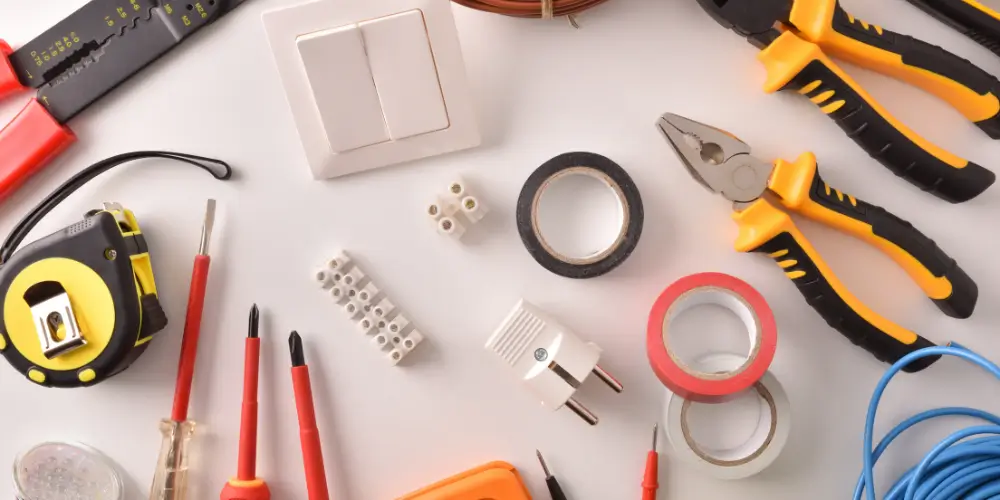
Tools and materials required
To secure a safe and compliant installation of your fire door, you’ll need specific tools and materials.
It’s important to familiarise yourself with the door specifications and installation guidelines that comply with fire regulations.
Let’s focus on the necessary tools checklist, material types, and understanding the door sizes to guarantee adherence to compliance standards.
Here are the important items you need:
- Safety Equipment: Always wear protective gear, including safety glasses, gloves, and earplugs or ear muffs. This equipment is crucial to protect against potential hazards during the installation process.
- Measuring and levelling tools, such as a tape measure, level, and square, are indispensable for accurately assessing the door frame and ensuring the door fits perfectly.
Precise measurements are crucial for meeting the fire door’s specifications and maintaining its integrity, which is essential for optimal performance under fire conditions.
- Installation Tools: You’ll need a drill, screwdriver, and possibly a chisel for fine adjustments.
Additionally, use screws and fixings that match the material types of the door and frame, adhering to the specified standards.
Each tool and material plays a crucial role in the successful installation of a fire door that meets all safety and compliance standards.
Checking fire certification and compliance
Verifying your fire door meets all the necessary certification and compliance requirements is the first vital step before installation begins. You must confirm that the door complies with stringent fire door regulations and compliance standards set by recognised certification bodies. This involves diligently reviewing the fire door’s certification label, which should detail the scope of the door’s fire resistance as determined through rigorous fire door testing.
Before proceeding, consult the latest installation guidelines and inspection protocols to guarantee your approach aligns with legal requirements. This compliance isn’t merely bureaucratic, but a vital aspect of safety assessments that protect lives and property in the event of a fire.
Each component of the fire door assembly (frame, seals, hinges, and hardware) must also meet specified standards. To maintain adherence, it is essential to be familiar with periodic inspection schedules and the criteria used during these checks.
Non-compliance can lead to severe legal repercussions and compromise the door’s effectiveness in preventing the spread of fire and smoke.

Step-by-Step Fire Door Fitting Process in the UK
To guarantee your fire door functions correctly, you must begin by accurately measuring the door opening.
Next, prepare the door frame area to accommodate the fire-rated door frame, which is vital for maintaining the integrity of the fire barrier.
Then, carefully fit intumescent strips and smoke seals, as these are essential for preventing the spread of smoke and fire.
Measure the Door Opening Correctly
Accurately measuring the door opening is your essential first step in fitting a fire door. Confirming precise dimensions is crucial for complying with safety regulations and ensuring a seamless installation.
Here’s how you can achieve accurate measurements:
- Measure the Opening Width: Use a reliable tape measure to determine the width of the door opening at three points: the top, middle, and bottom. Record the smallest measurement to guarantee the door fits in the narrowest part of the opening. This prevents any potential misalignment that could impede the door’s functionality.
- Determine the Height Clearance: Measure the height from the floor to the top of the opening on both sides. It’s essential to account for any unevenness in the floor, as this can impact the door swing and overall alignment. The smallest height measurement is significant for confirming that there is no gap at the top or dragging at the threshold.
- Check Wall Alignment and Threshold Height: Assess the vertical alignment of the walls to confirm they’re plumb. Uneven walls can impact the door frame dimensions.
Also, measure the threshold height to guarantee the door doesn’t catch or drag, which is crucial for maintaining the integrity of the fire door’s performance.
Prepare the Door Frame Area
Once you’ve recorded the precise measurements of the door opening, it’s time to focus on preparing the door frame area for the installation of the fire door.
Begin by evaluating the existing frame materials to guarantee they meet the insulation requirements and maintain structural integrity essential for fire safety. If the materials are compromised, consider replacing them before proceeding.
Next, apply rigorous preparation techniques to verify that the door frame is square and true, a critical step for ensuring proper door alignment and function. Use a carpenter’s square and level to check the angles and planes of the frame.
This accuracy in measuring and aligning isn’t just about fitting the door, but also about ensuring maximum safety in the event of a fire.
Address any gaps or imperfections in the frame with suitable fillers or adjusters, as these can impact the performance of the fire door.
Also, check for any signs of wear or damage around the frame area that might undermine the door’s effectiveness.
Pay close attention to the structural aspects of the frame, reinforcing it as necessary to ensure safety and compliance with regulatory standards.
Install a Fire-Rated Door Frame
Begin installing your fire-rated door frame by first verifying that all components meet the latest UK fire safety standards and building regulations. This is essential for compliance and safety. Specifically, confirm that the fire door materials, including the frame, are certified under the current fire door standards.
Here’s how to proceed with precision and compliance:
- Check Frame Alignment: Use a spirit level to confirm the frame is perfectly vertical and square within the opening. This step is important as improper frame alignment can compromise the door’s fire resistance capability. Refer to frame alignment tips to adjust as necessary.
- Secure the Frame: Utilise frame installation techniques that incorporate fire-resistant fixings and intumescent glue. Drill pilot holes in the frame to attach it firmly to the wall, confirming there are no gaps that could allow fire or smoke penetration.
- Inspect and Adjust: After mounting, perform a thorough inspection to confirm that there is no movement in the frame and that all parts are tightly fitted.
Regular fire door inspections and maintenance are mandated to preserve the integrity of your fire safety measures.
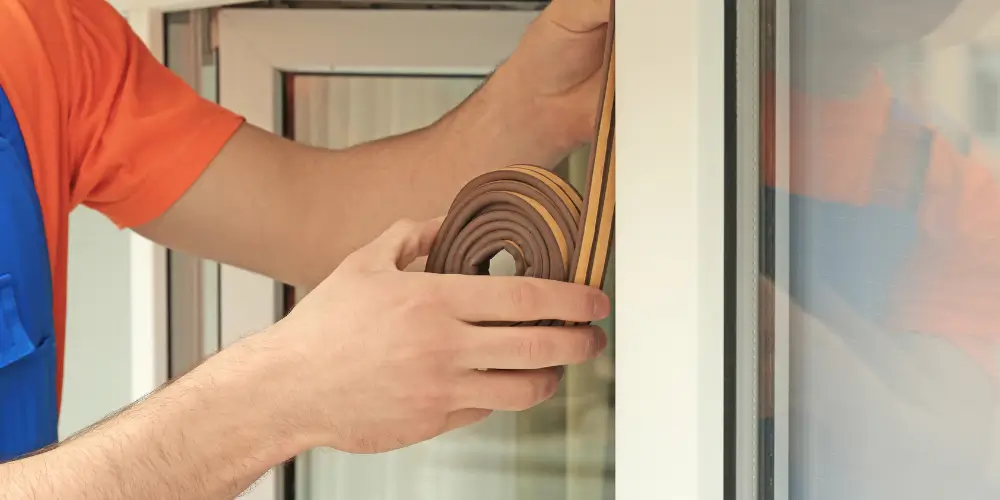
Fit Intumescent Strips and Smoke Seals
After securing the fire-rated door frame, the next step involves fitting intumescent strips and smoke seals, both vital components in enhancing the door’s effectiveness against fire and smoke.
You’ll need to select the appropriate intumescent strip types based on the specific fire resistance rating required. These strips expand in the presence of heat, sealing the gap between the door and frame and, thereby, preventing the passage of flames and hot gases.
For the installation, measure the door carefully to guarantee the strips are cut to the exact length. Adhere to stringent installation techniques; typically, the strips are fitted into a groove on the door or frame edge. Ensure the surface is clean and dry to maximise adhesion.
Choosing the right material for smoke seals is equally important. These seals block smoke, enhancing safety and compliance with regulatory standards. Opt for materials that offer durability and resilience to wear, as these will extend the lifespan of the door assembly.
Finally, regular maintenance is necessary. Check the integrity of seals and strips periodically and follow compliance standards for performance testing to ensure optimal performance.
This proactive approach guarantees that sealing methods remain effective, safeguarding the premises against fire and smoke hazards.
Hang the Fire Door Using Rated Hinges
To guarantee the fire door functions effectively in preventing the spread of fire and smoke, it’s vital to hang it using appropriately rated hinges. You’ll need hinges that can support the door’s weight and remain operational under extreme conditions.
Here’s how to ascertain precision and compliance in hanging your fire door:
- Select the Right Rated Hinge Types: Identify hinges that are certified for use in fire doors. Check for labels or documentation that confirm the hinge’s fire rating. Compatibility checks between the hinge and door material are essential to ascertain that they can withstand the designated fire exposure duration.
- Follow Hinge Placement Guidelines: Proper placement is critical Use at least three hinges per door to distribute the weight evenly. Position the hinges according to the manufacturer’s recommendations, typically with one hinge placed 5 inches from the top of the door, another 10 inches from the bottom, and the third centred between them.
- Implement Installation Techniques and Maintenance Tips: Securely install each hinge using screws that match the hinge’s fire rating.
Post-installation, perform regular maintenance checks and performance testing to catch and rectify any issues early, such as loosening or wear, which are common mistakes that can compromise door functionality.
Install Self-Closing Device
Once you’ve secured the fire door with rated hinges, the next step is to install a self-closing device, an integral element that guarantees the door effectively contains fire and smoke in emergencies.
Begin by evaluating door frame compatibility; not all self-closing mechanisms are compatible with every frame type, and selecting a compatible model is crucial for both functionality and regulatory compliance.
Follow the manufacturer’s installation guidelines meticulously. First, attach the self-closing device at the correct height, as stipulated by safety regulations. This height is typically at the top of the door, but may be at the middle or bottom, depending on the specific mechanism and door configuration.
Ensure the device is accurately aligned with the door frame to prevent any skewing that could impair its functionality.
Adjust the tension settings according to the door’s weight and size. This step is significant as it determines the force with which the door closes – too light, and it won’t shut fully; too strong, and it could pose a safety hazard or cause wear and tear.
Regular maintenance is necessary to keep the self-closing mechanism operational.
Check and lubricate moving parts periodically, and adjust tension as needed. Adhering to these maintenance tips helps meet compliance standards and extends the lifespan of your fire door, striking a balance between safety and cost considerations.
Add Fire-Rated Handles, Locks, and Latches
Installing fire-rated handles, locks, and latches is your next essential step in guaranteeing your fire door meets UK safety regulations effectively. You must select door hardware that aligns with the highest standards of fire safety and durability. Here’s how to proceed with precision and compliance:
Choose Certified Fire-Rated Hardware: Make certain all door hardware, including handles, locks, and latches, is certified to meet British Standards (BS EN 12209 for locks and BS EN 1906 for handles). This certification guarantees the components are capable of withstanding high temperatures and maintaining door functionality during a fire.
Follow the manufacturer’s recommended installation techniques.
This typically involves precise drilling for lock cases and the accurate fitting of latch plates to guarantee a seamless closure and lock functionality. Regularly consult the installation manual to ensure adherence to safety standards and maintain peak performance.
Implement Routine Maintenance Practices: Regular maintenance is essential to guarantee the ongoing reliability of fire-rated door hardware.
Schedule periodic checks to assess operational integrity and replace any components showing signs of wear or damage. This proactive approach supports compliance testing and extends the lifecycle of your fire safety measures.

Check the Door Gaps and Alignment
Verify that the door gaps and alignment meet stringent regulatory standards after installing fire-rated hardware. You’ll need to conduct a thorough door gap analysis to confirm that the spacing around the perimeter of the door doesn’t exceed the prescribed tolerances, which are essential for maintaining the integrity of the fire barrier.
Utilise precise measuring tools to assess the top, sides, and bottom gaps, adhering to the fire safety standards, which typically specify a maximum gap of 3-4mm.
Next, use advanced alignment techniques to ensure the door is perfectly perpendicular to the frame. This involves a detailed inspection of the door frame to identify any warping or misalignment that could compromise the door’s effectiveness in a fire situation.
Pay special attention to hinge placement strategies; incorrect hinge settings can lead to misalignment, impacting the door’s closing mechanism and its ability to seal properly in the event of a fire.
Adjustment procedures are vital here. You may need to realign the door or adjust the hinges to achieve ideal placement.
Apply Fire Door Certification Label
After confirming your fire door is properly aligned and sealed, the next vital step involves applying the fire door certification label. This label is essential as it verifies that your installation meets specific safety regulations and manufacturer specifications, guaranteeing compliance with UK building codes.
Here’s how to correctly apply the certification label:
- Verify the Label Information: Confirm the label indicates compliance with the necessary certification standards and safety regulations. It should clearly state the fire rating of the door, the type of fire door materials used, and be traceable back to its certification body.
- Choose the Appropriate Location: The label must be placed on the hinge side of the door frame, where it’s easily visible for inspection protocols without requiring the door to be opened. This positioning helps in future compliance checks and maintenance inspections.
- Secure the Label Properly: Use an adhesive that won’t degrade at high temperatures. The label must remain affixed and legible throughout the fire door’s lifespan.
Follow the installation procedures recommended by the door manufacturer to guarantee the label is both secure and correctly positioned.
Final Inspection and Compliance Check
Once you’ve affixed the certification label correctly, your next step is the final inspection and compliance check. This critical phase ensures your installation complies with stringent fire door regulations and building codes, which are pivotal in affirming the safety and legality of your work.
Begin by scrutinising the door’s alignment and the integrity of its seals. Each component must conform to the specified safety standards, which include the frame, hinges, and any intumescent seals. Use a checklist aligned with the latest inspection procedures to verify each element systematically and thoroughly. This not only streamlines the process but also guarantees nothing is overlooked.
Verify that the door closes smoothly and seals properly, with no gaps larger than those permitted by regulations. The gap specification is typically around 3mm on the sides and top, and 10mm at the bottom; however, you should confirm this against the current building codes.
Lastly, review the door certification and guarantee it’s visible and legible, as this serves as proof of compliance during safety audits or inspections. Document your findings and any corrective actions you’ve taken. This documentation will be essential for any future compliance verification and is a best practice for maintaining the integrity of your fire safety measures.
Who can install a fire door in the UK?
To ensure safety and compliance, a fire door must be installed by a qualified professional. Steering through the complexities of fire safety regulations requires expertise, particularly in understanding how these regulations impact the installation and operation of fire doors.
Here’s a breakdown of who’s ideally qualified to fit a fire door in the UK:
Certified Building Contractors
Building contractors with specific installation training on fire doors are your primary choice. These professionals have undergone certification courses that not only cover general construction practices but also delve into the niche area of fire safety. Compliance checks are part of their routine, ensuring that every installation adheres to both legal and safety standards.
Fire Door
Manufacturers
Some manufacturers offer direct installation services provided by trained technicians. These individuals are often the most knowledgeable about the specific products, having detailed insights into the best practices for installation and maintenance. They’re trained to align with fire safety regulations, offering a high level of assurance regarding the door’s performance.
Specialized Fire Safety Firms
These firms employ qualified professionals who specialise exclusively in fire safety solutions, including the installation of fire doors and other related services. They’re typically well-versed in the latest fire safety regulations and participate regularly in advanced training workshops. Their services often include detailed audits and compliance checks beyond mere installation.
How much does it cost to fit a fire door in the UK?
Determining the cost of fitting a fire door in the UK, you’ll find that expenses can vary widely depending on several factors. Key cost factors include the type of fire door selected, material costs, the complexity of the installation, and whether you opt for professional services or undertake the task yourself (DIY considerations).
Firstly, the types of fire doors available include standard, glazed, and custom designs, each varying in price. Material costs for these doors can vary significantly based on the required fire-resistance rating (e.g., FD30, FD60) and the materials used (e.g., wood, steel, composite). Typically, a basic fire door starts around £50, escalating to several hundred pounds for higher-spec models.
Labour expenses heavily influence installation pricing. Professional installation is recommended to guarantee compliance with safety regulations. On average, labour costs for fitting a fire door can range from £200 to £300 per door, but this cost can increase with the complexity of the installation or if structural alterations are required.
Regional variations also play a significant role in determining costs. Typically, you’ll encounter higher prices in major urban centres such as London compared to more rural areas. This disparity reflects variations in the cost of living and the availability of skilled tradespeople.
When considering DIY installation, it’s important to factor in not only the potential savings on labour expenses but also the need for precision and compliance with safety standards. Mistakes in DIY installation can lead to non-compliance with fire safety regulations, potentially incurring greater costs down the line due to the need for reinstallation or rectification by professionals.
Do I need a certificate to install fire doors?
When considering the costs and details involved in installing a fire door, you may also wonder about the certification requirements that must be met during the installation process. Understanding the compliance requirements and regulations for fire door installation is crucial for ensuring safety and compliance.
Fire door certification isn’t just about having a piece of paper; it’s a guarantee that the installation meets fire safety standards and adheres to strict building codes. If you’re installing a fire door, whether in a commercial or residential building, you must be aware of several key factors:
- Certified Installers: Only qualified installers who have undergone professional training are legally permitted to install fire doors. This guarantees that the installation complies with all relevant fire safety standards and installation regulations.
- Compliance with Building Codes: Installation of fire doors must comply with local building codes. These codes are thorough and specify everything from the type of fire door required for different areas of a building to the installation methods.
- Fire Door Types and Standards: Different types of buildings and locations within those buildings require specific types of fire doors. Each fire door type must meet certain fire resistance and durability standards, which are vital for the door’s effectiveness in preventing the spread of fire and smoke.
Ensure you’re not only competent in handling tools but also thoroughly familiar with the fire door certification process. This guarantees not only the safety of the occupants but also protects you legally as an installer.
Compliance isn’t just a formality; it’s a responsibility.
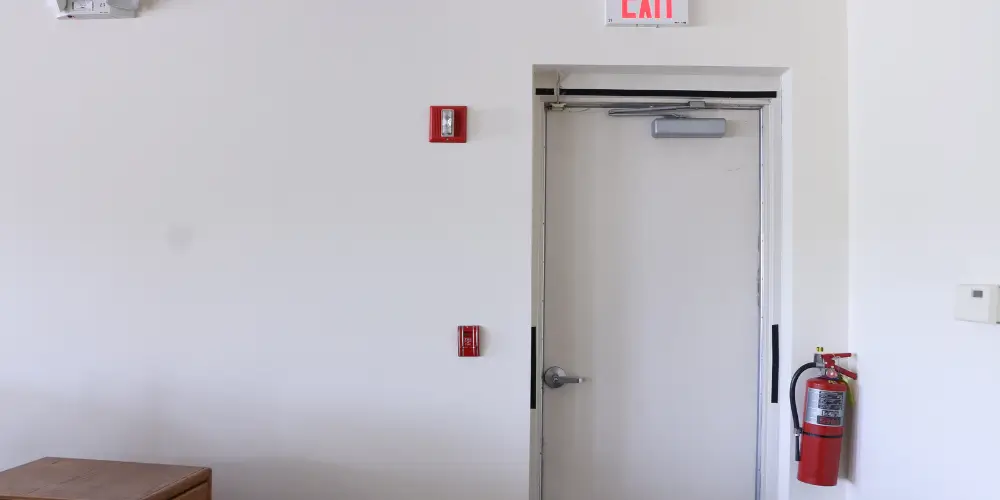
Does a fire door require a label?
Yes, every fire door must have a label that clearly shows its fire-resistance rating. This label is crucial for ensuring compliance with fire door standards, which outline the minimum performance requirements for various types of fire doors and their corresponding materials.
It’s not just about regulatory adherence; the label on your fire door serves as a key indicator during fire door inspections and maintenance checks.
When you’re selecting a fire door, be aware that the fire-resistance rating on the label should align with the specific hazards and building codes relevant to your premises. Fire door ratings typically range from 20 to 90 minutes, indicating the duration the door can withstand fire exposure.
The label should also verify compliance with recognised standards such as NFPA 80 or UL 10C, which confirm the door’s performance in fire conditions.
During fire door installation, make certain the label remains accessible and legible. If it’s painted over or damaged, you’re at risk of failing compliance checks, which can lead to significant legal and safety implications.
Regular fire door maintenance is required to guarantee the label remains intact and the door functions as intended.
Moreover, you should conduct periodic fire door inspections to verify that each door’s labelling and overall condition comply with the stringent requirements set forth by fire safety regulations.
These inspections are crucial for identifying and rectifying non-compliance issues promptly.
Who can modify a fire door?
After confirming that your fire door features the correct labelling, you may wonder about making modifications to it. It’s vital to recognise that not just anyone is suited for this task; only certain professionals can perform fire door modifications without compromising the door’s integrity and compliance with safety standards.
Here are the key points you need to know:
- Qualified Installers Only. Fire door modifications must be carried out by individuals who’ve professional certification specific to fire doors. These professionals are extensively trained in understanding the nuanced requirements of fire door regulations and ensuring that any modifications meet these stringent standards.
- Compliance with Building Codes: Any modifications made to a fire door must strictly adhere to local building codes and regulations. These codes are in place to guarantee that the structural integrity and functional capabilities of the fire door aren’t compromised. Qualified installers are familiar with these codes and can confirm that your fire door remains compliant with the relevant regulations.
- After post-modification, it’s essential to conduct regular fire door inspections to verify compliance with safety standards. These inspections are typically performed by certified inspectors who’ll check for correct installation and the efficacy of any modifications made. Conducting regular inspections helps maintain the door’s performance in preventing the spread of fire and smoke.
Handling fire door modifications with the care they require guarantees the safety of your building’s occupants and adherence to legal compliance requirements. Always consult with and hire professionals who demonstrate the requisite expertise and credentials for such significant tasks.
Can you make an existing door a fire door?
Transforming an existing door into a fire door involves more than just attaching a few safety features; it requires substantial modifications to meet the stringent safety standards and regulations that govern fire door specifications. You must undertake a detailed compliance evaluation to determine if your existing door can be adapted or if it’s more feasible to replace it with a certified fire door.
Firstly, consider the material and structure of your current door. Fire doors are typically constructed from materials like solid timber, steel, or gypsum, with a core designed to resist fire for a specified duration commonly 30, 60, 90, or 120 minutes. Evaluating whether your existing door can achieve these fire rating standards is essential, and often, existing doors, especially those made from less robust materials, fall short of these requirements.
Should your door be deemed suitable for modifications, you’ll need to address door frame compatibility. The frame, like the door, must be capable of withstanding high temperatures and exposure to fire. Both elements must be aligned in their fire-resistance capabilities.
Existing door modifications include upgrading the door slab, adding intumescent seals, and installing suitable door hardware that can withstand high temperatures.
Professional installation is non-negotiable to guarantee that all components are correctly fitted and meet legal safety standards. Additionally, you’ll need to factor in cost considerations, as retrofitting a door with fire-resistant technologies might approach or even exceed the expense of a new fire door.
Finally, anticipate aesthetic changes; the necessary upgrades can alter the visual appearance of your door, potentially impacting the overall look of your space.
Frequently Asked Questions
Can I Paint a Fire Door Without Compromising Its Integrity?
You can paint a fire door, but you must use paint that complies with fire door regulations and maintains the door’s fire rating. Choose coating options that meet safety standards without compromising aesthetic considerations.
How Often Should Fire Doors Undergo Maintenance Checks?
You should conduct annual maintenance checks on fire doors to ensure compliance with regulations. Use a detailed inspection checklist, review maintenance records, assess wear indicators, and perform performance testing to ensure an ideal fire door lifespan and optimal safety.
Are There Different Types of Fire Doors for Residential and Commercial Buildings?
Yes, residential and commercial buildings utilise different types of fire doors, distinguished by their ratings, materials, and specific regulations. You’ll find specific installation and testing standards designed to maximise benefits in each environment.
Can Fire Doors Be Fitted With Smart Locks or Digital Security Systems?
Yes, you can fit fire doors with smart locks and digital security systems. Guarantee compliance with fire door regulations and installation guidelines to maintain integrity while integrating advanced access control and security system options.
How Does Climate Affect the Performance of Fire Doors?
Climate plays a crucial role in the performance of fire doors. Temperature fluctuations and humidity levels cause material expansion, impacting door sealing and fire ratings. Proper installation and maintenance are vital to mitigate these environmental impacts.