

To adjust your fire door closer, locate the adjustment screws on the closer body. Use a screwdriver or hex key to modify the tension for controlled functionality. Adjust the swing speed by turning the closing speed valve, making sure the door closes within 5 to 7 seconds for safety compliance. Additionally, tweak the backcheck valve to manage the door’s resistance when it opens past a preset angle turn clockwise to increase resistance. Finally, refine the latching speed with the valve marked “L” or “S” to guarantee secure latching. Properly maintaining these settings enhances the door’s compliance and functionality, paving the way for further optimization.
Key Takeaways
- Identify the adjustment screws on the closer body, typically for sweep, latch, and backcheck speeds.
- Use the correct tools, like a hex key or screwdriver, to adjust the tension screws and valves.
- Set the closing speed to ensure the door closes within 5 to 7 seconds for safety compliance.
- Check and adjust the latching speed valve to ensure the door securely latches without slamming.
- Regularly inspect and maintain the closer to ensure compliance with fire safety regulations and proper functionality.
Table of Contents
How to Adjust Door Closer Speed in the UK?
To adjust the speed of the door closer on your fire door, you first need to adjust the tension.
This involves turning the adjustment screw located on the end of the closer body to either increase or decrease the force.
Next, you’ll set the swing speed by adjusting the separate valve to control how fast the door closes from fully open to about 15 degrees from the shut position.
Adjust Tension
Adjusting the tension on your fire door closer is crucial for ensuring it closes at a safe speed, in compliance with UK safety regulations. Mastery of tension adjustment techniques requires an understanding of the hydraulic closer mechanism integral to your door’s operation.
Initially, you’ll need the correct tension adjustment tools; typically, a hex key or a screwdriver is used.
Begin by locating the tension adjustment valve, typically located at the end of the closer body. Adjusting this valve increases or decreases the hydraulic pressure, thereby altering the force with which the door closes.
It’s essential to recognise the importance of tension in maintaining door functionality and safety. Too little tension results in a door that fails to close fully, while excessive tension can cause the door to slam, potentially damaging the doorframe and the closer itself.
Regular door closer maintenance, including periodic tension checks, guarantees longevity and reliability. When troubleshooting door closers, inconsistencies in closing speed often point to issues with tension settings.
Adjust incrementally and test repeatedly to achieve the ideal setting that upholds both safety and functionality. Remember, precise adjustments are key to compliant and efficient fire door operation.
Set Swing Speed
After setting the correct tension for your fire door closer, the next step involves configuring the swing speed to ensure the door closes smoothly and safely within the required timeframe, as per UK regulations.
Swing speed adjustment is essential in confirming that fire doors comply with safety compliance standards and maintain door operation efficiency.
To begin the adjustment, locate the swing speed valve on your door closer, typically marked with an “S” or depicted with a swinging door icon.
Using a suitable tool, usually a hex wrench or screwdriver, turn the valve clockwise to slow the swing speed or counterclockwise to increase it.
It’s imperative to make these adjustments incrementally to avoid over-tuning, which could impair the hydraulic closer function.
Monitor the door’s closing speed ideally, the closure time is between 5 and 7 seconds.
This timeframe guarantees that the door closes promptly yet allows sufficient time for passage without causing abrupt closures that could lead to injuries.
Regularly revisiting the swing speed settings is a part of proactive fire door maintenance.
Environmental factors, such as changes in air pressure and temperature, can impact the door closer’s mechanics, necessitating periodic adjustments to ensure optimal performance and compliance.

What is a Fire Door Closer?
A fire door closer is a critical device mounted on fire doors, designed to close the door after it has been opened automatically.
Its primary function is to control the door’s shut mechanism, ensuring the door closes promptly and securely to help maintain the integrity of a fire-resistant barrier.
This mechanism plays a crucial role in preventing the spread of fire and smoke between different sections of a building, thereby enhancing overall safety and security.
Controls the Door Shut
Why should you consider a fire door closer? Understanding the integral role of a fire door closer in controlling door shut is vital for maintaining both safety and regulatory compliance. This device guarantees that a fire door closes automatically after being opened, upholding door functionality and contributing to the overall safety of a building.
To achieve optimal performance, it’s essential to follow strict installation guidelines. Precise alignment and calibration are necessary to meet safety standards and guarantee that the closer performs effectively under varied conditions.
Regular maintenance is also pivotal. You must inspect and adjust the closer periodically to prevent failures that could compromise safety.
Equipping yourself with proper user training on the operation and troubleshooting of fire door closers is non-negotiable. Such training guarantees that you can promptly address any issues, minimising the risk of malfunction and maintaining consistent protection against fire hazards.
Helps Fire Resistance
Understanding the function of a fire door closer involves not only recognising its role in controlling door closure but also appreciating its contribution to a door’s fire resistance capabilities. A fire door closer guarantees that the fire door remains shut after every use, which is essential during emergencies to prevent the spread of fire and smoke. This function is crucial for maintaining the integrity of emergency exits, as mandated by safety regulations.
You must verify that your fire door closers comply with relevant standards, which dictate specific requirements for fire resistance performance. Regular inspection protocols are necessary to assess the operational effectiveness of these devices.
Additionally, adherence to maintenance requirements is significant. Failure to properly maintain your fire door closer can lead to malfunctions, compromising the door’s ability to function correctly in critical situations.
It’s imperative to understand that each component of a fire door assembly plays a significant role in overall safety. The closer isn’t just a convenience mechanism; it’s a key component that confirms the fire door performs its regulatory role in safeguarding human life and property in the event of a fire.
Therefore, mastery of fire door closer settings and maintenance isn’t optional it’s a fundamental aspect of building safety management.
Steps to Adjust a Door Closer
To begin adjusting your fire door closer, first remove the cover to access the internal mechanisms.
Ascertain that all valves are fully closed to maintain control over the adjustment process.
Next, you’ll need to adjust the backcheck, sweep/main speed, and latching speed correctly, ensuring each setting complies with safety standards before testing the door function.
Removing the Cover of a Door
Before adjusting your fire door closer, remove the cover, which is typically secured by screws. This initial step is vital for accessing the internal mechanisms that require fine-tuning.
Start by inspecting your fire door to locate the cover of the door closer. It’s often positioned at the top or side of the door, depending on the design.
You’ll want to use a suitable screwdriver or a drill with a screw bit that matches the head of the screws—usually a Phillips or flathead. Carefully unscrew each fastener, making sure you don’t strip the heads. Keep the screws in a safe place as you’ll need them to reattach the cover after making the necessary adjustments.
Once all screws are removed, gently lift the cover off. Be mindful of any wires or connections that might be attached to the cover, especially in more sophisticated models with integrated safety features.
This step not only exposes the adjustment screws but also provides an opportunity to inspect the door closer for wear or damage, an essential part of maintenance practices.
Adhering to these installation tips and safety standards guarantees that your fire door functions reliably, aligning with the intended adjusting techniques and regulatory requirements for fire safety.
Closing All of the Valves
Next, you’ll need to close all the valves on your fire door closer to guarantee a controlled adjustment process. The steps you undertake here are vital to ascertain that your adjustments are both effective and safe.
Remember, mastering the closure system not only prolongs the life of the door closer but also assures it functions at peak efficiency.
Here are the essential steps to manage the valves:
- Identify Valve Types: Familiarise yourself with the different valve types present in your door closer. Typical configurations include latch, sweep, and backcheck valves.
- Understand Valve Functions: Each valve serves a distinct purpose. Latch controls the final closing phase, sweep manages the door’s speed for most of the swing, and backcheck prevents the door from being flung open.
- Perform Valve Maintenance: Check for any signs of wear or leakage. Routine maintenance prevents functional failures and extends the equipment’s lifespan.
- Execute Valve Installation: Ascertain that all valves are correctly installed. Incorrect installation can lead to improper function and potential damage to the door.
- Conduct Valve Troubleshooting: If a valve isn’t functioning as expected, perform troubleshooting steps before making further adjustments.
Closing the valves properly sets the stage for precise valve adjustments, which are essential for the door closer’s optimal performance and reliability.

Adjust the Backcheck And Sweep/Main Speed
Once you’ve closed all the valves, adjusting the backcheck and sweep/main speed becomes your next focus. The backcheck adjustment controls the door’s resistance as it opens past a certain angle, preventing damage from excessive force or fast opening.
Use your adjustment tools to locate the backcheck valve, typically marked on the closer mechanism. Turn this valve clockwise to increase resistance, or counterclockwise to decrease it. Adjust slowly, testing the door operation to guarantee the door doesn’t swing open too easily or resist too much.
Next, adjust the sweep speed, which determines the speed at which the door closes from fully open to about five degrees from the latch. This speed is vital for maintaining door control and guaranteeing the door closes in a timely, secure manner without slamming.
Find the sweep speed valve on your closer mechanism. Turn it clockwise to slow the door’s closing speed, and counterclockwise to increase it. Again, make incremental adjustments and test the door frequently.
This fine-tuning ensures the door operates smoothly and aligns with safety regulations, optimising both functionality and security in your building’s fire safety protocols.
Set the Latching Speed
Adjust the latching speed of your fire door closer to confirm it securely seals upon closing. This step is essential for compliance with fire safety regulations and guarantees that the door functions effectively in emergencies.
Latching speed refers to the final few inches of the door’s journey as it closes. If set too fast, the door may slam, damaging the frame or not latch properly, compromising safety. If it is too slow, it mightn’t fully close, posing a security risk.
Here’s how to adjust the latching speed properly:
- Locate the Latching Speed Valve: Typically located at the end of the door closer body, it is often marked with an “L” or “S“.
- Use the Appropriate Tool: Adjust the valve using an Allen wrench or screwdriver, depending on your door closer model.
- Test and Adjust Gradually: Turn the valve clockwise to slow down or counterclockwise to speed up the latching. Make adjustments in small increments.
- Consider Door Installation Tips: Confirm the door hasn’t shifted or become unaligned, which can affect latching.
- Follow Maintenance Best Practices: Regularly check and readjust the latching speed as part of ongoing door maintenance.
Adhering to these steps will help maintain the integrity of your fire door system and confirm it meets operational and regulatory standards.
Testing the Door
After setting the latching speed, it’s important to test the door to guarantee it closes properly and meets safety standards.
Begin by evaluating functionality; open the door fully and observe as it closes. Verify it latches without excessive force or undue delay, which could compromise safety and usability.
Next, focus on examining alignment. Check that the door maintains an even and consistent path as it closes, with no part of the door or frame dragging or misaligning. Misalignment can indicate issues with the hinges or the closer’s installation.
Testing durability involves repeated opening and closing to observe any degradation in performance. Listen for any unusual noises that suggest mechanical problems. This step confirms that the closer maintains its integrity over time under typical usage conditions.
Checking seals is significant; a properly sealed door prevents smoke and fire from spreading. Inspect the door’s perimeter when closed to verify no gaps are present.
Additionally, measuring pressure is important in testing how much force is required to open and close the door comfortably, thereby verifying that it meets accessibility standards.
Lastly, inspect hinges for any signs of wear or damage. They should operate smoothly without any grinding sounds or visible gaps, which could affect the door’s operation and safety.
Why is my Fire Exit Door not Closing Properly?
If your fire exit door isn’t closing properly, it’s likely due to common mechanical issues or obstructions.
You should check for signs of wear and tear, which can impede the door’s function.
It’s vital to address these problems promptly to guarantee compliance with safety regulations.
Common Mechanical Issues
Due to various mechanical issues, your fire exit door may not be closing properly. Understanding the root causes and implementing precise troubleshooting techniques is crucial for ensuring compliance with safety regulations and maintaining optimal performance.
Here are common mechanical issues to take into account:
- Misalignment of the Door Closer Arm: Improper installation can cause misalignment, which affects the door’s ability to close fully.
- Faulty Hydraulic Fluid Levels: Low or contaminated hydraulic fluid can impair the door closer’s function.
- Worn Seals or O-rings: Over time, these components degrade, leading to leaks and performance issues that necessitate prompt replacement.
- Damaged Closing Mechanism: Internal damage to springs or gears can cause the mechanism to malfunction, resulting in a loss of smooth operation.
- Incorrect Spring Tension Adjustment: If the spring tension isn’t set according to the door’s weight and size, it won’t close properly.
To address these issues, regular maintenance of door closers is essential. You’ll need to inspect and replace worn components.
Follow installation tips to guarantee that any new or existing hardware is correctly aligned and functioning. Always consult the manufacturer’s manual for specific troubleshooting techniques and replacement options, ensuring each step adheres to the prescribed safety regulations.
Obstructions or Wear and Tear
Besides mechanical issues, obstructions or general wear and tear can considerably impact the proper functioning of your fire exit door. Identifying obstruction types is essential. Objects placed inadvertently in the door’s path or accumulated debris can prevent the door from closing. Inspect the area regularly and clear any blockages.
Wear indicators are equally crucial to monitor. Check for signs of deterioration such as loose screws, worn hinges, or damaged seals. These issues can cause the door to misalign, resulting in a disrupted smooth closure. Verify door alignment is correct; even minor misalignments can prevent a secure seal when closed.
Hinge lubrication is a necessary maintenance step. Over time, hinges can seize due to rust or dust accumulation, particularly in environments with high humidity or extreme temperatures. Regular lubrication, according to the manufacturer’s guidelines, helps maintain smooth operation.
Lastly, adhere strictly to a maintenance schedule. This schedule should include routine checks of all components, both mechanical and structural. Immediate attention to minor issues prevents larger, more costly problems in the future. Proactive maintenance is key to guaranteeing your fire exit door functions reliably and complies with safety regulations.
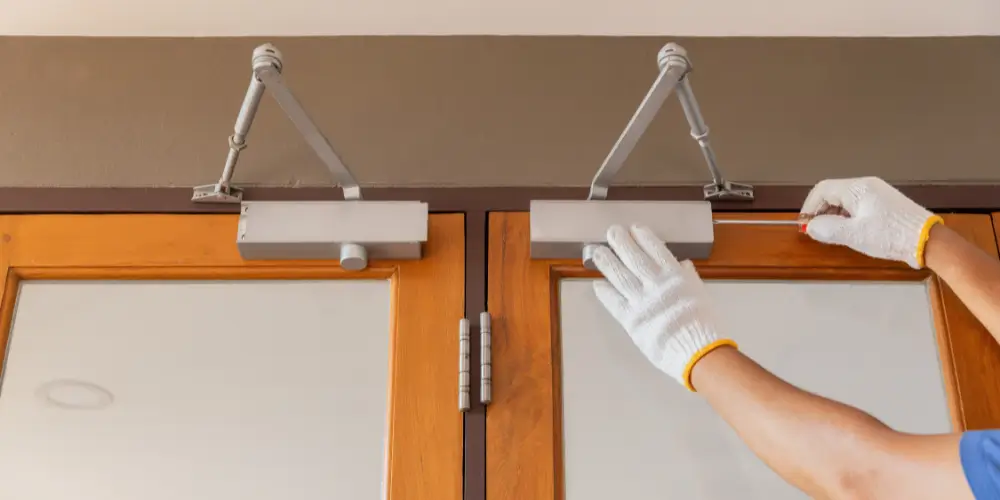
How do you adjust the Tension on a Door Closer?
To adjust the tension on a door closer, locate the adjustment screw, typically found at the end of the closer body.
Once identified, turn the screw in small increments; a clockwise turn increases the closing force, while a counterclockwise turn reduces it.
It’s essential to make these adjustments gradually to achieve ideal performance without compromising the door’s functionality.
Locate the Adjustment Screw
Before adjusting the tension on your fire door closer, locate the adjustment screw. This vital component is typically positioned on the end of the closer cylinder or behind the closer’s cover, depending on the model. Identifying the correct screw location is crucial for ensuring the effective adjustment and longevity of the mechanism.
Here are essential pointers to guide you in locating and preparing to adjust the adjustment screw:
- Identify Door Closer Type: Determine whether you have a surface-mounted, in-frame concealed, or in-floor concealed closer, as the screw location varies accordingly.
- Safety Precautions: Verify the door is securely open and the area is clear of obstructions to prevent accidents during adjustment.
- Adjustment Tools: Typically, a hex key or screwdriver is required. Confirm the size and type before proceeding.
- Proper Technique: Engage the tool firmly into the screw to avoid stripping it, maintaining steady pressure.
- Maintenance Tips: Regularly check screw tightness and lubricate moving parts to prevent wear and promote smooth operation.
Mastering these steps not only enhances safety but also guarantees your door closer performs effectively and remains compliant with regulatory standards.
Turn in Small Increments
Adjusting the tension on your fire door closer requires precision; turning the adjustment screw in small increments is key. This method allows for fine adjustments, guaranteeing that the door closes smoothly and securely without slamming or failing to latch.
To begin, use an appropriate tool typically an Allen wrench or screwdriver, depending on your model to make these adjustments.
Start with a quarter-turn clockwise to increase the closing force. Test the door’s response after each adjustment. You’re aiming for a controlled setting that matches the specific needs of your environment. If the door closes too quickly, turn the screw counterclockwise in small increments, testing the door after each adjustment. This precise tuning helps in achieving a balance between safety and usability.
It’s crucial to approach this task with careful calibration. Gradual changes prevent overcorrection, which can lead to wear and tear or even damage to the door closer mechanism.
Common Closer Adjustment Mistakes
When adjusting a fire door closer, it’s essential to avoid over-adjusting the valves, as this can lead to mechanical failure and safety hazards.
Confirm you’re turning the correct screw; selecting the wrong one can render adjustments ineffective and potentially damage the mechanism.
These common mistakes can compromise the door’s functionality and violate compliance standards.
Over-Adjusting Valves
Accurate adjustment of the valves on a fire door closer is vital to guarantee its proper function; however, over-tightening these components can lead to premature wear or failure.
You must understand the importance of the valve function to prevent common adjustment pitfalls. The over-adjusting risks aren’t trivial and can compromise the entire door mechanism.
Here are essential guidelines to help you avoid these risks:
- Use proper adjustment tools: Specific tools are designed for valve calibration to guarantee precision and prevent damage.
- Follow manufacturer guidelines: Adhering to the recommended settings prevents excessive force on any part.
- Monitor adjusting frequency factors: Frequent adjustments can weaken the closer’s integrity. Evaluate the need carefully.
- Learn valve calibration techniques: Proper training or following detailed instructions is vital for maintaining peak performance.
- Document each adjustment: Keeping a log helps track the history of changes and can guide future maintenance.
Wrong Screw Turned
Turning the wrong screw during the adjustment of your fire door closer can easily disrupt its functionality, posing significant safety risks.
It’s essential to recognise and avoid common mistakes, such as screw misalignment and incorrect tension settings. When adjusting your door closer, make certain you’re working with the correct screws designated for valve adjustments. These are typically marked and detailed in the manufacturer’s manual.
Mistaking the tension adjustment screw for a valve adjustment screw is a frequent error. This can lead to either an overly tight or dangerously loose door closer, impairing its ability to control the door speed effectively and safely.
Always double-check that you’re turning the right screw by consulting the closer’s schematic.
To prevent screw alignment issues, use appropriate tools and apply consistent pressure when making adjustments. If resistance is felt, stop and reassess forcing the screw could strip the threads or damage the mechanism.
If you encounter problems during your adjustment process, refer to the troubleshooting techniques outlined in your user guide. These resources are invaluable for rectifying errors and making sure your adjustments enhance the door closer’s performance rather than compromise it.
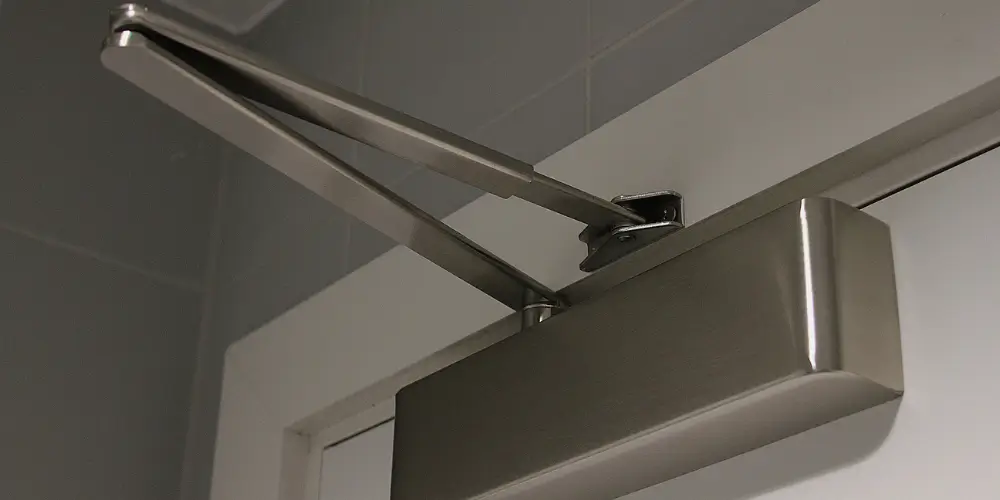
Do All Fire Doors Need Closers?
It’s essential to understand that not all fire doors require closers; however, specific regulations mandate their use in certain scenarios.
In Houses in Multiple Occupation (HMOs), it’s legally necessary to install closers on all fire doors to guarantee they automatically close, preventing the spread of fire and smoke.
Furthermore, fire doors located on escape routes must always be fitted with closers to comply with safety standards and facilitate safe egress during emergencies.
Legal in HMOs
When managing a House in Multiple Occupation (HMO), it’s essential to understand that not all fire doors require closers; however, regulations dictate their use in specific scenarios. The complexity of fire door regulations in HMOs can be intimidating. You need to ensure compliance not only for the safety of tenants but also to fulfil your legal responsibilities.
Here are key considerations to guide you:
- Landlord Obligations: As a landlord, you’re legally required to ensure that all fire safety measures are in place and maintained, including the proper installation of fire door closers as specified by safety standards.
- Fire Safety Audits: Regular audits are mandatory to assess the effectiveness of existing fire safety measures, including the functionality and necessity of door closers on fire doors.
- Tenant Responsibilities: Tenants must be informed about maintaining the integrity of fire safety measures, including the proper use of fire doors and associated closers.
- HMOs Compliance: Compliance with local fire safety standards is vital. This includes adhering to specific guidelines regarding the installation of fire door closers, specifying where and when they must be installed.
- Safety Standards: These standards specify when a fire door must be equipped with a closer to prevent the spread of fire and smoke, ensuring tenant safety in emergencies.
Understanding these elements will help you master the requirements and guarantee safety and compliance in your HMO.
Required for Escape Routes
Understanding the specific requirements for fire doors in escape routes is key. Under most building codes, fire doors that serve as part of an escape route or are located near emergency exits are mandated to have closers. This requirement ensures that these critical barriers remain closed after use, significantly reducing the spread of fire and smoke during an emergency, thereby aligning with established fire safety regulations.
You must incorporate fire door inspections into your regular safety checks to verify that these mechanisms are functioning correctly. Compliance with evacuation plans also necessitates that all escape route signage is clear and that fire doors along these routes are equipped with reliable closers. This integration supports swift and safe evacuation, reinforcing the overarching safety framework.
Moreover, the regulatory expectations extend to maintaining the integrity of these doors. Any failure in fire door apparatus, including closers, could compromise the entire escape route, putting lives at risk.
Therefore, you must understand and comply with these technical specifications and ensure regular maintenance as required by local fire safety standards.
Frequently Asked Questions
Can a Fire Door Closer Be Painted to Match the Door?
You can paint a fire door closer, but consider fire door regulations, paint compatibility, and safety implications. Choose colour options wisely, focusing on aesthetic and maintenance. Guarantee the paint doesn’t compromise the closer’s functionality.
How Often Should Fire Door Closers Be Inspected?
You should inspect fire door closers annually to comply with compliance standards, following established testing protocols and maintenance schedules. Look for wear indicators during performance checks to guarantee they meet required safety and operational benchmarks.
Are There Different Types of Closers for Different Fire Door Sizes?
Manoeuvring fire door types is like solving a puzzle; each door’s size dictates specific closer mechanisms, aligned with size specifications, installation guidelines, maintenance requirements, and strict regulatory standards to guarantee peak performance and safety.
What Happens if a Fire Door Closer Is Installed Incorrectly?
If you install a fire door closer incorrectly, it’ll compromise fire door functionality, create safety hazards, and lead to compliance issues. You’ll face increased maintenance requirements and may need professional help to correct these installation mistakes.
Can I Install a Fire Door Closer on My Own?
Yes, you can install a fire door closer yourself by following DIY fire door installation guidelines, ensuring adherence to safety regulations, using the necessary tools, avoiding common mistakes, and considering costs.
