

How Do Fire Doors Work? Fire doors work by utilising a combination of specialised materials and mechanisms to slow the spread of fire and smoke within a building, thereby enhancing safety in emergencies. Equipped with intumescent strips that expand when heated, these doors effectively seal gaps, maintaining the integrity of designated fire-resistant zones. They also feature automatic self-closing mechanisms to guarantee the door closes during a fire, blocking harmful smoke and flames. Continuous compliance with stringent safety regulations is mandatory to guarantee these features function effectively when you need them most. Exploring further, you’ll uncover deeper insights into how different components contribute to their performance.
Key Takeaways
- Fire doors are designed with intumescent strips that expand in heat, sealing gaps to block fire and smoke.
- Equipped with self-closing mechanisms, fire doors automatically shut to prevent the spread of flames and smoke.
- They contain smoke seals that fill door gaps, creating a tight barrier against toxic smoke.
- Fire door ratings indicate the duration they can withstand fire, typically ranging from 30 to 120 minutes.
- Regular maintenance ensures the integrity and functionality of fire doors, thereby ensuring compliance with safety regulations.
Table of Contents
How does a fire door work?
You must understand that fire doors play a crucial role in enhancing building safety by preventing the spread of fire and slowing the travel of smoke.
These doors are equipped with intumescent strips that expand in the presence of heat, sealing the gap between the door and frame to prevent smoke and flames from passing through.
Additionally, their self-closing mechanisms guarantee the door automatically shuts in the event of a fire, a feature mandated by safety regulations to maintain the integrity of fire-resistant zones.
Stops fire spread
How exactly do fire doors prevent the spread of fire? You must understand that the efficacy of fire doors hinges considerably on the synergy of their materials, design, installation, and maintenance, as mandated by stringent regulations.
Fire door materials are chosen based on their ability to resist fire for a specified duration, typically rated in increments of 30, 60, 90, or 120 minutes. These materials must undergo rigorous fire door testing to verify they meet the required resistance standards.
The design of fire doors includes robust seals and automatic closing mechanisms that activate in the event of a fire, effectively blocking the path of the fire.
Proper fire door installation is essential; even minor deviations from guidelines can compromise the door’s integrity. This is why adherence to fire door regulations during installation is rigorously enforced.
Ongoing fire door maintenance and regular fire door inspections are critical to sustain peak performance. These inspections check for gaps, damaged seals, or malfunctioning hardware, which could otherwise lessen the door’s effectiveness.
Delays smoke travel
In addition to halting the progression of flames, fire doors play a crucial role in impeding the spread of smoke throughout a building. You must understand that smoke, often more dangerous than the flames due to asphyxiation risks, can be controlled considerably by these specialised doors.
They’re designed in compliance with stringent safety standards and building codes that demand robust smoke containment features. These doors are strategically installed across evacuation routes and near key areas to guarantee that in the event of a fire, smoke doesn’t travel freely, thereby supporting emergency planning efforts.
This placement is essential as it complements the function of smoke alarms and the efficiency of fire drills by providing additional time for safe evacuation. The effectiveness of fire doors in smoke containment is a fundamental component of fire prevention strategies.
Each door is equipped with components that resist the passage of smoke and is regularly inspected to ensure compliance with regulatory requirements. You must be aware that maintaining these doors by the prescribed standards ensures they function as intended during a fire, thereby safeguarding both lives and property by providing occupants with a clearer, safer path to exit the premises.
Intumescent Strips
One significant component of fire doors is the intumescent strips, which expand considerably when exposed to high temperatures. These strips are integral in maintaining the integrity of a fire-resistive barrier. Made primarily from materials that swell when heated, the intumescent material properties play a key role in the effectiveness of fire doors.
When you’re planning emergency exits, understanding the functionality of these strips is important. During a fire, the intumescent strips expand to seal gaps between the door and its frame, thereby containing smoke and delaying the spread of fire. This expansion is critical for smoke containment strategies and helps in adhering to fire safety regulations, which mandate that fire doors must perform to certain standards under extreme conditions.
For proper fire door installation, it’s important to verify that these strips are correctly fitted and aligned with the building code compliance requirements. Regular fire door maintenance checks should include inspections of intumescent strips for any signs of damage or wear that could compromise their functionality.
As you develop or revise building safety protocols, remember that the effectiveness of the intumescent strip is paramount. Confirming these components are in ideal condition supports overall building safety and compliance with stringent fire safety regulations.
Self-Closing Mechanisms
After confirming the fire door’s integrity with intumescent strips, it’s equally important to focus on the self-closing mechanisms that play a significant role in fire safety. These mechanisms guarantee that fire doors automatically close in the event of a fire, preventing the spread of smoke and flames and helping to maintain the building’s compartmentalisation.
Self-closing mechanisms, typically involving automatic door closers or spring-loaded hinges, must be rigorously tested and consistently maintained to meet safety compliance. The installation process is vital, requiring precise alignment and secure attachment to verify that the door closes smoothly and seals properly under fire conditions.
Here’s a detailed overview of key aspects of self-closing mechanisms:
| Feature | Description | Importance |
| Spring-Loaded Hinge | Utilises a spring to close the door after opening automatically | Guarantees the door always reseals |
| Automatic Door Closer | Mechanically or hydraulically powered system | Reliable, adjustable closing |
| Door Status Monitoring | Integrates sensors to monitor and report the door’s open/closed status | Essential for safety checks |
| Maintenance Requirements | Regular checks and adjustments as specified in testing standards | Critical for long-term reliability |
| Installation Process | Must adhere to manufacturer guidelines and testing standards | Confirms effective functionality |
As you explore selecting and maintaining these mechanisms, you’ll ensure that the fire door performs its vital role when needed most.
Fire-Resistant Construction
Fire doors are engineered to with stand high temperatures and prevent the spread of fire and smoke within a building. You’ll find that these doors are vital components in managing building safety and enhancing emergency response strategies.
They’re constructed using fire-resistant materials such as steel, vermiculite, and gypsum, which are selected based on rigorous risk assessments and adherence to building codes.
The specifics of fire door construction are dictated by safety standards that vary depending on the building’s occupancy type whether it’s residential, commercial, or industrial. Each setting demands unique specifications to effectively mitigate the hazards that are most likely to occur there.
You must be aware that the integrity of these doors is maintained through strict installation practices and regular maintenance procedures. Installation must guarantee a perfect fit to avoid any gaps that could allow smoke to permeate.
Furthermore, maintenance isn’t just a recommendation it’s a requirement. Regular inspections verify that the self-closing mechanisms function correctly, seals remain intact, and the door and its frame suffer no damage that could compromise its performance.
These maintenance checks are part of broader emergency planning efforts that enhance the safety and resilience of buildings against fires.
Fire Compartmentalisation
Understanding how fire doors work involves examining their role in fire compartmentalisation, a vital aspect of building safety. Fire doors serve as a formidable barrier, halting the spread of flames and smoke between different sections of a building, thereby allowing safe egress routes and time for evacuation.
Fire door installation is paramount, guaranteeing that each component from door frames to seals aligns with precise fire safety standards. You’re not only investing in a piece of hardware but in an all-encompassing safety feature that undergoes rigorous fire door testing to meet stringent regulations.
Proper fire door maintenance is essential. Regular fire door inspections ensure compliance with safety standards and verify the doors’ functionality in the event of a fire. You must be aware of the materials used in your fire doors, as they determine the door’s resistance to heat and longevity.
Here’s a quick overview of key aspects:
| Aspect | Importance |
| Fire Door Materials | Determines resistance and durability |
| Fire Door Testing | Confirms operational integrity |
| Fire Door Compliance | Guarantees adherence to laws |
| Fire Door Benefits | Enhances overall building safety |
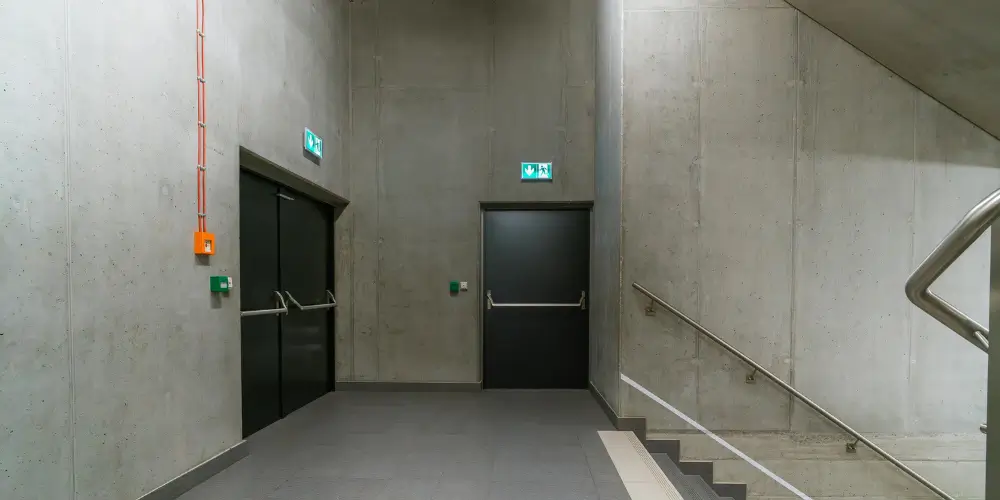
What Makes a Fire Door Different?
You’ll find that a fire door’s unique ability to resist flames stems from its heat-resistant core, which is designed to withstand extreme temperatures.
Each component, from the hinges to the seals, is rigorously fire-tested to guarantee it meets stringent safety standards.
This adherence to regulatory compliance not only enhances safety but also considerably reduces the risk of fire spreading in a building.
Heat-resistant core
At the heart of a fire door‘s design is a heat-resistant core that sets it apart from standard doors. You must understand that this core isn’t just about withstanding high temperatures; it’s intricately engineered to meet stringent fire resistance ratings. The core’s ability to delay heat transfer is crucial in providing occupants with time to evacuate safely during a fire.
Fire door materials are chosen based on their thermal insulation properties. The core construction methods are varied, typically involving materials like vermiculite, gypsum, or proprietary formulations that enhance fire resistance. Each material contributes differently to the door’s overall performance, influencing core density variations which affect not only fire resistance but also soundproofing characteristics and impact resistance.
Moreover, these doors must comply with established manufacturing standards. Compliance ensures that the materials used and the construction methods meet the required safety standards.
Fire doors undergo rigorous impact resistance testing to verify their durability under extreme conditions, further cementing their role as a crucial safety feature.
Fire-tested components
Beyond their heat-resistant cores, fire doors differentiate themselves through fire-tested components that guarantee exceptional performance during a fire. These components, rigorously evaluated under controlled conditions, confirm that every aspect of a fire door upholds the highest safety standards.
Key components include:
Fire Door Materials
The materials used in fire doors, such as gypsum, steel, or vermiculite boards, are selected for their ability to withstand high temperatures. The selection process is governed by fire door standards, which dictate the minimum performance requirements during exposure to heat and flames.
Seals and Hardware
All seals, hinges, and locking mechanisms must pass stringent testing procedures to be certified. These elements are vital, as they must remain operational even when subjected to the intense heat of a fire, ensuring the door remains securely closed and thereby preventing the spread of smoke and flames.
Glazing Systems
If a fire door includes windows, the glass must be fire-resistant and framed with materials that also comply with the necessary fire door standards. The entire assembly is tested to confirm it doesn’t compromise the door’s integrity and performance ratings.
You’re required to adhere strictly to installation guidelines, maintenance requirements, and regular inspection frequencies to maintain the door’s certification and ensure its continued functionality.
This thorough approach confirms robust protection against fires, safeguarding lives and property.
What are the rules on fire doors in the UK?
In the UK, you must adhere to specific regulations governing fire doors to guarantee they meet safety standards.
These rules specify where fire doors are vital, such as in residential buildings over two storeys and certain non-dwelling structures.
You’ll find that understanding these regulations is important for compliance and enhancing building safety.
Key UK fire door regulations
Understanding the key UK fire door regulations is crucial for guaranteeing safety and compliance in building design and maintenance. Here’s what you need to know:
- Materials and Installation: Fire doors must be constructed from certified materials that meet specific fire-resistance standards. Proper installation is critical and must follow the manufacturer’s guidelines to guarantee the door’s effectiveness in preventing the spread of fire and smoke.
Compliant materials and correct installation procedures greatly enhance the door’s protective capabilities.
- Maintenance and Inspections: Regular maintenance and inspections are mandatory to guarantee that fire doors remain effective. You’re required to check these doors periodically for damage and guarantee that all components function properly.
Fire door inspections should be conducted by qualified personnel who can identify issues and recommend necessary repairs to maintain compliance and safety.
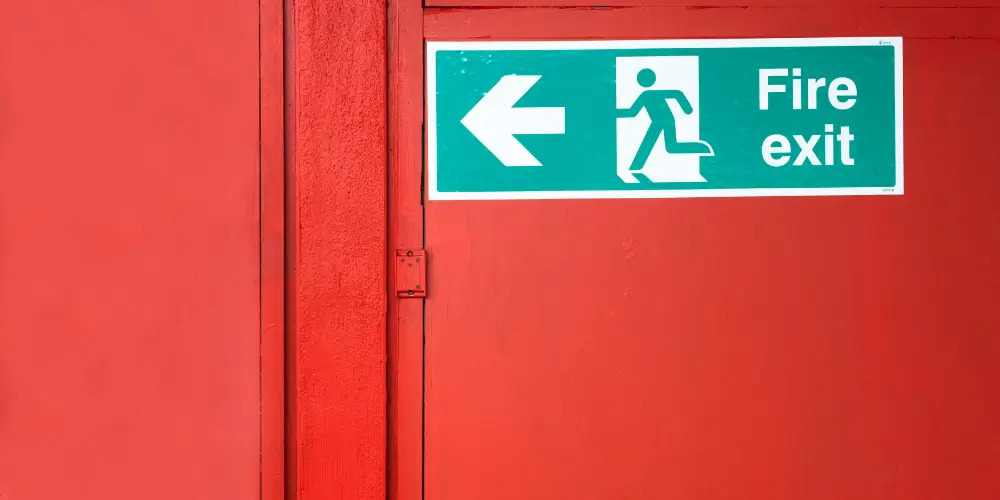
- Signage and Awareness: Appropriate signage must be displayed on all fire doors, indicating their purpose and usage instructions.
It’s crucial to promote awareness among building occupants about the operation and importance of fire doors. This includes training on keeping fire doors closed to prevent the spread of fire.
Adhering to these regulations not only ensures legal compliance but also significantly contributes to the overall safety of any building.
Where fire doors are required
Fire doors are essential features in various types of buildings throughout the UK, including commercial, residential, and public structures. To guarantee you comply with UK building codes and safety regulations, it’s vital to understand where fire doors are mandated.
In commercial properties, fire doors are required in areas prone to high fire risk, such as kitchens, storage rooms holding flammable materials, and corridors leading to emergency exits. For residential buildings, regulations stipulate that any habitable room adjacent to a stairwell must have a fire door to prevent smoke from travelling upstairs, particularly in multi-storey homes.
Construction requirements specify that all fire doors must meet certain fire safety standards, which guarantee they can resist fire for a minimum specified time, typically ranging from FD30 to FD120 (30 to 120 minutes of resistance).
Here’s a quick overview to deepen your understanding:
| Building Type | Required Location | Fire Door Rating |
| Commercial | Near fire hazards | FD60 |
| Residential | Near stairwells | FD30 |
| Public | Multiple escape routes | FD90 |
Guarantee you consult with a fire safety expert to tailor the fire protection features of your building to the latest regulations. This proactive approach not only enhances safety but also aligns with strict compliance requirements.
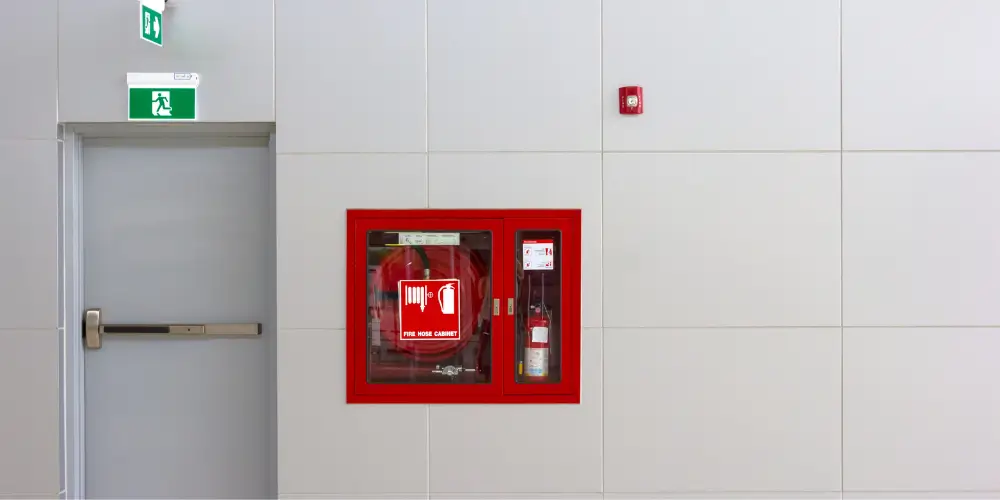
How long will an NHS fire door hold back a fire?
You must understand that NHS fire doors are rated based on their ability to withstand fire for a set period, typically ranging from 30 to 120 minutes.
The choice of a fire door in a healthcare facility depends on the specific building’s usage and the areas it serves.
These ratings guarantee that doors comply with UK safety regulations, providing critical time for evacuation and preventing the spread of fire and smoke.
NHS fire door ratings explained
Many NHS fire doors are designed to withstand flames and smoke for at least 30 minutes, with some models offering up to 60 minutes of protection. This variance in fire resistance is essential, as it aligns with NHS regulations and building codes, which prioritise patient safety and emergency response efficacy.
In understanding these ratings, you must consider the following key aspects:
- Door Specifications: Each fire door must adhere to strict specifications that include not only the duration for which they can resist fire but also the integrity of materials used. These specifications are meticulously outlined in safety compliance documents.
- Fire Risk Assessment: Regular fire risk assessments are mandated. This guarantees that the doors’ ratings are consistent with the latest health guidelines and the specific needs of different areas within NHS facilities.
- Emergency Procedures: The integration of fire doors into emergency procedures is vital. Their design and placement should facilitate safe egress and ingress, while also containing fire to prevent its spread, thereby adhering to emergency response protocols.
Each of these elements is interlinked, forming a robust framework that supports fire safety within NHS establishments. Mastery of these details ensures that safety compliance isn’t only met but also optimised.
Fire door choice based on building use
Selecting the appropriate fire door for a building hinges considerably on its intended use, especially within NHS facilities where safety is paramount. In healthcare settings, the choice of fire doors is essential, not only to comply with stringent safety regulations but also to guarantee the well-being of patients and staff. These doors are typically rated to withstand fire for a minimum of 30 to 60 minutes, providing critical time for evacuation and emergency response.
When considering fire doors for other types of buildings, such as commercial buildings, educational institutions, or industrial facilities, the requirements vary. Commercial and public spaces often require doors with a higher resistance due to the high volume of foot traffic and potential fire load.
Similarly, in high-rise structures and mixed-use developments, the complexity of evacuation and the potential for higher fire risks demand doors with longer resistance periods, often up to 120 minutes.
Residential properties mightn’t need as robust a specification, but safety should never be compromised. You must consult with fire safety experts to verify that the fire doors meet both local building codes and the specific safety needs dictated by the building’s use and occupancy levels.
Fire Door Hardware Role
When evaluating the effectiveness of fire doors, it is essential to consider the role of hardware, including hinges and locks.
Hinges are designed to resist heat and maintain structural integrity, ensuring the door remains securely in place during a fire.
Similarly, locks are engineered to stay secure under extreme temperatures, preventing the door from being compromised.
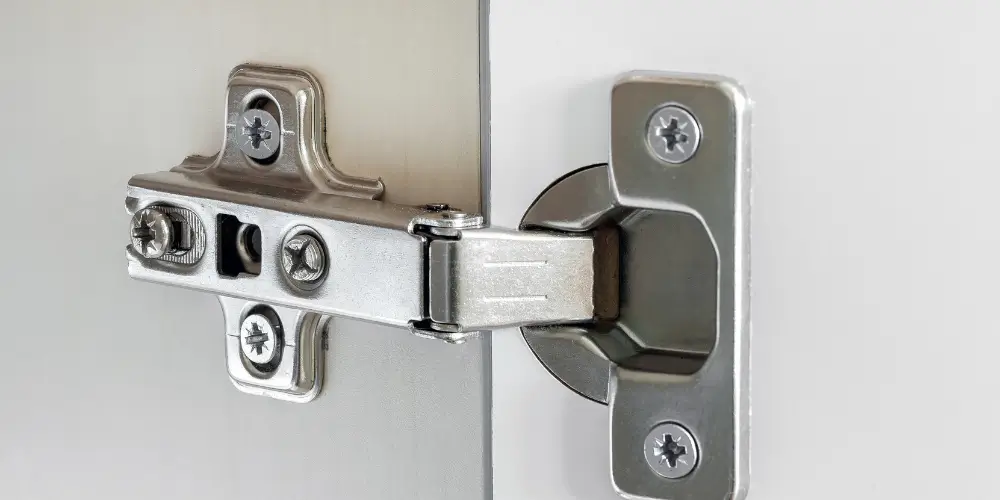
Hinges resist heat
Fire door hinges play a crucial role in maintaining the integrity of a fire-resistant barrier; they’re designed to withstand the extreme heat generated during a fire.
These hinges ensure that the door remains securely in place, preventing the spread of smoke and flames and thereby upholding the door’s essential function in fire safety.
When you’re dealing with hinge materials, it’s vital to choose those specifically formulated for heat resistance and structural integrity. This choice directly impacts the door’s ability to function under the stress of a fire.
Here’s what you need to know about selecting and maintaining fire door hinges:
- Hinge Materials: Select materials that can withstand high temperatures without losing strength. Stainless steel and brass are common choices, as they meet both performance testing standards and code compliance requirements.
- Maintenance Requirements: Regular inspections are mandatory to ensure hinges are free from excessive wear or corrosion, which could compromise the door’s functionality in the event of a fire.
- Installation and Compliance: Proper door installation is crucial; hinges must be accurately aligned to maintain the door’s structural integrity.
Additionally, installation must adhere to local fire safety regulations and building codes to guarantee compliance and performance during critical times.
Locks stay secure
After guaranteeing the resilience of fire door hinges against extreme temperatures, it’s equally important to contemplate the security of the locks. You need locks that not only resist the passage of smoke and flames but also provide reliable security for occupants.
Fire door lock types include mortise, cylindrical, and multipoint systems, each designed to meet specific safety regulations and locking standards. The secure mechanisms in fire door locks are vital. These are typically tested to withstand high temperatures and guarantee that the door remains securely closed during a fire.
This involves both key locking and latch systems, which must maintain their operational integrity to prevent the door from inadvertently opening or failing to close. In terms of regulatory compliance, locking standards such as BS EN 12209 provide guidelines on the necessary performance of lock and latch systems in fire conditions.
These standards ensure that the locks can withstand extreme conditions without compromising their security features. Additionally, door security isn’t just about locking against fire; it also includes accessibility features.
These are designed to guarantee that everyone, including those with disabilities, can safely access or exit a secured area in emergencies, aligning with broader safety regulations.
Fire Door Gaps and Performance
You must guarantee that fire door gaps are properly sealed to prevent air leaks, which are vital for maintaining the integrity of the fire resistance barrier.
Regulations specify that these seals meet specific standards to effectively block smoke and flames in the event of a fire.
Any failure in these seals compromises the door’s performance and can lead to the rapid spread of fire and smoke.
Tight seals needed
To guarantee the effectiveness of fire doors, maintaining tight seals around their edges and between their components is essential.
These tight seals prevent door gaps, which can otherwise compromise the door’s ability to block heat and smoke during a fire. Achieving a robust seal involves careful attention to construction materials and adherence to performance standards that specify the necessary heat resistance and durability.
When you install or inspect a fire door, consider the following critical factors:
- Construction Materials: Utilise materials that offer superior heat resistance and are capable of expanding slightly under heat to maintain tight seals. Typical materials include intumescent strips that swell in the presence of heat, thereby sealing any gaps that could allow smoke to pass through.
- Smoke Seals: These are installed around the fire door to prevent smoke from passing through. Verify that these are always intact and properly fitted by regulatory standards.
- Performance Standards Compliance: Regularly review that the fire door’s installation and maintenance align with the local and international performance standards.
These standards outline the minimum requirements necessary to ensure that the door effectively prevents the spread of fire and smoke.
No air leaks allowed
Ensuring that fire doors maintain airtight seals is crucial to their effectiveness in preventing the spread of fire and smoke. You must understand that even small gaps can compromise the entire system’s effectiveness by allowing smoke and hot gases to pass through. When you’re involved in door installation, it’s crucial to adhere strictly to building codes that specify gap limits and ensure that all components meet the required insulation properties and material durability standards.
Here’s a quick breakdown of gap specifications for standard fire doors, as typically required:
| Component | Maximum Gap Size |
| Bottom of Door | 10 mm |
| Sides of the Door | 3 mm |
| Top of Door | 3 mm |
| Meeting Stiles | 3 mm |
| Threshold | 8 mm |
These gaps are fundamental for practical operation and minimal airflow control, yet tight enough to block the passage of harmful elements during a fire incident. Regular maintenance standards and performance testing are essential to guarantee that these gaps haven’t widened over time, which could severely impact fire safety. Don’t underestimate the role of precision in fire door efficacy; every millimetre counts in protecting against the rapid spread of fire and smoke.
How Smoke Seals Help Fire Doors Work
You’ll find that smoke seals are essential components of fire doors; they effectively block toxic smoke from passing through.
These seals fill the small gaps that naturally occur around the edges of fire doors, ensuring a tight barrier.
Meeting regulatory standards, these seals are vital for maintaining the integrity and functionality of fire safety systems.

Blocks toxic smoke
Smoke seals play an important role in enhancing the effectiveness of fire doors by blocking toxic smoke from seeping through gaps. These specialised seals are integral to mitigating smoke inhalation risks, which are often more immediate and deadly than the flames themselves.
Understanding the mechanism and importance of smoke seals involves recognising their function in the broader context of fire safety protocols and emergency response.
Here’s how smoke seals contribute to safety:
- Containment of Toxic Smoke: Smoke seals limit the movement of dangerous gases, helping to confine the smoke to the area of the fire. This containment is vital for minimising toxic smoke effects and protects escape routes, making building evacuation procedures more manageable.
- Enhancement of Fire Doors’ Integrity: By sealing the perimeter of a fire door, these seals guarantee that the door performs to its rated capacity, preventing smoke from bypassing the door through gaps.
- Support for Emergency Protocols: Effective smoke containment aids in the execution of fire escape planning and emergency response training by providing clearer and safer evacuation routes.
You’re encouraged to incorporate smoke seals into your fire safety education and verify they’re part of your smoke alarm and fire door maintenance checks. This integration greatly boosts your preparedness and response during a fire incident.
Fills small gaps
Fire doors equipped with smoke seals effectively fill small gaps that otherwise allow toxic fumes to pass through. These seals are integral in maintaining door integrity and enhancing fire safety by adhering to strict building regulations. When you install a fire door, verifying that every crevice is sealed not only complies with safety standards but also fortifies the door’s role as a smoke barrier.
The design and material of smoke seals play an essential role. They must withstand high temperatures and still perform their function without failure. Typically made from intumescent materials or elastomeric compounds, these seals expand when exposed to heat, thereby sealing any gaps that could compromise the structural integrity of the emergency exits.
Compliance with regulatory frameworks is mandatory. The gasket prevention capability of smoke seals must meet specific criteria outlined in fire safety guidelines. This is to ensure that, in the event of a fire, the spread of smoke and fumes is significantly hindered, thereby providing occupants with more time to evacuate safely.
It’s your responsibility to verify that these components are regularly inspected and meet current safety standards, confirming that the fire doors continue to offer maximum protection in your building.
Frequently Asked Questions
Can Fire Doors Be Painted or Decorated?
You can paint or decorate fire doors, but it’s essential to follow industry standards to maintain their fire rating and safety compliance. Consider using approved decorative finishes that adhere to painting regulations and maintenance considerations.
Are Fire Doors Required in All Commercial Buildings?
Fire door regulations require them in most commercial buildings to meet building codes and safety compliance standards, focusing on materials, installation requirements, maintenance, and integration into emergency exit routes for ideal accessibility and safety.
How Often Should Fire Doors Be Inspected?
You should inspect fire doors annually to meet compliance regulations and maintain fire safety standards. Use a detailed inspection checklist, perform door functionality tests, and keep maintenance records up to date through regular professional inspections.
Can Fire Doors Be Left Open?
You shouldn’t leave fire doors open; they’re designed to automatically close in emergencies, ensuring safety by adhering to building codes and enhancing fire resistance. Regular maintenance guarantees the peak operation of these critical door mechanisms.
Are There Different Types of Fire Doors for Homes and Businesses?
Yes, there are distinct types of fire doors for homes and businesses, differing in materials, ratings, and compliance requirements. Residential fire doors and commercial fire doors require specific installation and maintenance to guarantee effectiveness.
