

Under business and fire safety regulations, you must identify and assess fire hazards, implement necessary safety measures, and guarantee proper maintenance of fire safety equipment. You must also train your staff on fire safety protocols, develop and routinely review your emergency response plans, and prominently display critical fire safety information. Additionally, maintaining accurate records of safety checks, drills, and compliance with legal standards is essential for continuous improvement. Engaging collaboratively with fire services and periodically reviewing fire safety policies to align with current legislation are your responsibilities. Exploring further can help you understand how to enhance your safety strategies effectively.
Key Takeaways
- Identify and assess potential fire hazards regularly.
- Implement and maintain necessary fire safety measures and equipment.
- Train all staff on fire safety protocols and emergency response.
- Develop, implement, and regularly review fire emergency response plans.
- Keep accurate records of safety checks, training, and fire drills.
Table of Contents
Identify Potential Fire Hazards
To identify potential fire hazards within your business, evaluating all areas where fire risks might exist is vital. Then, you must conduct thorough workplace safety audits, focusing on fire hazard identification.
It’s not just about checking the obvious, like electrical equipment and heating systems; you’ve got to explore deeper.
Promoting a strong safety culture guarantees compliance with the law. It fosters an environment where every team member feels they belong and have a role in keeping the workplace safe.
Engage in hazard communication training to guarantee everyone is on the same page. This isn’t just a formality; it’s an important step in empowering your staff with the knowledge they need to prevent disasters.
Another key element is developing effective emergency response strategies. Take your time with an incident to uncover weaknesses in your plans. Instead, use these strategies to enhance your team’s fire risk awareness.
Include everyone in these plans to guarantee they know exactly what to do and whom to turn to during an emergency.
Conduct Regular Risk Assessments
You must conduct regular risk assessments to maintain a high fire safety standard within your business. It’s not just a best practice; it’s a legal requirement guaranteeing you remain compliant with safety regulations. Effective risk assessment techniques can systematically identify and manage potential hazards before they pose serious threats.
Implementing hazard identification early helps you recognise risks inherent to your operations. Understanding these elements, whether electrical equipment, flammable materials, or employee practices, is essential. Once identified, risk prioritisation allows you to address the most significant threats first, ensuring resource allocation enhances safety effectively.
The frequency of these assessments is reasonable. It should align with the operational changes, introduction of new equipment, or following any incident. Regular reviews, as part of your assessment frequency, confirm that no new hazards have been overlooked and that all safety measures are up-to-date.
Involving stakeholders is significant. This includes employees at all levels, as their firsthand experience provides invaluable insights into potential risks and the practicality of proposed control measures. Their involvement fosters a culture of safety and belonging, making them feel integral to the safety process.
Adhering to strict documentation standards is critical. Maintaining clear, precise records of all risk assessments provides a trail of accountability and is important for legal compliance. These documents should detail the methodology used, findings, and actions taken.
Lastly, these assessments should be viewed as tools for continuous improvement. Each one should build on the last, refining processes and enhancing safety measures iteratively. This ongoing commitment protects your business and employees and contributes to a collective sense of security and compliance.

Implement Fire Safety Measures
After conducting thorough risk assessments, it’s imperative to implement specific fire safety measures to safeguard your business. By doing so, you’re complying with regulations and fostering a community committed to safety and preparedness.
Firstly, develop extensive fire prevention strategies. This includes routinely maintaining electrical systems and verifying that all materials are stored safely. It’s your responsibility to identify potential hazards and mitigate them promptly. Regular regulatory compliance training will guarantee that your team is adept at recognising and managing risks effectively.
Next, focus on crafting detailed emergency response techniques. These should include clear instructions on what to do during a fire, tailored to your business’s unique layout and operations. Training all employees in these procedures isn’t just a regulatory requirement, it’s a significant component in fostering a culture of safety and teamwork.
Evacuation route planning is equally important. You must establish and mark all evacuation paths, verifying they’re free of obstructions. Regular fire drills will test the effectiveness of these routes and your team’s preparedness. These drills should be conducted at different times and under varying conditions to guarantee that everyone knows how to react swiftly and safely.
Moreover, all fire safety signage must be maintained visibly throughout the premises. Signs are critical in guiding employees and visitors during an emergency.
Finally, smoke detector maintenance is a routine yet essential task that provides early warning in the event of a fire, protecting lives and property.
Implementing these measures isn’t just about regulatory compliance, it’s about creating a secure environment where everyone feels protected and valued.
Maintain Fire Safety Equipment
Maintaining your fire safety equipment guarantees that all systems function best when needed. As a responsible person, you’re not just complying with regulations; you’re safeguarding the safety and protection of everyone in your building. This duty involves rigorous and scheduled checks essential to your safety strategy.
Firstly, fire extinguisher maintenance isn’t just recommended; it’s mandatory. Verify that all extinguishers are accessible, properly charged, and serviced according to the manufacturer’s instructions and local fire safety codes. This includes a monthly check of the weight and seal and an annual professional inspection.
Next, smoke alarm testing should be conducted monthly. Test each alarm using the test button and replace batteries annually or as needed. It’s important to keep a log of these tests to verify compliance and functionality in case of an audit.
Emergency lighting inspection is another important area. These lights must be tested monthly to confirm they function during a power outage. A full discharge test, generally conducted annually, is necessary to validate that they can operate for their full required duration.
Sprinkler system checks should be performed at least quarterly. This includes inspecting valves, gauges, and physical components for signs of damage or wear. It is critical to confirm that nothing obstructs the sprinklers and that they’re in good working order.
Additionally, integrate regular fire blanket use reviews, portable appliance testing, electrical safety audits, and maintaining a precise safety equipment inventory. Each component plays a significant role in your thorough fire safety plan, emphasising not just compliance but a commitment to the welfare of your community.
Train Staff on Fire Safety
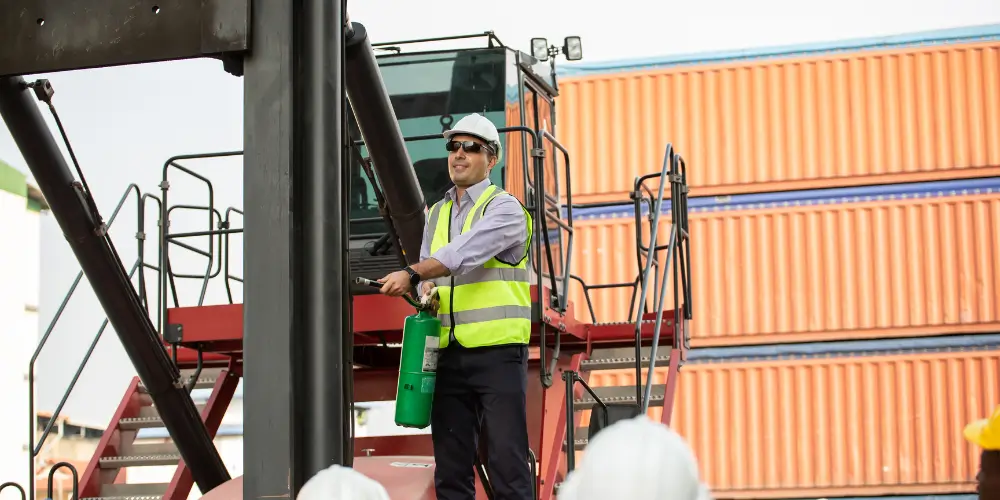
Beyond guaranteeing the maintenance of fire safety equipment, it’s vital to train all staff on effective fire safety procedures. As a responsible person, your role includes implementing thorough fire safety training that meets regulations and fosters a sense of security and belonging among your team members. You’re tasked with creating a culture where safety is everyone’s responsibility.
Fire safety training should be ongoing and adaptive. It’s not enough to conduct a single session; refresher sessions are important to keep everyone’s knowledge up to date and to integrate new employees into your safety culture. Utilise interactive workshops that engage participants and enhance their understanding of essential practices like hazard recognition. Here’s how you can structure these initiatives:
| Aspect of Training | Tool Used | Emotional Impact |
| Hazard Recognition | Interactive Workshops | Empower employees to identify risks confidently. |
| Compliance Audits | Detailed Evaluations | IInstilsa sense of accountability and diligence. |
| Refresher Sessions | Online Courses & In-person Meetings | Reinforces knowledge and community spirit. |
| Employee Engagement | Evacuation Drills | Builds trust and teamwork during emergencies. |
Incorporating online courses can provide flexibility and guarantee that all team members, regardless of their schedules, have access to critical safety information. These courses should be thorough, covering everything from the basics of fire safety to advanced emergency response tactics.
Create a Fire Evacuation Plan
Having established a robust fire safety training program, it’s equally important to set up an extensive fire evacuation plan. You must prioritise the importance of fire drills to guarantee everyone understands their role during an emergency. Regular drills equip your team with the knowledge to act swiftly and confidently.
Begin your evacuation plan by carefully mapping out evacuation routes. These paths should be clear of obstructions and well-lit, necessitating reliable emergency lighting systems to guide the way during power failures. Marked routes and exits reduce panic and disorientation among staff and visitors.
Choosing the right assembly point is essential. This location should be safe, easily accessible from the building, and spacious enough to accommodate everyone. It should be far enough from the building to avoid risks from fire and smoke but close enough to be reached quickly.
Define staff roles clearly in your plan. Assign specific responsibilities such as shutting down critical equipment, guiding others to safety, and accounting for all personnel at the assembly point. Communication strategies during an evacuation are significant; establish a protocol for spreading the word about the emergency without causing panic.
Fire wardens play a pivotal role. Their responsibilities include overseeing evacuation, ensuring no one is left behind, and coordinating with emergency services. Provide them with scenario-based training to handle various fire situations effectively.
In your fire safety community, everyone’s participation matters. Involve all employees in evacuation drills and discussions to foster a sense of responsibility and teamwork.
This collaborative approach enhances safety and strengthens the bond within your team.
Display Fire Safety Notices
After setting up your fire evacuation plan, displaying fire safety notices throughout your premises is crucial. These notices aren’t just informative; they’re a legal requirement and critical to your fire safety strategy.
Ensuring every employee and visitor can quickly understand what to do in case of a fire is your responsibility. Here’s how you can effectively meet these obligations:
Visual communication through fire safety notices must be unambiguous. This involves meticulous fire notice design to convey messages effectively and guarantee that everyone on your premises knows how to respond during an emergency.
You must consider the placement of these notices—they should be visible in all areas, including exits and assembly points.
- Legal requirements: Confirm that your notices comply with local fire safety regulations. Regular compliance audits can help you maintain standards.
- Notice placement: Install notices at eye level and along routes that all occupants frequently use.
- Multilingual notices: If you have a diverse workforce, include notices in the relevant languages to guarantee everyone’s understanding.
- Digital displays: Digital displays can dynamically update safety information, which is particularly useful in complex environments.
Remember, employee awareness is paramount. Conduct regular briefings and training sessions to reinforce the information displayed on your notices.
Also, keep abreast of any changes in fire safety regulations so you can update your notices as needed.
Record Safety Checks and Drills
While guaranteeing your premises are well-equipped with clear fire safety notices, you must also keep rigorous records of all safety checks and drills. As the responsible person, you’re tasked with upholding a framework that guarantees compliance and secures the safety and trust of everyone under your roof.
Implementing regular safety check frequencies is pivotal. You should schedule these checks at intervals that reflect the unique risks of your business environment, guaranteeing that each inspection is thoroughly documented. This isn’t just a procedural formality; it’s a cornerstone of your safety strategy.
Another critical area is drill effectiveness evaluation. After each fire drill, assess its success. Were all employees evacuated promptly and safely? Did the emergency communication systems function as expected? Document outcomes and feedback, using them to refine future drills and training sessions.
Your recordkeeping methods must be meticulous. Invest in reliable digital or physical systems that safeguard these records against loss or damage. Compliance documentation should be easily accessible for safety audits, illustrating a clear, ongoing commitment to regulatory standards.
Stay proactive with training updates. As regulations evolve, so should your training programs. Keep your team informed and adept at responding to emergencies. Regularly update training materials and session logs to reflect the latest safety protocols and learning outcomes.

Coordinate With Fire Services
You must actively coordinate with local fire services to guarantee that your emergency response strategies are integrated and effective. This collaboration isn’t just a recommendation; it’s an essential part of your duty as the responsible person under fire safety regulations. Ensure you’re compliant and proactively engaged, strengthening your community’s safety net.
Effective fire service collaboration involves meticulous planning and communication. Your role includes setting up structured interaction points that support robust emergency response planning.
Here’s how you can visualise this collaboration:
- Inter-agency Training Sessions: Participate in joint training exercises that simulate emergency scenarios, integrating your resources with the fire services’ resources to enhance response capabilities.
- Community Engagement Initiatives: Organise and engage in fire safety workshops that educate the public, fostering a culture of safety and preparedness within the community.
- Regular Incident Reporting Procedures: Establish clear protocols for communicating incidents, ensuring that your team and the fire services are informed and prepared to act swiftly.
- Resource Allocation Strategies: Work together to determine the most effective use of available resources during an emergency, ensuring ideal efficiency and effectiveness.
Your communication protocols must be clear and continuously updated to reflect any changes in operations or personnel.
Review Policies
Reviewing and updating your fire safety policies confirms that your practices align with the latest legal requirements and technological advancements. You must take responsibility for implementing these policies and verifying that they’re current and effective. This isn’t just about compliance but safeguarding your team and business.
Firstly, fire policy updates are vital. Laws change, and new fire safety technologies emerge. You’ll need to promptly stay ahead by integrating these changes into your safety protocols. Don’t wait for an audit to find gaps in your practices.
Next, review your emergency response protocols. Are they still effective? Do they cover all possible scenarios? It’s important that these plans aren’t only well-documented but also practised regularly. You should assess the training effectiveness evaluation to confirm that every employee knows what to do in case of fire. Remember, confusion can be as dangerous in a crisis as a fire.
Moreover, your staff accountability measures must be clear and enforceable. Each team member should understand their responsibilities in maintaining fire safety. Regular compliance documentation reviews and incident reporting procedures will help enforce this accountability and provide records proving your diligence.
Engage stakeholders through policy communication strategies and stakeholder engagement initiatives. Their feedback can provide valuable insights that further enhance safety measures.
Lastly, review your policies annually to stay abreast of legislative changes. This proactive approach verifies compliance and demonstrates a commitment to safety and community that resonates with employees and stakeholders alike.
Frequently Asked Questions
Are Tenants Considered Responsible Persons in Apartment Buildings?
As a tenant, you share responsibilities for fire safety, including being aware of emergency procedures and building management’s risk assessments. It’s essential to understand your obligations and legal liabilities in these situations.
How Does Insurance Impact Fire Safety Responsibilities?
Your insurance impacts fire safety by covering fire risk, aiding in claims processes, and promoting prevention measures. It guarantees property value is protected, mitigates liability concerns, and necessitates regular safety audits with significant legal implications.
Can Outsourcing Affect My Responsibilities Under Fire Safety Laws?
Outsourcing can complicate your fire safety duties; clarifying contractor responsibilities, guaranteeing compliance, and updating on regulatory changes are essential. You’re still liable for risk management, safety training, and emergency planning.
What Are Penalties for Non-Compliance With Fire Safety Regulations?
If you don’t comply with fire safety regulations, you’ll face fines, sanctions, and legal liabilities. Enforcement agencies issue violation notices and conduct compliance audits. You must meet training requirements and complete risk assessments and incident reporting.
Does Seasonal Decoration Affect Fire Safety Responsibilities?
Yes, seasonal decorations can heighten fire risks. You’ll need to choose safe decoration materials, follow compliance guidelines, and update risk assessments and emergency procedures, especially when adding festive lighting and other seasonal hazards.
