

The purpose of a fire door is to protect you by containing fire and smoke to a specific area, guaranteeing safety during an emergency. This containment helps maintain clear and safe evacuation routes, thereby preserving the integrity of the building. You’ll find that these doors serve as robust barriers, minimising the penetration of harmful smoke and flames while also affording necessary time for an orderly evacuation. They are meticulously designed to meet accessibility needs, making certain all occupants, including those with disabilities, can exit safely. Regular maintenance and compliance checks confirm their effectiveness. Understanding the full scope of their role can greatly enhance your safety strategies.
Key Takeaways
- Fire doors contain fire and smoke, protecting life and property by limiting the spread of flames and smoke..
- They ensure safe evacuation routes during emergencies.
- Fire doors act as barriers against fire and smoke, enhancing visibility and reducing respiratory hazards.
- They are designed for accessibility, supporting safe egress for all occupants, including those with disabilities.
- Regular maintenance of fire doors guarantees their functionality and supports orderly evacuation processes.
Table of Contents
What is the primary purpose of a fire door in London?
You must understand that the primary purpose of a fire door in London is to contain fire and smoke within a confined area.
This containment protects both life and property by limiting the spread of fire and allowing safe evacuation routes.
Consequently, the integrity and functionality of fire doors are critical to achieving these safety objectives.
To Contain Fire and Smoke
In the context of building safety, the primary purpose of a fire door is to effectively contain fire and smoke within a compartment, preventing their spread to other parts of the structure.
As you delve deeper into fire safety protocols, you’ll appreciate the vital role the design and functionality of fire doors play.
Here are key aspects to take into account:
- Fire Door Types: Various types, such as single, double, and sliding doors, cater to different structural needs and fire safety requirements.
- Fire Door Materials: Typically constructed from steel, wood, or glass, materials are chosen based on their resistance to heat and ability to contain smoke.
- Fire Door Standards: Compliance with standards such as BS 476 or EN 1634 ensures that fire doors meet rigorous safety benchmarks.
- Fire Door Installation and Maintenance: Proper installation is crucial, and regular maintenance ensures that doors function properly in the event of a fire.
Understanding fire door standards, materials, and types enhances your ability to select the right doors for specific applications.
Equally, knowledge of installation and maintenance requirements assures that these life-saving components remain effective in their essential roles.
Your mastery of these elements is fundamental for optimising the safety and compliance of any building project.
To Protect Life and Property
While understanding the role of fire doors in containing fire and smoke is foundational, their broader objective encompasses safeguarding lives and property. You must appreciate the intricate balance between fire door materials and their classifications, which directly influences their effectiveness in protecting life and property.
Materials such as steel, timber, and glass reinforced gypsum each have unique properties that determine the door’s resistance to fire and heat.
Further, fire door benefits extend beyond mere resistance. Proper fire door installations guarantee a seamless fit that prevents smoke and flames from bypassing the door, a critical aspect in the initial stages of a fire.
Regular fire door maintenance and inspections are essential; these practices guarantee the doors function as intended over time. Neglect in these areas can compromise the door’s integrity, reducing its protective capabilities.
Adherence to fire door regulations and thorough fire door testing are non-negotiable for achieving ideal performance. These regulations are designed to meet rigorous safety standards, requiring that all installed fire doors undergo systematic testing and evaluation.
You’re tasked with guaranteeing compliance not only with national standards but also with specific local codes that may dictate additional requirements.
The integration of these elements materials, maintenance, regulations, and testing, forms the backbone of an effective fire door strategy, fundamentally aimed at protecting life and property.
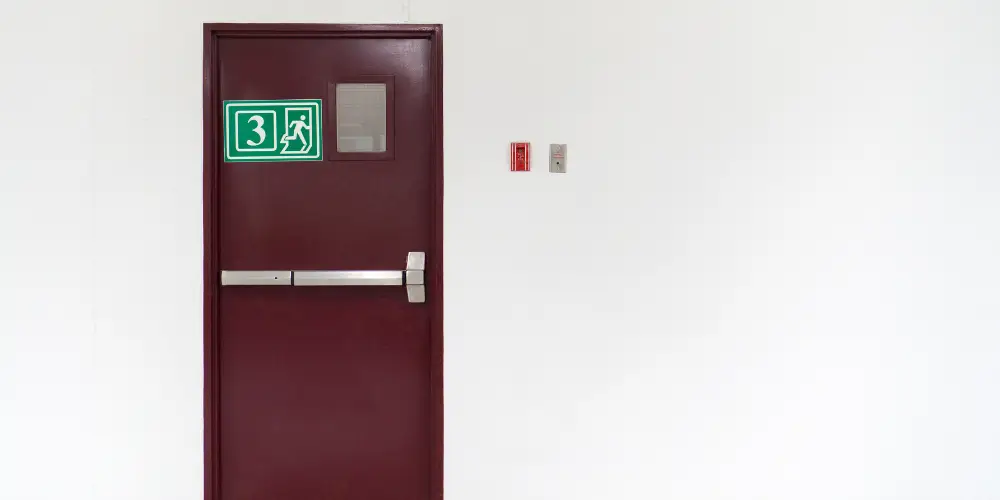
What is the purpose of a fire screen door?
A fire screen door serves a critical role in maintaining safety and visibility in areas that require compartmentalisation, yet benefit from open plan designs.
By incorporating transparent materials that can withstand high temperatures, these doors provide a barrier against fire spread while maintaining unobstructed visual lines.
They support the overall architecture’s safety strategy by ensuring compartment integrity while facilitating ease of movement and visibility during emergencies.
Provides Transparent Fire Protection
Fire screen doors play a crucial role in building safety by providing transparent fire protection, allowing for visibility and light transmission while effectively blocking the spread of flames and smoke.
They’re engineered with a dual purpose: to safeguard lives and property while maintaining a clear line of sight, which can be essential during an emergency evacuation.
Here are four important aspects to take into account about fire screen doors:
- Materials and Testing: Fire door materials are rigorously tested to withstand high temperatures. The integration of materials like tempered glass that complies with fire door certification guarantees both durability and functionality during critical times.
- Installation and Maintenance: Proper fire door installation is imperative for functionality. Certified professionals must perform it in accordance with strict fire door regulations. Regular fire door maintenance and inspections are required to ensure they remain in peak condition and their functional integrity isn’t compromised.
- Regulations and Certification: Adherence to fire door regulations and acquiring necessary fire door certification are mandatory. These ensure the door’s design meets specific safety standards.
- Functionality: Beyond preventing the spread of fire and smoke, these doors provide essential visibility that aids navigation and coordination during emergencies, aligning with the core goal of fire safety systems.
In mastering fire safety, understanding the multifaceted role and rigorous standards of fire screen doors is essential.
Supports Compartmentalisation in Open Spaces
Understanding the role of fire screen doors extends beyond just visibility and barriers against fire and smoke. They’re essential in effective compartmentation strategies, particularly in open space designs where traditional barriers are minimal.
These doors help maintain building regulations compliance by creating fire-resistant zones that slow the spread of fire and smoke, thereby improving safety standards.
When designing large, airy environments, maintaining an aesthetic appeal while ensuring safety can be challenging. Fire screen doors offer a solution that integrates seamlessly into modern architectural considerations, supporting the overall layout without disrupting the visual or functional flow of the space.
This integration not only enhances fire hazard management but also supports emergency evacuation planning, providing clear and accessible routes for occupants to exit safely in the event of a fire.
The strategic placement of fire screen doors in open spaces is an indication of their role in not just protection but also in preemptive fire response planning. This is vital in ensuring that fire and rescue services can perform their duties effectively, thereby maximising the potential for saving both lives and property.
Utilising these doors is therefore a fundamental aspect of an extensive approach to fire safety in contemporary building designs.
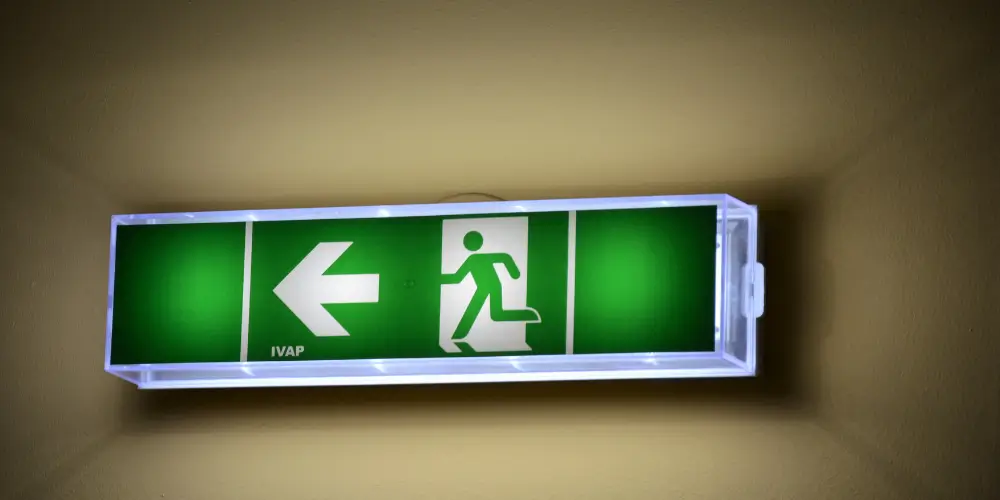
Protection of Escape Routes
You must understand how fire doors maintain clear escape routes, an important feature during emergencies.
These barriers prevent the spread of smoke and fire, preserving the structural integrity and accessibility of these significant paths.
It’s essential to recognise why maintaining the integrity of escape routes is important; it guarantees a safe and unimpeded exit for occupants in a fire situation.
How Fire Doors Keep Escape Routes Clear
By compartmentalising buildings, fire doors play an essential role in maintaining clear escape routes during emergencies. Their ability to delay the spread of both fire and smoke is vital in preserving the integrity of escape routes, thereby guaranteeing that occupants can evacuate safely.
Understanding precisely how fire doors contribute requires an extensive examination into their functionality within the context of building safety standards and emergency evacuation procedures.
Here are four key mechanisms by which fire doors effectively maintain clear escape routes:
- Barrier Creation: Fire doors form a physical barrier against fire and smoke, adhering to stringent fire prevention strategies that limit the spread to confined areas.
- Smoke Control: By incorporating smoke control measures, these doors prevent toxic smoke from infiltrating escape routes, significantly reducing visibility and respiratory hazards.
- Accessibility Compliance: Fire doors are designed with accessibility features that guarantee all occupants, including those with disabilities, can use them without hindrance during an emergency evacuation.
- Regular Maintenance: Adherence to rigorous door maintenance practices ensures that fire doors function optimally when needed most, preventing malfunctions that could obstruct escape routes and compromise safety.
In mastering these elements, you’ll appreciate the pivotal role fire doors play in not just safeguarding individuals but also in facilitating an orderly and efficient evacuation process.
Why Escape Route Integrity Is Critical
Maintaining the integrity of escape routes is essential during a fire emergency. You must understand that each component within the escape route ecosystem plays a vital role, from maintaining fire doors to operating smoke control systems. These elements are not merely regulatory compliance; they’re your lifelines during critical moments.
Proper escape route planning ensures that all exits are accessible and marked, adhering to best practices in emergency exit signage. This is not just about directing traffic; it’s about saving lives. Regular evacuation procedures training empowers occupants with the knowledge to act swiftly and efficiently, minimising panic and confusion.
Fire door maintenance is fundamental in this orchestration. These barriers are designed to resist the spread of fire and smoke, preserving the structural integrity and usability of escape routes. Coupled with effective smoke control systems, they greatly reduce the risk of smoke inhalation – the primary cause of casualties in fire incidents.
Here’s a breakdown of key factors in maintaining escape route integrity:
| Factor | Role in Escape Route Integrity | Consideration |
| Fire Door Maintenance | Blocks fire and smoke | Regular checks and repairs |
| Emergency Exit Signage | Guides to safety | Visibility and placement |
| Evacuation Procedures Training | Prepares occupants for emergencies | Regular drills and updates |
| Smoke Control Systems | Reduces smoke propagation | Integration with fire alarms and building layout |
This integrated approach, including building layout considerations, fire alarm integration, and occupancy load management, forms your defence against the unpredictable nature of fire emergencies.
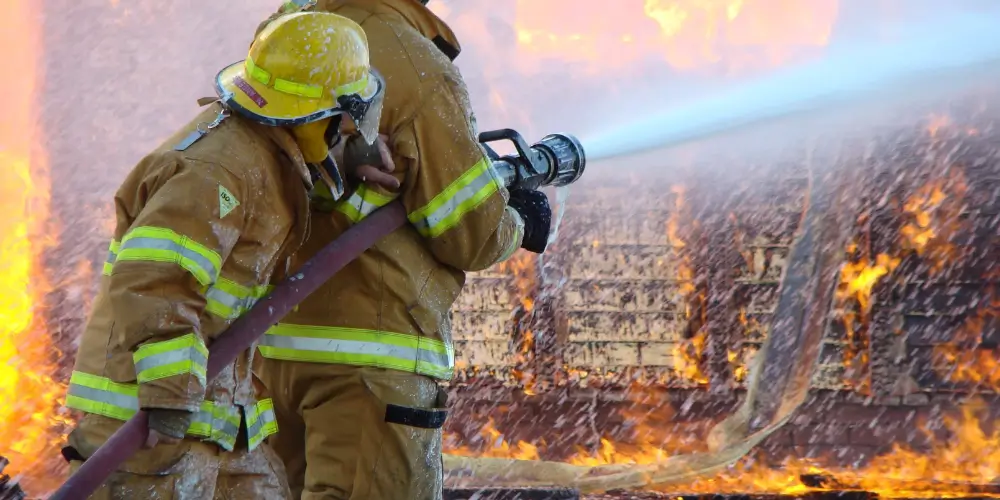
Firefighter Access
You must understand how fire doors are pivotal in supporting emergency access for firefighters.
These doors are engineered to facilitate rapid response in critical areas, ensuring that access is neither hindered nor delayed during emergencies.
Their design and installation are key to maintaining the integrity of escape routes while allowing effective firefighter intervention.
How Fire Doors Support Emergency Access
Fire doors play a crucial role in ensuring that firefighters can safely and efficiently access buildings that are on fire. Here’s how they support emergency access:
- Compliance with Fire Door Regulations: You must confirm that fire doors meet stringent regulatory standards. This compliance is critical not only for maintaining the structural integrity of the door but also for verifying that the doors function as intended during emergencies.
Regular fire door inspections are imperative.
- Integration into Emergency Exit Routes: Fire doors are strategically installed along designated emergency exit routes. This placement helps guide both occupants to safety and firefighters to areas that need attention, facilitating a smoother building evacuation plan.
- Enhancement of Smoke Control Systems: Properly maintained fire doors help contain smoke and toxic gases, which is fundamental to the effective operation of smoke control systems.
This containment supports firefighters by providing clearer and less hazardous paths to navigate through a building.
- Support through Emergency Response Training: Fire door maintenance and the knowledge of their operation are often included in emergency response training programs.
This ensures that all emergency personnel are familiar with operating these doors in an emergency, thereby enhancing occupant safety awareness and operational efficiency.
Facilitating Rapid Response in Critical Areas
Effective fire door placement is crucial to ensure rapid response times in critical areas, thereby enhancing firefighter access during emergencies. You must understand that fire door functionality isn’t just about halting the spread of flames; it also guarantees that first responders can reach endangered zones swiftly and safely. This pivotal aspect is often detailed in emergency response plans and is a focal point during emergency preparedness training.
Incorporating fire doors into rapid evacuation strategies not only supports safe egress for occupants but also facilitates unimpeded access for firefighters and rescue teams. Important area access, as mandated by fire door regulations, must be meticulously planned. These regulations outline the installation locations, maintenance standards, and inspection schedules to ensure optimal functionality in emergencies.
Furthermore, during fire drill protocols, the effectiveness of fire doors is tested under simulated conditions, ensuring that they function as expected in real emergencies. It’s also essential that safety equipment integration includes systems that interact seamlessly with fire doors, such as alarm triggers and automatic closures, to enhance overall safety and response efficiency.
Through diligent adherence to these principles, you can significantly strengthen your facility’s defence against fire, prioritising both prevention and effective emergency response.
Why are fire doors important in commercial buildings?
In commercial buildings, you must install fire doors to meet specific legal requirements that govern business premises.
These doors play a crucial role in reducing liability during fire emergencies by limiting the spread of fire and smoke, thereby protecting both life and property.
Compliance not only guarantees safety but also mitigates potential legal consequences in the aftermath of a fire.
Legal requirements for business premises
Ensuring compliance with local building codes and regulations is crucial when operating commercial buildings, as it directly impacts safety and legal liability.
To effectively enhance business safety and meet compliance standards, it is essential to be well-versed in the legal requirements specific to fire door regulations.
Here are the key components to keep in mind:
- Fire Safety Audits: Regular audits are mandatory to ensure that all fire doors and related safety mechanisms comply with the latest fire safety standards.
These audits help identify potential risks and enforce measures to mitigate them.
- Compliance Standards: Adherence to national and local building codes, including specific standards for fire doors, is non-negotiable.
This includes guaranteeing that fire doors are properly installed, maintained, and functioning to prevent the spread of fire and smoke.
- Emergency Preparedness: Integrating fire doors into your emergency preparedness plans is essential.
This involves training staff on the proper use of fire doors during an emergency to guarantee effective risk management.
- Insurance Requirements: Compliance with fire door regulations often affects your insurance policies.
Failure to comply can result in increased premiums or denial of claims, which can significantly impact your financial liability.
Reducing liability in fire emergencies
By installing fire doors in commercial buildings, you greatly reduce legal and financial liabilities in the event of a fire. These specialised barriers are integral to risk management strategies, ensuring legal compliance with stringent building codes and safety regulations.
Fire doors not only contain flames and limit the spread of smoke but also significantly enhance incident response times, enabling safe evacuations. Your adherence to these regulations impacts liability insurance premiums, as insurers favour buildings that demonstrate robust fire safety measures.
Implementing thorough emergency planning, which includes regular fire drills and fire safety training, not only prepares occupants for potential emergencies but also solidifies your commitment to maintaining a high standard of safety.
Moreover, fire doors serve as a critical component in your building’s overall safety architecture. Their presence reflects a proactive approach to safeguarding both human life and property. This not only mitigates potential legal actions in the wake of fire incidents but also protects against severe financial repercussions associated with property damage and business interruptions.
Through conscientious installation and maintenance of fire doors, you’re not just complying with the law; you’re actively contributing to a culture of safety and responsibility. This strategic foresight is essential for minimising risk and safeguarding your interests in any commercial setting.
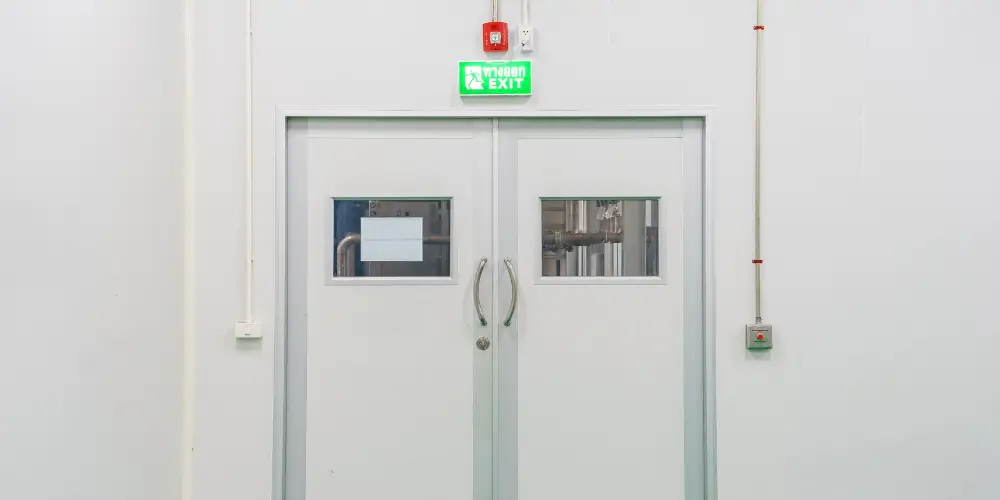
What role do fire doors play in passive fire protection?
In passive fire protection, you’ll find that fire doors primarily serve to contain fires rather than extinguish them.
By acting as a barrier, they prevent the spread of fire and smoke, thereby supporting the overall fire safety systems in a building.
This containment allows for safe egress routes and helps minimise property damage in the event of a fire incident.
Containment rather than extinguishing
Containing rather than extinguishing, fire doors play an essential role in passive fire protection by acting as barriers that prevent the spread of fire and smoke within a building.
You must understand the mechanics behind their design and functionality to appreciate their vital role in maintaining safety.
Here’s what you need to know about the role of fire doors:
- Fire Resistance Ratings: Each fire door is assigned a rating that indicates how long it can withstand fire without failing. These ratings are critical for compliance with fire safety standards and building regulations, guaranteeing occupant safety during emergencies.
- Smoke Containment: Fire doors help contain smoke, which is often more hazardous than flames due to the potential for smoke inhalation. Proper fire door maintenance ensures that seals and closures function correctly to block the passage of smoke.
- Emergency Preparedness: Integrating fire doors into your building’s design is a proactive measure that aligns with emergency preparedness strategies. It provides vital evacuation time for occupants, enhancing overall safety.
- Regulatory Compliance: Adhering to building regulations and fire safety standards, fire doors offer substantial advantages. They not only guarantee the safety of occupants but also help in maintaining the structural integrity of the building during a fire.
Supporting overall fire safety systems
Fire doors serve as a fundamental component of a building’s passive fire protection system, complementing other fire safety measures to enhance the overall safety framework. By integrating fire door materials that are rigorously tested for heat resistance and durability, you guarantee that they effectively block the passage of flames and smoke, thereby maintaining the integrity of escape routes and containing fires within manageable areas.
Furthermore, adherence to strict installation standards is essential. Proper placement and fitting of fire doors, along with the correct use of door hardware, maximise their effectiveness. You must verify that these elements comply with the latest safety guidelines and codes, which are frequently updated to reflect new research and advancements in fire safety technology.
Maintenance protocols and inspection frequency are equally important. Regular checks help identify any faults or wear that might compromise the door’s functionality. Engaging in consistent maintenance guarantees that fire doors remain reliable in critical moments.
Lastly, effective smoke control is augmented through the strategic installation of fire doors. Smoke, often more dangerous than the flames due to asphyxiation risks, is contained when doors function correctly.
Incorporating thorough safety training guarantees that all occupants understand how to use and respect these fire protection systems, enhancing overall building safety.
Are fire doors required in all buildings?
You may wonder if your building requires fire doors.
In the UK, specific regulations mandate fire doors in both residential and commercial structures, particularly in areas identified as high-risk.
Understanding these directives guarantees compliance and enhances safety in your premises.
UK regulations for homes and businesses
In the UK, regulations about fire doors differ between residential homes and business premises.
You’ll find that while the specifics can vary, the underlying principle of safety and prevention remains central.
Here’s what you need to know:
- Fire Door Regulations: Business premises must comply with strict fire safety regulations under the Regulatory Reform (Fire Safety) Order 2005, which mandates the installation of fire doors in certain areas.
Residential buildings, particularly new constructions, are governed by building regulations that specify when and where fire doors are necessary, typically in multi-occupancy or multi-story buildings.
- Fire Door Specifications: The materials and build of fire doors must adhere to BS 476-22 or EN 1634-1 standards, guaranteeing they can withstand fire for a specified minimum time, usually ranging from FD30 to FD120 (30 to 120 minutes of protection).
- Fire Door Installation and Maintenance: Proper installation and regular maintenance are essential for guaranteeing that fire doors function as intended.
This includes periodic fire door inspections and testing to confirm operational efficacy.
- Fire Door Compliance and Inspections: For businesses, maintaining compliance involves regular checks and documentation of fire door integrity and functionality, as part of broader fire safety audits.
Understanding and adhering to these elements ensures that you’re not only compliant but also genuinely safeguarding lives and property against fire hazards.
High-risk areas that must have fire doors
Throughout various types of buildings, certain areas are recognised as high-risk for fires, necessitating the installation of fire doors to enhance safety and compliance with regulations.
As you assess your building’s requirements, understanding the specific fire door regulations is essential. These regulations not only dictate where fire doors are mandatory but also specify the types of doors suitable for different settings.
Fire door types range from standard single-leaf doors to more complex double-leaf designs, each tailored to resist fire spread effectively. The selection of fire door materials also plays a significant role in their performance. Materials are selected based on their fire resistance rating, which typically ranges from 30 minutes to over 120 minutes of protection.
Professionals must conduct fire door installation to guarantee they function as intended.
Post-installation, regular maintenance and inspections of fire doors are essential. These checks involve examining the integrity of door seals, hardware, and the correct operation of self-closing mechanisms.
Adherence to fire door testing and labelling is another vital aspect. Labels indicate the door’s fire rating and compliance with national standards, serving as a guide for fire door inspection and maintenance.
This rigorous approach guarantees that the fire doors in your building effectively contribute to containment strategies, safeguarding lives and property.
Who is responsible for fire doors in a building?
As a landlord or duty holder, you’re legally mandated to maintain fire doors to meet specific safety standards.
Fire risk assessors and facilities managers play vital roles in evaluating and guaranteeing the operational integrity of these doors.
You must ensure that these responsibilities are met not only to comply with regulations but also to safeguard the occupants within your building.

Legal duties of landlords and duty holders
Landlords and duty holders bear the vital responsibility for guaranteeing that fire doors in buildings comply with safety regulations. This duty isn’t merely a formality but a significant aspect of risk management and legal compliance designed to safeguard lives and property.
As a landlord or duty holder, you must thoroughly understand your obligations. Here’s a concise breakdown:
Legal Compliance
You’re legally obligated to ensure that all fire safety measures comply with local fire safety regulations. This includes the installation, maintenance, and regular inspection of fire doors.
Risk Management
Implementing extensive risk assessments that include fire doors helps identify potential risks and the necessary mitigation measures. This is vital for both emergency preparedness and insurance requirements.
Property Maintenance
Regular maintenance of fire doors is mandatory to guarantee they function correctly during emergencies. This includes regularly checking door closers, seals, and hinges to ensure they are functioning properly.
Tenant Obligations Communication
You must inform tenants of their responsibilities regarding the proper use of fire doors, guaranteeing they don’t obstruct or damage them.
These steps are integral to maintaining the safety and integrity of the building, guaranteeing that both property and lives are adequately protected.
Fire risk assessors and facilities managers’ roles
Many buildings rely on the specialised roles of fire risk assessors and facilities managers to confirm the operational integrity and compliance of fire doors. As a facilities manager, you are responsible for ensuring that fire door inspections are conducted regularly and that all findings are addressed promptly. This responsibility is essential in maintaining the safety of the facility and its occupants.
Fire risk assessors play a pivotal role in identifying potential hazards and developing risk mitigation strategies. They must stay informed about the latest fire safety regulations and ensure that emergency evacuation plans are up-to-date and effective. Together, these professionals conduct compliance audits and facility safety assessments to confirm that all fire safety measures meet the required standards.
Here is a breakdown of their responsibilities:
| Role | Responsibilities | Tools Used |
| Fire Risk Assessor | Risk identification, compliance audits | Risk assessment tools, Checklists |
| Facilities Manager | Maintenance protocols, fire door inspections | Maintenance software, Inspection forms |
| Joint Tasks | Emergency evacuation plans, fire safety training | Training programs, Evacuation maps |
A 5-step check for fire doors
To ensure the effectiveness of your fire door, start by checking for a valid certification label that indicates compliance with safety standards.
Next, measure the gaps around the door; they shouldn’t exceed 4mm when the door is closed to maintain the integrity of the fire barrier.
Finally, assess the condition of the seals, confirm the door closes fully, and inspect the hinges for any signs of wear or damage.
Checking for certification
Why should you verify the certification of a fire door?
Confirming that a fire door meets the required certification standards is essential for compliance with safety regulations and building codes. This verification process isn’t only a fundamental component of fire door inspections. Still, it is also integral in establishing that the door will perform as expected during a fire, thereby safeguarding lives and property.
Here’s a precise guide on how to check the certification of a fire door:
- Locate the Label: Certification labels are usually affixed on the edge of the door or the frame. This label contains important information regarding the fire rating and the manufacturer.
- Review Certification Standards: Ensure the certification label indicates compliance with recognised standards, such as those established by the National Fire Protection Association (NFPA) or its equivalent.
- Check Date of Installation: The label should also indicate the installation date to guarantee compliance with the most current testing procedures and installation guidelines.
- Inspect Maintenance Records: Regular maintenance is mandatory for the validity of fire door certification. Check for a log of periodic reviews and maintenance activities.
Confirm that all these checks align with the latest maintenance protocols and compliance checks.
This thorough approach assures that the fire doors in your building are reliable and up to code.
Measuring the gaps
Make certain you measure the gaps around and between the fire door components; this vital step verifies the door’s ability to impede smoke and flames in an emergency. Precise fire door measurements are crucial to ensuring the door’s effectiveness under fire conditions.
Begin with the gap specifications; typically, these shouldn’t exceed 3mm at the top and sides, and 10mm at the bottom, according to most installation standards.
Firstly, check the door frame alignment. A misaligned frame can lead to uneven gap sizes, compromising the door’s integrity. Use a spirit level and measuring tape to assess the alignment and confirm that it adheres to compliance guidelines.
Next, conduct a thorough assessment of air leakage. This involves inspecting the perimeter of the door to detect any potential air gaps that could allow smoke to pass through. Use a smoke pencil or a similar device to trace around the door edges and monitor for air movement that indicates gaps.
Continue with rigorous maintenance protocols. Regularly scheduled checks help maintain gap consistency and door frame alignment over time. Document any variations and adjust as necessary to adhere to stringent safety standards.
Assessing the seals
After measuring the gaps, your next critical step in confirming the integrity of a fire door is to assess its seals. This involves a meticulous examination to verify that the door meets safety and performance standards.
Here’s how you can conduct this check:
- Verify Seal Integrity: Examine the entire length of the seal for any signs of damage or wear. Check for brittleness, tears, or dislodgment that could compromise the door’s ability to prevent smoke leakage.
- Measure Gap Consistency: Use precise tools to measure the gaps where the seal meets the door frame. Confirm these are within the specified limits to avoid any smoke leakage during a fire event.
- Inspect Material Durability: Evaluate the materials used in the seals for their fire resistance and durability. They should conform to installation standards and withstand the environmental conditions of their location.
- Review Maintenance Records: Look at the maintenance frequency and historical compliance checks. Regular performance testing records indicate a proactive approach to maintaining seal effectiveness.
Does the Door fully close?
Ensuring that a fire door fully closes is crucial for its effectiveness in preventing the spread of fire and smoke. You must examine door functionality closely to guarantee the closing mechanisms are operating as intended. Each type of fire door, ranging from swinging to sliding models, employs distinct mechanisms that must adhere strictly to installation standards.
Firstly, observe the door as it closes. Does it latch completely without manual assistance? If not, the mechanism may require adjustment or replacement. For peak door maintenance, check that no parts are worn or damaged.
Secondly, verify the door’s alignment within its frame. Misalignment can prevent a proper seal, undermining the door’s integrity. This is a vital aspect of door compliance that can’t be overlooked.
Thirdly, conduct regular safety inspections to assess the auto-closing feature, particularly after an incident or alteration in the surrounding area that might affect door functionality.
Fourthly, maintain user awareness. Ensure that all individuals using the building are aware of the importance of keeping fire doors clear and in good working order.
Lastly, consult the manufacturer’s guidelines to confirm that your fire door’s maintenance and usage adhere to the prescribed standards. Regular professional assessments will support compliance and functionality, promoting safety and regulatory adherence.
Checking the hinges
From verifying that your fire door fully closes, the next step involves inspecting the hinges, a key element in maintaining the door’s operational integrity.
Proper hinge maintenance guarantees that the door functions correctly in the event of a fire, providing a necessary barrier against flames and smoke.
Here’s a detailed guide to checking your fire door’s hinges:
- Hinge Alignment Checks: Examine each hinge to confirm they’re properly aligned and not offset. Misalignment can prevent the door from closing fully, compromising its effectiveness.
- Hardware Inspection Tips: Look for loose or missing screws in the hinge plates. Every screw should be tight and secure to maintain the door’s structural integrity.
- Lubrication Techniques: Apply a high-temperature lubricant to the hinge pins. This prevents corrosion and guarantees smooth door swing functionality, which is critical for safety compliance checks.
- Wear and Tear Assessment: Check for signs of wear, such as metal filings or unusual grinding noises during door operation. Significant wear may indicate the need for replacement, according to established replacement guidelines.
Regularly performing these checks as part of your fire door maintenance routine enhances your safety and guarantees compliance with fire safety regulations.
Frequently Asked Questions
Can Fire Doors Be Painted or Decorated?
You can paint or decorate fire doors, but you must follow safety compliance and painting regulations. Consider fire door maintenance, colour choices, and design considerations to ensure the visual impact aligns with the aesthetics of the fire door.
How Often Should Fire Doors Be Inspected?
You should inspect your fire doors annually to guarantee they meet safety standards. This frequency aligns with risk assessments and maintains fire door functionality, as documented in compliance checklists, inspection records, and maintenance logs.
Are There Different Types of Fire Doors for Homes and Offices?
Yes, different types of fire doors exist for homes and offices, varying in materials, ratings, and features to guarantee compliance with specific safety standards through precise installation, regular maintenance, and rigorous testing.
What Are the Penalties for Non-Compliance With Fire Door Regulations?
You’ll face hefty fines and legal consequences if you don’t comply with fire door regulations. Regulatory agencies enforce these standards strictly, conducting compliance inspections to guarantee adherence to building codes and mitigate liability issues.
Can Fire Doors Be Held Open Legally?
You can legally hold fire doors open if they are equipped with automatic closers that comply with fire safety codes, which ensure closure in emergencies and align with building compliance, fire safety training, and occupancy limits regulations.