

Can You Paint a Fire Door ? You can paint a fire door, but you must follow specific regulations to guarantee it maintains its fire resistance capabilities. You’ll need to use fire-rated paint and, possibly, a fire-retardant primer. It’s essential to prepare the surface properly and apply multiple thin coats rather than a thick one to uphold the door’s integrity. Ensure that you do not paint over intumescent seals or smoke seals, as this can compromise their function in the event of a fire. Additionally, always consult the manufacturer’s guidelines and local fire codes before starting. Understanding these details further can help you achieve both a safe and aesthetically pleasing outcome.
Key Takeaways
- Fire doors can be painted, but only with fire-rated paint that complies with safety regulations.
- Ensure the paint does not cover or impair intumescent strips and smoke seals.
- Proper surface preparation, including cleaning and sanding, is essential before painting a fire door.
- Consult the manufacturer’s guidelines and local fire codes before painting to ensure compliance with regulations.
- Regular checks and maintenance are necessary after painting to ensure the door retains its fire-resistance properties.
Table of Contents
Can you paint a fire door in the UK?
In the UK, you must adhere to specific regulations when painting a fire door.
It’s crucial to use intumescent paint, which expands in heat to protect the door’s integrity.
Ensure you verify the building codes to confirm compliance with the most recent safety standards.
What the Rules Say
Regarding the regulations in the UK, you must comply with specific guidelines when considering painting a fire door.
It’s crucial to understand that any alteration, including painting, mustn’t compromise the door’s integrity and functionality as defined under fire safety regulations. Compliance guidelines are stringent because the door’s ability to resist fire mustn’t be diminished.
Fire door maintenance, including painting, requires adherence to safety code updates that specify the use of intumescent paint. This type of paint expands when exposed to high temperatures, helping to seal the door against smoke and flames, thereby maintaining the door’s fire-resistance rating.
Regular fire door inspections will verify compliance and functionality, ensuring that any coatings applied haven’t impaired the door’s performance.
You should also be aware that not all paints are suitable, and using non-compliant products can lead to penalties or, worse, failure of the door in a fire event.
It’s not just a matter of choosing any paint; it involves selecting one that meets fire prevention measures and enhances the door’s protective qualities.
Always verify that the paint and application methods align with the latest fire door guidelines to maintain ideal safety and compliance.
What Paint Types to Use
When selecting the appropriate paint for a fire door, you must prioritise using intumescent paint. This type of paint not only enhances the door’s resistance to fire but also contributes to its overall durability, which is essential in maintaining the door’s integrity over time.
Fire door maintenance is simplified with intumescent coatings, which expand when exposed to high temperatures, sealing the door against smoke and flames.
For aesthetic considerations, ensure that the paint complements the rest of your property’s decor. The market offers various colour options, allowing you to meet both safety and design needs simultaneously.
However, don’t compromise on regulatory compliance for aesthetic appeal. Always confirm that the paint meets local fire safety standards.
Before paint application, thorough surface preparation is essential. Clean the door to remove dust and debris, and lightly sand it to ensure the paint adheres properly.
Applying the paint uniformly is vital; uneven layers can affect the door’s performance in a fire situation.
Consider the paint drying time, which can vary based on the product. A properly dried door ensures maximum protection and maintains the integrity of the fire-resistive barrier.
Always follow the manufacturer’s guidelines to achieve the best results.
Painting Over Intumescent Seals
When considering whether it’s safe to paint over intumescent seals on your fire door, it’s essential to understand how the paint may affect the seal’s functionality.
There are limitations to the types of paint you can use; not all paints are suitable, as they might impair the seal’s ability to expand in a fire.
You should consult the seal manufacturer’s guidelines to ascertain compatibility and maintain the door’s fire resistance integrity.
Safe to Paint?
Before you consider painting a fire door, it’s crucial to understand the implications of painting over intumescent seals. Intumescent seals expand when exposed to high temperatures, blocking smoke and flames during a fire. Painting over these seals can compromise their functionality, leading to severe safety risks.
When contemplating whether to paint your fire door, consider these critical points:
Compliance
Guidelines
Always check local fire safety codes and manufacturer’s instructions. These documents often provide specific directives on fire door maintenance, including whether or not paint can be applied over intumescent materials.
Professional
Advice
Consult with a fire safety professional before making any alterations to ensure compliance with local regulations. Their expertise in safety considerations and fire door maintenance can guide you through safe painting techniques.
Product Recommendations
Use only paint products recommended for fire doors. These are usually non-reactive with intumescent materials and adhere to preparation steps that preserve the seal’s effectiveness.
Adhering to these guidelines guarantees that your aesthetic preferences don’t undermine critical safety features.
Always prioritise safety and compliance over appearance to maintain the protective qualities of your fire door.
Painting Limitations
Although you can paint a fire door, painting over intumescent seals introduces significant limitations. It’s vital to understand how these seals operate; they expand in the event of a fire, sealing off gaps to prevent the spread of smoke and flames.
When you apply paint over these seals, you risk impairing their functionality, which could compromise the door’s integrity in the event of a fire.
Adhering to painting guidelines and fire door regulations is crucial for ensuring the safety and effectiveness of your fire door. Before starting, check if the manufacturer specifies any specific paint types or application methods that may affect the door’s compliance with safety standards.
Regarding colour selection and finish types, opt for products that don’t compromise the door’s structural and operational integrity.
Consider texture and durability factors when selecting a paint. A high-quality, non-obstructive paint guarantees that the intumescent seals remain effective. Regular maintenance tips include checking the condition of the paint and seals periodically to confirm they haven’t degraded.
Ultimately, while painting your fire door may align with aesthetic preferences, you must prioritise compliance with durability and safety standards to maintain the door’s protective functions.
Can You Paint Smoke Seals?
When considering whether to paint smoke seals on fire doors, it’s essential to understand why this isn’t recommended.
You need to identify the differences between smoke seals and intumescent strips, as they serve distinct purposes in fire safety.
Painting over smoke seals can impair their function, potentially compromising the door’s ability to prevent the spread of smoke in the event of a fire.
Why Not to Paint Them
Painting fire doors, particularly their smoke seals, can greatly compromise their effectiveness and is generally advised against. Understanding the technicalities and consequences of this action is crucial for maintaining optimal fire safety and complying with fire door regulations.
When you apply paint to smoke seals, several significant risks and issues arise:
- Adhesion Issues: Paint can cause the smoke seals to stick to the door frame, impairing their ability to expand properly during a fire. This prevents the seal from effectively blocking smoke and toxic gases, thereby reducing the door’s overall fire-resistance capability.
- Chemical Reactions: Certain types of paint may chemically react with the materials used in smoke seals, potentially degrading them. This degradation can shorten the lifespan of the fire doors and necessitate more frequent replacements or maintenance.
- Legal and Safety Non-Compliance: Altering the integrity of fire doors through painting can lead to non-compliance with safety regulations. This non-adherence not only poses a direct threat to safety but also carries legal implications that could result in penalties or void insurance claims.
To ensure safety compliance and uphold the importance of fire safety, it’s essential to consider these factors before making aesthetic choices that could compromise the effectiveness of your fire safety measures.
Identifying Smoke vs Intumescent Strips
Before deciding whether to install smoke seals on your fire door, it’s essential to understand the distinction between smoke seals and intumescent strips.
Smoke seals are designed to prevent smoke from passing through the gaps around the door during a fire, which is crucial for maintaining safe emergency access and ensuring the effectiveness of smoke detection. These are typically made from intumescent materials that expand when exposed to heat; however, their primary function is smoke containment, rather than expanding to seal gaps like intumescent strips.
Intumescent strips, on the other hand, are activated by heat and expand significantly to seal the door edges, preventing the passage of flames and hot gases. This feature is crucial for door safety and adheres to strict fire regulations. These strips play a crucial role in fire prevention, helping to contain the fire within a designated compartment and thereby limiting damage, while facilitating evacuation.
When considering seal maintenance, it’s necessary to comply with building codes that often stipulate that neither smoke seals nor intumescent strips should be painted.
Paint can impair their functionality by limiting their expansion capabilities, thereby compromising the door’s integrity and safety features. Always check local guidelines and manufacturer instructions before making modifications to these components.
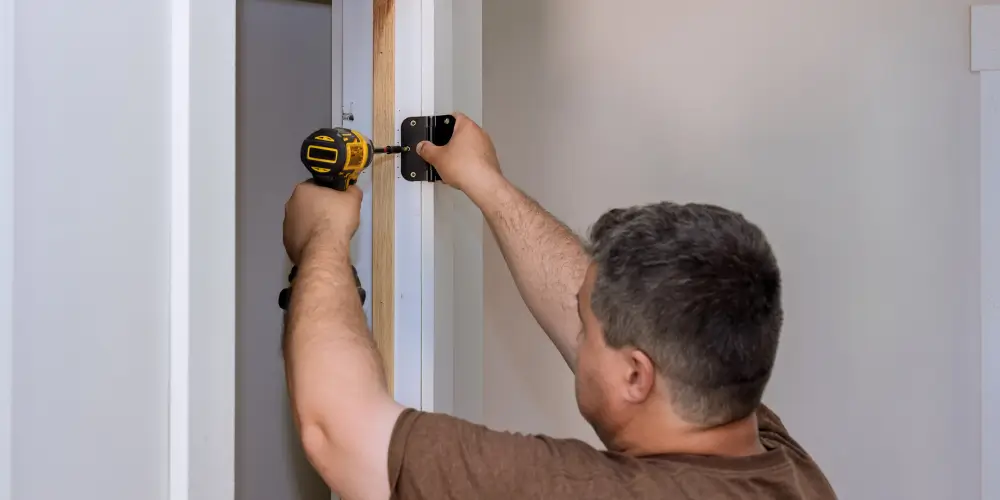
Painting Fire Door Hinges and Hardware
When painting a fire door, it is essential to carefully mask the hinges and hardware to prevent compromising their functionality.
Start by cleaning these components to guarantee the tape adheres well and provides a clean edge.
Follow precise steps to mask each piece thoroughly before applying paint to the door, ensuring you maintain the door’s integrity and performance.
Why You Must Mask Them
To guarantee the integrity and functionality of fire door hinges and hardware, it’s vital to mask these components before painting. Proper masking guarantees that paint doesn’t interfere with the mechanical operation and safety features of the door. Understanding how to mask effectively is important for both aesthetic and practical reasons.
- Fire Safety: Masking protects important components from paint, which can compromise fire resistance. Adhering to fire safety standards isn’t just about regulatory compliance; it’s about ensuring that these doors function properly in the event of an emergency.
- Maintenance Tips: Proper masking techniques facilitate easier maintenance. Paint-free hinges and hardware are less likely to corrode or seize, which is important for the longevity and reliability of fire doors.
- Aesthetic Considerations: Clean and precise paint lines enhance the overall appearance of the door. Masking guarantees that only the intended areas are painted, maintaining a professional look and adhering to aesthetic standards.
When selecting masking products, opt for materials that provide reliable adhesion and ease of removal without damaging the door’s surface.
Surface preparation before masking can greatly impact the final result, emphasising the need for careful planning and execution. This approach not only meets regulatory standards but also protects the door’s operational capabilities and appearance.
What Steps to Take
If you’re ready to paint the hinges and hardware of a fire door, make sure you’ve gathered all necessary supplies and prepared the area meticulously. Adhering to fire safety regulations is essential not only for compliance but also to ensure the door’s functionality and longevity. Here’s a detailed breakdown:
| Step | Details |
| 1. Remove Hardware | Unscrew and remove hinges and any other hardware to prevent paint from obstructing mechanical functions and compromising fire door compliance. |
| 2. Clean and Prep | Clean each piece thoroughly. Sand if necessary to guarantee the new paint adheres well, maintaining the door’s aesthetics and longevity. |
| 3. Apply Primer and Paint | Use a heat-resistant primer and paint. Apply evenly, employing door painting techniques that avoid drips and build-up. |
| 4. Reattach Hardware | Once dry, reattach all components carefully, checking for operational integrity to guarantee ongoing fire door maintenance and safety. |
This process not only enhances the appearance but also plays a crucial role in fire door inspections, ensuring that all elements meet the required standards for both fire door aesthetics and functionality. Remember, regular fire door maintenance extends the life of your door and guarantees it performs its protective role effectively.
Can you paint a wooden fire door?
You can paint a wooden fire door, but the process depends on whether it’s a veneer or solid core type.
For both types, thoroughly sand the surface before applying paint to ensure proper adhesion and a smooth finish.
This preparatory step is essential for maintaining the door’s fire-resistance capabilities and aesthetic appeal.
Veneer vs Solid Core
When considering whether to paint a wooden fire door, it’s crucial to differentiate between veneer and solid core options. Each type has specific characteristics that impact their suitability for painting, as well as their performance in fire safety and durability.
- Veneer Fire Doors:
- Aesthetic Choices: Veneer doors offer a variety of finishes that mimic different wood grains, allowing for enhanced aesthetic customisation.
- Cost Considerations: Generally less expensive than solid core doors due to the lighter, less dense materials used beneath the veneer layer.
- Installation Requirements: Typically lighter and easier to handle, potentially reducing installation costs.
- Solid Core Fire Doors:
- Fire Resistance Comparison: Solid core doors often provide superior fire resistance. Their dense construction helps in slowing the spread of fire and smoke.
- Durability Differences: More robust and resistant to wear, solid core doors are ideal for high-traffic areas.
- Solid Core Benefits: In addition to improved fire safety, solid core benefits also provide better sound insulation, a significant advantage in multi-unit buildings or offices.
When you’re deciding to paint, consider these aspects deeply. Both types require different preparation techniques due to their distinct fire door construction.
Choose based on your specific needs for safety, durability, and aesthetics.
Sanding Before Painting
Preparation is key before you begin painting a wooden fire door, and sanding is an essential step in this process. Proper surface preparation ensures optimal paint adhesion and a smooth finish, both of which are significant factors in maintaining the door’s functionality and aesthetic appeal.
Start by selecting the appropriate sanding tools and grit. For initial sanding, use a coarse grit (around 80-100) to effectively remove any old paint or varnish. This rough grit helps strip away superficial layers without damaging the wood.
Once you’ve removed the old layers, switch to a finer grit (150-200) for finish smoothing. This shift is essential for creating a surface that paint can adhere to effectively.
Employ advanced sanding techniques to guarantee uniformity across the surface. Always sand in the direction of the wood grain to prevent scratches that could impair the final appearance.
After sanding, focus on dust removal. Use a vacuum followed by a tack cloth to remove any residual dust, a step that’s often underestimated but crucial for achieving a clean paint application.
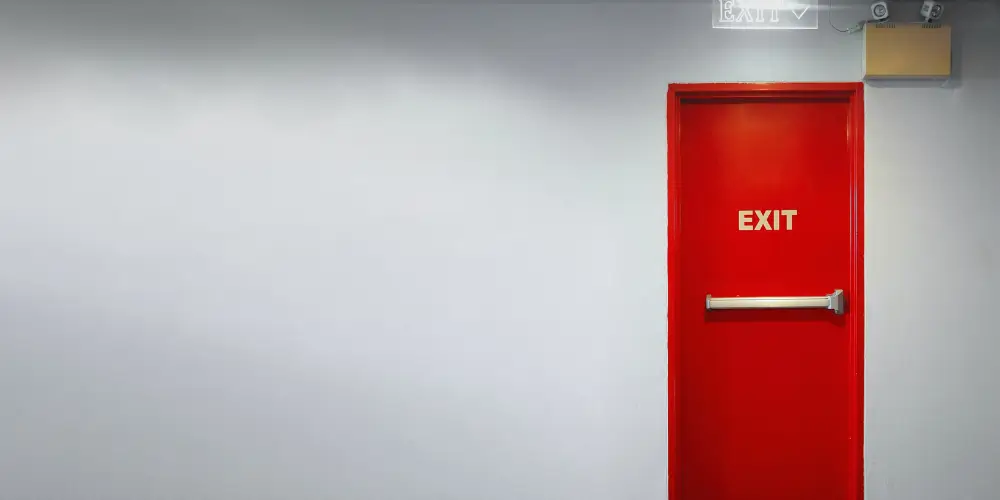
Can you paint a metal fire door?
When you’re ready to paint a metal fire door, select a heat-resistant paint and use a method that ensures a smooth, even coat.
Be sure to mask off any hardware, such as hinges and handles, to protect them from paint splatters and drips.
Applying paint correctly maintains the door’s fire resistance and guarantees it operates safely and effectively.
How to Apply Paint
To successfully paint a metal fire door, begin by thoroughly cleaning the surface with a degreaser to remove any dirt and oils. This initial step is vital as it guarantees ideal paint adhesion and a smooth finish.
After cleaning, apply a primer specifically designed for metal surfaces to enhance adhesion further and prevent rust.
When selecting your paint, opt for high-quality, heat-resistant products that comply with fire door regulations. Consider these factors:
- Colour Selection Advice: Opt for light colours to reflect heat and minimise the risk of warping under high temperatures.
- Paint Finish Options: A semi-gloss or gloss finish is preferable for easier maintenance and cleaning.
- Drying Time Considerations: Allow sufficient drying time between coats to achieve a durable finish.
Apply the paint using a brush or roller specifically designed for smooth metal surfaces.
Employing proper paint application techniques is necessary:
- Use long, even strokes to avoid streaks.
- Apply multiple thin coats rather than a single thick coat to enhance durability and appearance.
- Allow the paint to dry completely between coats, observing the manufacturer’s recommended drying times.
Properly executed, your painted fire door won’t only look professionally finished but also continue to meet safety standards.
Hardware Masking Tips
Before you start painting your metal fire door, it’s vital to protect the door’s hardware. Implementing precise hardware cleaning techniques is the first step. Use a mild cleaner and a soft cloth to remove any dirt or grease, confirming the surfaces are pristine. This not only preserves the hardware’s functionality but also helps maintain its condition.
Next, evaluate whether to mask or remove the hardware. The hardware removal process involves carefully unscrewing and storing each piece. This method is preferable, as it prevents any paint from altering the hardware’s function or appearance.
If removal isn’t feasible, ensure that you meticulously mask each piece using high-quality painter’s tape and consider hardware safety considerations to prevent damage.
After painting, when reinstalling or replacing the hardware, follow strict hardware installation guidelines. Conduct hardware compatibility checks to verify new pieces fit without hindering the door’s fire-resistant properties.
Hardware functionality tests are crucial for confirming that everything operates smoothly and securely.
What kind of paint do you use on a fire door?
When choosing paint for a fire door, you must decide between standard and fire-rated options.
Fire-rated paints are specifically formulated to resist high temperatures and help maintain the door’s integrity in the event of a fire.
When opting for water-based paints, ensure they meet the necessary safety and performance standards for fire resistance.
Standard vs Fire-Rated Paint
Choosing the right paint for a fire door is vital for maintaining its fire-resistance capabilities. While standard coatings might seem adequate for typical applications, fire-rated paint is specifically engineered for fire-rated applications. This distinction is significant as it directly impacts the door’s ability to withstand high temperatures and prevent the spread of fire.
Here are the key differences:
Fire
Resistance
Fire-rated paint contains intumescent properties that expand when exposed to heat, forming a protective barrier. Standard paint lacks these properties and can compromise the door’s integrity.
Certification and Compliance
Fire-rated paint complies with stringent safety regulations and comes with certifications that prove its efficacy in fire resistance. Standard coatings don’t meet these rigorous standards.
Application
Techniques
Fire-rated paint requires specific application techniques to guarantee superior performance. It’s thicker and necessitates professional handling for proper adherence and effectiveness.
When selecting paint for a fire door, consider the durability of the paint, colour choices, and finish types.
Product comparisons are significant; they help you understand which products offer the best protection and meet safety standards. Always opt for solutions that enhance safety while meeting your aesthetic and functional requirements.
Choosing Water‑Based Paints
While fire-rated paints are often solvent-based due to their durability and resistance properties, water-based options are available that meet the stringent requirements for use on fire doors.
You’ll find that water-based paints offer notable benefits, particularly in terms of reduced environmental impact and safer handling. These paints emit lower levels of volatile organic compounds (VOCs), making them a more eco-friendly choice for indoor environments.
Regarding paint durability, modern water-based formulations have improved remarkably, offering a resilience that rivals their solvent-based counterparts. When selecting a paint for a fire door, verify that the product specifies suitability for fire resistance to maintain the door’s integrity.
The application techniques for water-based paints differ slightly from those for solvent-based paints. They typically require a longer drying time, although this can vary depending on the brand and environmental conditions.
It’s essential to allow adequate drying to achieve the desired finish type and guarantee maximum durability.
Maintenance considerations are also favourable with water-based paints. They generally facilitate easier touch-ups and cleaning due to their softer finish. Colour selection is broad, providing you with the flexibility to revitalise the existing décor without compromising safety standards. Always prioritise products designed specifically for fire safety to maintain the protective qualities of your fire door.
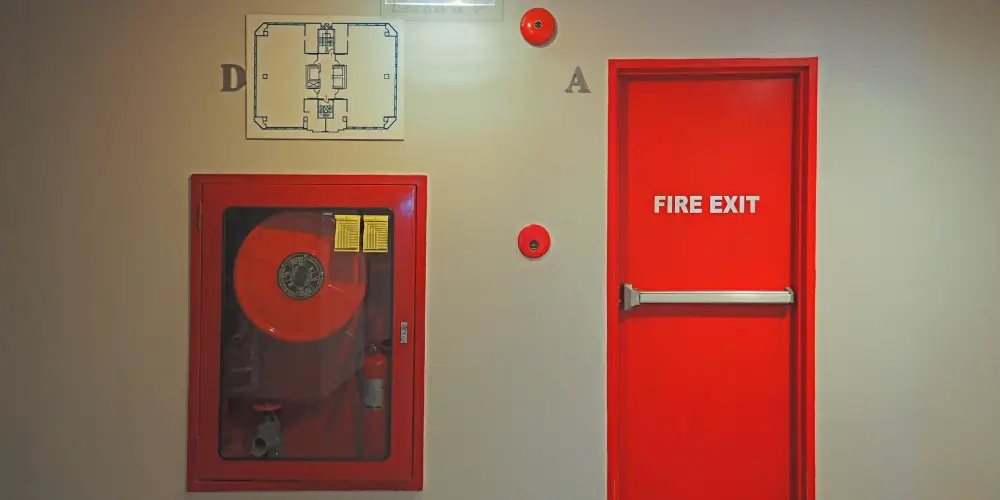
Can fire doors be decorated?
You might wonder if you can personalise your fire doors without compromising their safety features.
Under UK fire safety regulations, any decoration mustn’t impair the door’s integrity or fire-resistance rating.
Stick to compliant decoration tips that guarantee your fire door remains effective while reflecting your aesthetic preferences.
What’s Allowed Under UK Fire Safety Rules
Although you may want to personalise a fire door to match your interior design, UK fire safety regulations impose strict guidelines on what alterations are permitted. Understanding the legal obligations and compliance requirements is essential.
Here’s what you need to take into account:
- Painting Compliance Guidelines: Any paint used must maintain the door’s integrity and fire-resistance rating. Specific intumescent paints might be required, which expand in the event of a fire, sealing gaps and preventing the spread of flames and smoke.
- Decorative Finishes Options: When adding decorative elements, ensure they don’t compromise the door’s functionality. This includes avoiding any modifications that might obstruct the door’s closure or its seal in the door frame.
- Inspection Criteria Overview: Regular inspections are mandatory to guarantee that any decorative modifications haven’t impaired the fire door’s effectiveness. These inspections should assess the condition of paint, adherence to fire door regulations, and the functionality of self-closing mechanisms.
You’re expected to adhere strictly to these guidelines to confirm compliance with fire safety considerations.
Failure to comply not only risks penalties but also compromises safety, underscoring the importance of maintaining the integrity of all fire door aspects.
Decoration Tips That Keep Compliance
Decorating fire doors within compliance guidelines is certainly possible, provided you select approved materials that maintain the door’s safety features. When considering fire door colours, you must adhere to safety standards that guarantee the door’s functionality isn’t compromised.
Opt for finish types that are non-flammable and specified as suitable for fire doors. These finishes shouldn’t only meet the aesthetic considerations you desire but also conform to the stringent legal requirements that govern fire safety.
To initiate this process, familiarise yourself with the compliance guidelines detailed in your local fire safety regulations. These guidelines will outline permissible decoration ideas and the types of materials that maintain the integrity of the fire door.
When applying paint or other finishes, verify the products are labelled for use on fire doors and don’t impede the door’s operation or seal.
Maintenance tips are essential: regularly check the condition of the decorated fire door to confirm it continues to comply with fire safety standards. Any degradation in the finish or material could affect the door’s performance during a fire.
Always consult with a fire safety professional if you’re unsure about the compatibility of decoration materials with your specific fire doors.
Can you paint internal fire doors white?
You might wonder if you can paint your internal fire doors white without compromising safety.
It’s essential to verify that the paint you choose adheres to fire safety standards and doesn’t negatively affect the door’s fire-resistant properties.
Always verify that the paint is properly classified for use on fire-rated doors to ensure compliance and maintain protection.
Is White Paint Safe to Use?
White paint is indeed safe to use on internal fire doors, provided it complies with the specific fire-resistant standards required for such applications. When selecting white paint options, it’s essential to consider not only the aesthetic appeal but also the technical specifications that ensure the paint’s performance in fire conditions.
Here are several key aspects to keep in mind:
- Fire Door Regulations: Verify that the paint meets local fire safety codes and regulations. Non-compliant materials can compromise the door’s integrity.
- Paint Durability: Opt for a formulation that offers high durability and resistance to heat. This guarantees that the paint maintains its protective properties and appearance over time.
- Application Techniques: Proper application is vital. Use techniques that enhance the paint’s adherence and effectiveness, such as applying a primer specifically designed for fire-rated surfaces.
Additionally, consider maintenance tips to prolong the life of both the paint and the door. Regular checks and touch-ups can prevent deterioration and guarantee compliance with safety standards.
Additionally, consider exploring colour alternatives if you’re concerned about the environmental impact of traditional white paints. Some newer formulations minimise harmful emissions without compromising safety or durability.
Compliance with Fire Safety Standards
Often, when considering painting internal fire doors white, it’s essential to guarantee that the chosen paint complies with stringent fire safety standards. You must select a paint that maintains the door’s integrity and complies with all relevant fire safety regulations. This adherence isn’t just about choosing any fire-resistant paint; it involves ensuring the product holds the necessary safety certifications specific to your region’s compliance requirements.
When planning to repaint a fire door, consult the maintenance guidelines provided by the door manufacturer. These guidelines are important as they detail the types of paints and finishes that are safe to use without compromising the door’s fire-resistance capabilities. Deviation from these specifications can lead to reduced efficacy in fire situations, posing a significant fire hazard.
Moreover, regular safety inspections should be conducted to assess the condition of the painted fire doors. This practice helps in identifying any potential issues that could impair their functionality.
What paint is fire-resistant?
You’ll find that fire-resistant paints are specially formulated to withstand extreme temperatures and slow the spread of flames.
These paints are categorised primarily into intumescent and flame-retardant types, each suited for specific environments and materials.
Typically, such coatings are applied in buildings, on structural steel, and in areas that require stringent fire safety measures.
Types of Fire-Resistant Paint
When selecting paint for a fire door, it’s important to opt for fire-resistant varieties that can withstand high temperatures and slow the spread of flames. Your choice should focus on enhancing safety while meeting aesthetic and functional requirements.
Here’s a closer look at the types available:
- Intumescent Paint: This coating swells when exposed to high heat, forming a charred layer that provides thermal insulation. It’s ideal for protecting structural elements and maintaining the integrity of your fire door in the event of a blaze.
- Fire Retardant Primers: Applied as a base layer, these primers enhance the fire resistance of the top coat. They contain chemicals that inhibit flame spread, making them a vital first step in fireproofing your door.
- Heat-Resistant Finishes: These finishes can withstand extreme temperatures without degrading. They’re suitable for areas exposed to high heat, ensuring that the door’s surface remains intact and functional even during intense fire exposure.
Each type serves a specific role, from providing a barrier against heat penetration to ensuring that the door remains a viable part of a building’s passive fire protection system.
You’ll need to consider eco-friendly options and commercial applications, taking into account both safety and aesthetic considerations.
Where Fire-Resistant Paint is Used
Fire-resistant paint is fundamental in locations where the risk of fire is significant and where maintaining structural integrity during a fire is essential. You’ll find these specialised coatings in a variety of settings, each with stringent fire safety compliance requirements.
For example, in commercial buildings, fire-resistant coatings are applied to steel structures to prevent structural failure in the event of high temperatures. Similarly, in residential units, particularly in kitchens and near heating appliances, these paints provide an additional layer of safety.
When it comes to fire door regulations, the use of fire-resistant paint isn’t only recommended, but often mandated. These regulations guarantee that the doors can withstand fire for a specified period, typically rated for 30, 60, 90, or 120 minutes. The choice of paint affects the door’s ability to comply with these performance standards.
Your paint application techniques also play an important role in achieving effective fire resistance. It’s not just about slapping on a coat of paint; you must adhere to specific methods to guarantee uniform coverage and the best thickness.
Maintenance considerations are equally significant, as the integrity of fire-resistant coatings can diminish over time due to environmental impact or mechanical damage. Therefore, periodic checks and touch-ups are necessary to maintain protection levels while also balancing aesthetic choices.
Frequently Asked Questions
How Often Should Fire Doors Be Repainted?
You should repaint your fire door when signs of wear appear, ensuring compliance with fire safety standards. This involves using appropriate paint types after proper surface preparation and adhering to inspection requirements to maintain the door’s lifespan.
Does Painting a Fire Door Void Its Warranty?
Painting your fire door can void its warranty if you don’t follow the manufacturer’s guidelines on paint types and application methods that comply with fire door regulations, safety standards, and legal requirements concerning door materials and fire ratings.
Are There Eco-Friendly Paints Suitable for Fire Doors?
Yes, you’ll find eco-friendly paints that meet fire safety standards for various types of fire doors. Ascertain the paint’s durability, low VOC emissions, and adherence to fire door regulations through proper surface preparation.
How Do You Prepare a Fire Door for Painting?
How will precision enhance your project? For fire door preparation, start by thoroughly cleaning the surface. Apply a suitable primer, following the recommended drying times. Select fire-resistant paint that adheres to safety regulations and master finishing techniques for optimal results.
What Maintenance Is Required for Painted Fire Doors?
You’ll need regular fire door inspections and safety compliance checks to guarantee adherence to fire door regulations. Assess paint durability, perform adhesion tests, and follow repainting frequency guidelines to maintain your door’s protective qualities.