UPTO 10 CIRCUITS
ONLY £149.99
* All inclusive (No hidden costs)
* Limited availability this week – Book early
* Up to 10 circuits included
* Additional circuit: £15 each
* Additional consumer unit/fuse board: £129.99
* Digital report provided after inspection


Our Reviews
What is a Commercial EICR (CEICR)?
A Commercial EICR (CEICR) is an Electrical Installation Condition Report for business premises. It assesses the condition of the fixed electrical installation and highlights any defects or risks that could lead to electric shock, fire, or equipment failure. The report confirms whether the installation is Satisfactory or Unsatisfactory, using clear observation codes (C1 / C2 / C3 / FI) and recommended actions.
Commercial EICRs are commonly required for offices, shops, restaurants, warehouses, industrial units, and mixed-use buildings, and they are often requested for insurance, compliance, tenancy agreements, and health & safety documentation.
Commercial EICR London Pricing
Our fixed-price Commercial EICR London package is designed for small commercial units and covers up to 10 circuits.
-
Commercial EICR (up to 10 circuits): £149.99
inspection, testing, digital CEICR report included -
Additional circuit: £15 each
-
Additional consumer unit / fuse board: £129.99
-
Parking / congestion charges: may apply depending on location and restrictions

Commercial EICR Testing London (What We Check)
During a Commercial EICR, we carry out a combination of visual inspection and electrical testing of the fixed installation to assess safety and compliance. The aim is to identify defects, deterioration, or risks that could lead to electric shock, fire, or operational downtime, and then document them clearly in your report.
Our inspection typically covers the consumer unit/distribution board condition and protection, circuit protective devices and any signs of overheating, and checks on earthing and bonding (where applicable). We also assess RCD protection and functional operation (where fitted/required), the condition of fixed wiring and visible accessories, and we look for signs of unsafe alterations, damage, or non-compliance risks.
Where safe and appropriate, testing may include insulation resistance testing, earth fault loop impedance, polarity checks, and RCD testing to confirm the installation’s safety and integrity. Some tests may require brief power interruptions, and we plan this to minimise disruption to your business operations.

How Often Do You Need a Commercial EICR?
There isn’t one single “every five years” rule that applies to every commercial property. The correct inspection interval depends on building type, usage, risk level, previous report findings, and insurer/lease requirements. Your CEICR will typically include a recommended date for the next inspection based on the condition of the installation and the environment.
If your property has high usage, heavy equipment, or frequent changes (fit-outs, machinery, tenants), the inspection interval is often shorter.
If you’re unsure what interval applies to your premises, the safest approach is to follow what your last report recommends and any requirements in your insurance policy or lease agreement. You should also arrange a new Commercial EICR after major changes such as rewiring, refurbishments, adding new distribution boards, or installing high-load equipment—because the risk profile of the installation changes and you need updated documentation for compliance and safety records.
Our CEICR Process (Step 1–5)
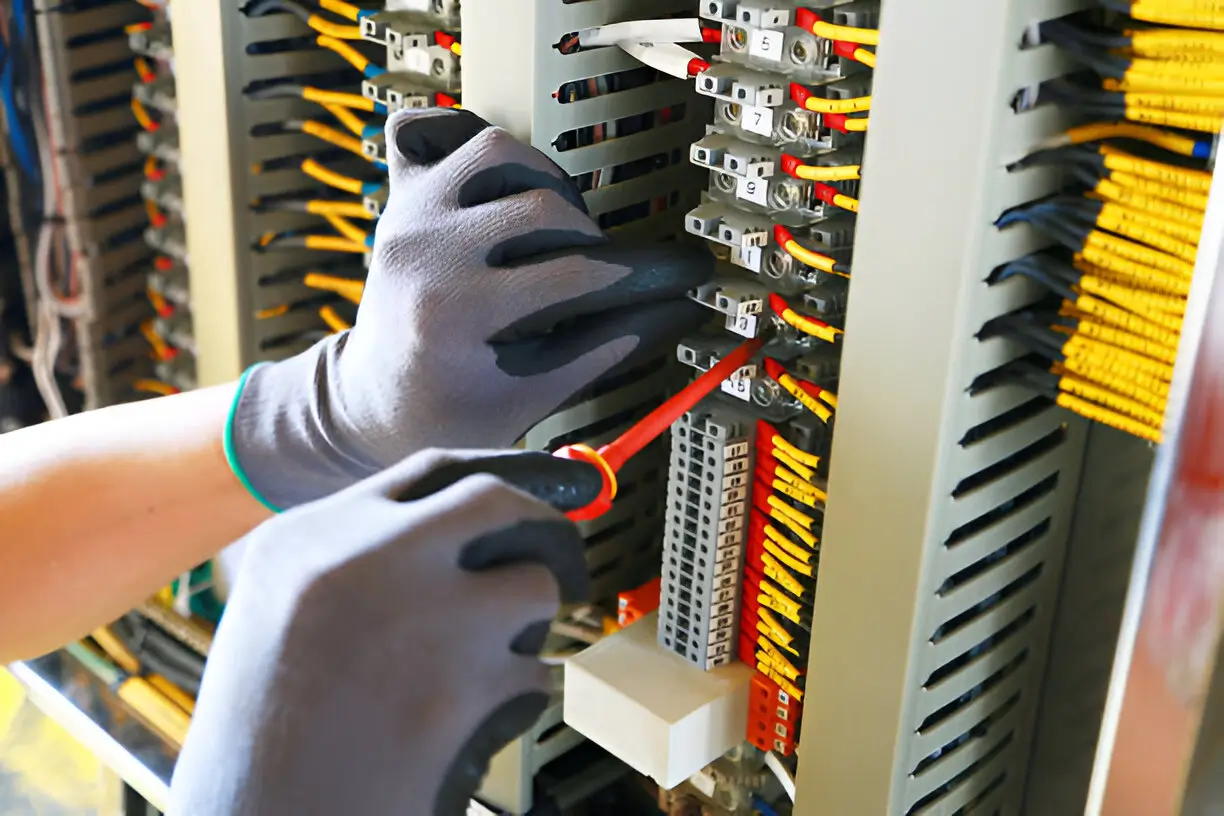
We keep the Commercial EICR (CEICR) process simple and structured so you know exactly what will happen on the day. We confirm scope first, carry out inspection and testing safely, and then issue a clear digital report with coded observations and next steps.
Confirm scope
We confirm the premises type (office/retail/warehouse etc.), estimated circuit count, number of consumer units/distribution boards, and access restrictions. This helps us plan the visit properly and avoid delays or surprises.
On-site inspection
We carry out a visual inspection of distribution boards, circuits, fixed wiring condition, and visible accessories. We also look for signs of overheating, damage, unsafe alterations, or non-compliance risks.
Testing (where safe and appropriate)
We complete electrical testing as required to assess safety and integrity. Some tests may need brief power interruptions, and we coordinate this to minimise disruption to your operations.
Digital CEICR report issued
You receive a digital CEICR showing whether the installation is Satisfactory or Unsatisfactory, with clear observation codes C1/C2/C3/FI and recommended actions.
Next steps explained
If remedial work is needed, we explain what must be corrected first (especially C1/C2 items) and what evidence or follow-up may be required to reach a satisfactory outcome.
What Happens If a Commercial EICR Is Unsatisfactory?
If your Commercial EICR (CEICR) includes C1 (danger present) or C2 (potentially dangerous) observations, the installation is typically classed as unsatisfactory until issues are corrected. This can affect compliance, insurance requirements, and tenant or landlord obligations, especially in higher-risk commercial environments.
After the inspection, we provide a clear digital report with coded observations (C1/C2/C3/FI) and recommended actions. If urgent defects are identified, we explain what needs to be addressed first and what evidence or follow-up may be required to achieve a satisfactory outcome and maintain safe operation.

Cost Analysis and Preparation
When preparing for a Commercial Electrical Installation Condition Report (CEICR), it’s crucial to understand and manage the associated costs effectively. Proper financial planning ensures that your business remains compliant with electrical safety standards without facing unexpected expenses. Here’s a step-by-step guide to help you navigate the cost analysis and preparation for your eicr commercial property London.

Analyse Costs Per Circuit
Determine the average cost per circuit for your Commercial EICR, typically ranging from £12 to £15. Remember that this cost can increase depending on the complexity and size of your commercial property.

Include Additional Charges
Account for additional expenses such as consumer unit testing, which generally costs around £129.99. Also, consider potential extra fees like parking or congestion charges that may apply based on your location.

Request and Compare Quotes
Could you obtain detailed quotes from several accredited service providers? Comparing these quotes will help you secure a competitive rate and ensure the electrician meets all necessary qualifications and compliance standards.

Prepare a Contingency Fund
Could you set aside a contingency fund to cover potential remedial actions identified during the inspection? These repairs or upgrades are crucial for maintaining electrical safety and compliance but can significantly impact your budget if not anticipated.
By following these steps, you can ensure that your Commercial EICR process is financially manageable and thorough. Proper cost analysis, detailed preparation, and a well-planned contingency fund will help you maintain electrical safety and compliance without compromising your business operations. With careful planning and consideration of all potential expenses, you can navigate the EICR process smoothly, securing your property’s well-being and its occupants’ safety.

Who is Responsible for an EICR on a Commercial Property?
Responsibility usually sits with the duty holder, the person or organisation that controls the electrical installation. This may be:
-
The landlord/freeholder (common for base building systems and landlord supplies)
-
The tenant/business operator (common for tenant-controlled installations and equipment)
-
A managing agent acting on behalf of the owner
If there’s shared power across communal areas or multiple units, we confirm who controls which circuits before inspection.
What You Receive After Your Commercial EICR
After the visit, you receive:
-
Digital Commercial EICR / CEICR report
-
Clear codes: C1 / C2 / C3 / FI
-
Satisfactory / Unsatisfactory result
-
Recommended actions and next inspection guidance
If urgent defects are found (C1/C2), we explain what needs fixing first and what evidence is needed to reach a satisfactory outcome.


Areas We Cover for Commercial EICR London
Wandsworth
Harrow
Ealing
Bromley
Croydon
Fulham
Kensington
Westminster
Sutton Surrey
W1
SW
WD
EN
CM
IG
RM
DA
BR
CR
SM
KT
TW
UB
HA
FAQs
How much does a Commercial EICR cost in London?
Our Commercial EICR London package starts at £149.99 for up to 10 circuits. Additional circuits are £15 each, and an additional consumer unit/fuse board is £129.99. Parking/congestion charges may apply depending on location.
What does “up to 10 circuits” mean?
A circuit is a protected electrical line supplying parts of the premises (lighting, sockets, equipment). Premises with more circuits require more testing time. We confirm scope before attendance.
How much is a Commercial EICR cost per circuit?
Our package includes up to 10 circuits for £149.99, and extra circuits are £15 each. The effective cost per circuit depends on total circuits and whether multiple consumer units are present.
What happens if the Commercial EICR is unsatisfactory?
If the report includes C1 or C2, it’s typically classed as unsatisfactory until issues are corrected. We explain the findings and the fastest next step to reach a satisfactory outcome.
Will the power be switched off during testing?
Some tests may require brief power interruptions. We plan this in advance to minimise disruption and confirm access requirements before attendance.
Who is responsible for an EICR in a commercial property — landlord or tenant?
Usually the party who controls the installation (the duty holder). Landlords often cover base building and landlord supplies; tenants cover their controlled installations. We confirm scope before inspection.
How often should a Commercial EICR be done?
Intervals vary by building type, risk, previous findings, and insurer/lease requirements. Your report typically recommends the next inspection date.
Do you cover offices, shops, restaurants, and warehouses?
Yes – we cover common commercial property types across London. We confirm scope and circuit count at booking to quote accurately.
Accreditation